


A comprehensive career-success model for physician-scientists
- PMID: 22030759
- PMCID: PMC3228877
- DOI: 10.1097/ACM.0b013e31823592fd
A comprehensive career-success model for physician-scientists
Abstract
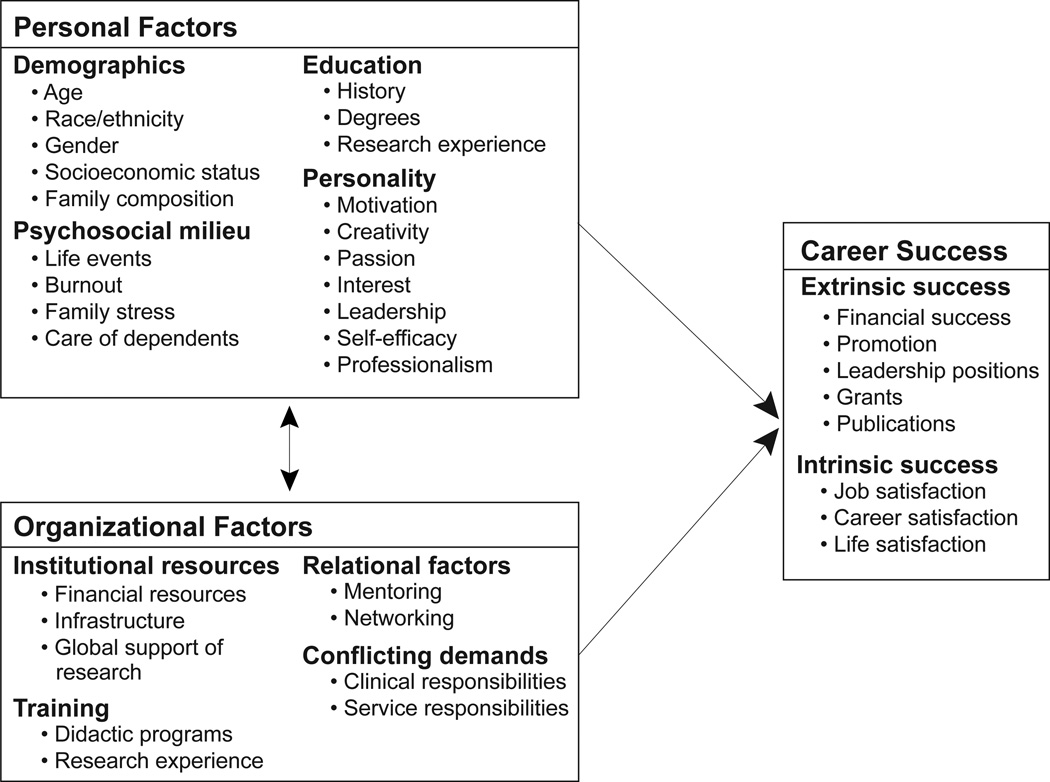
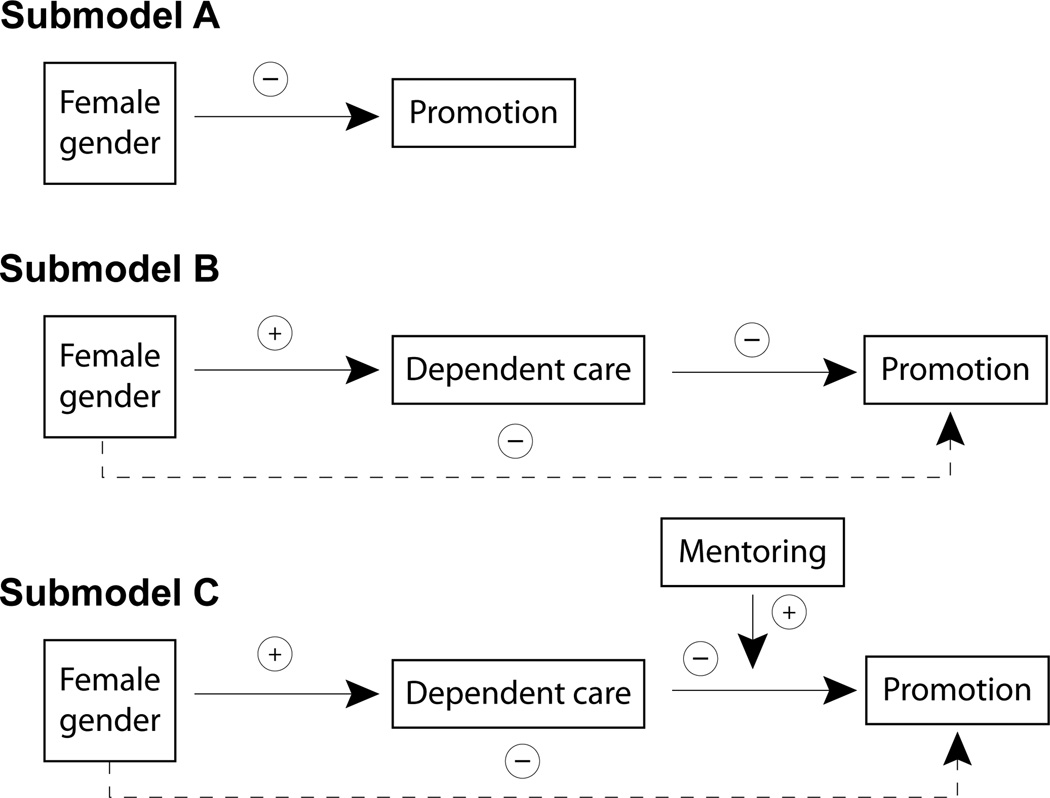
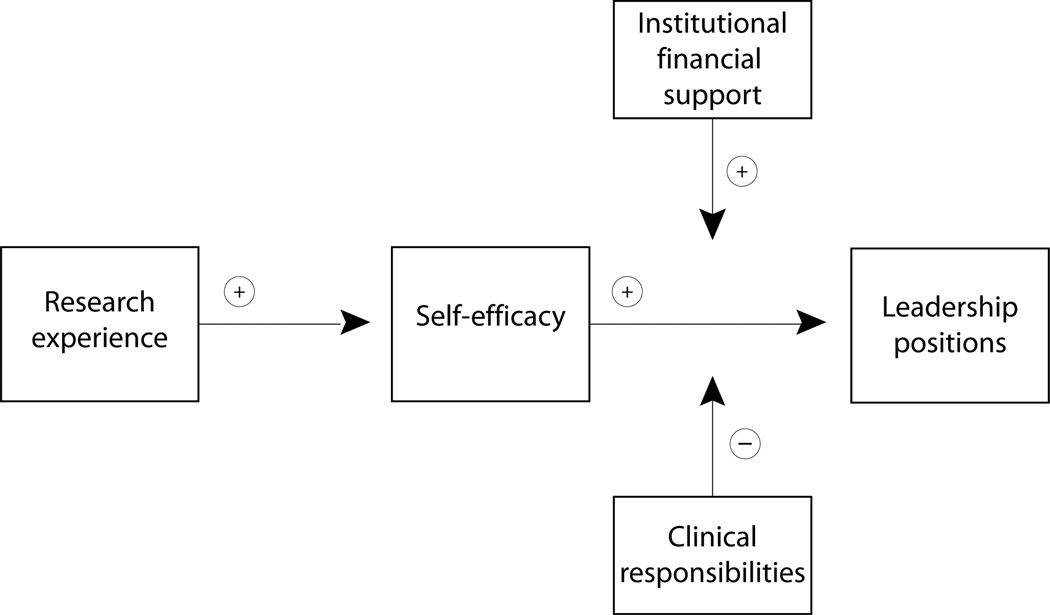
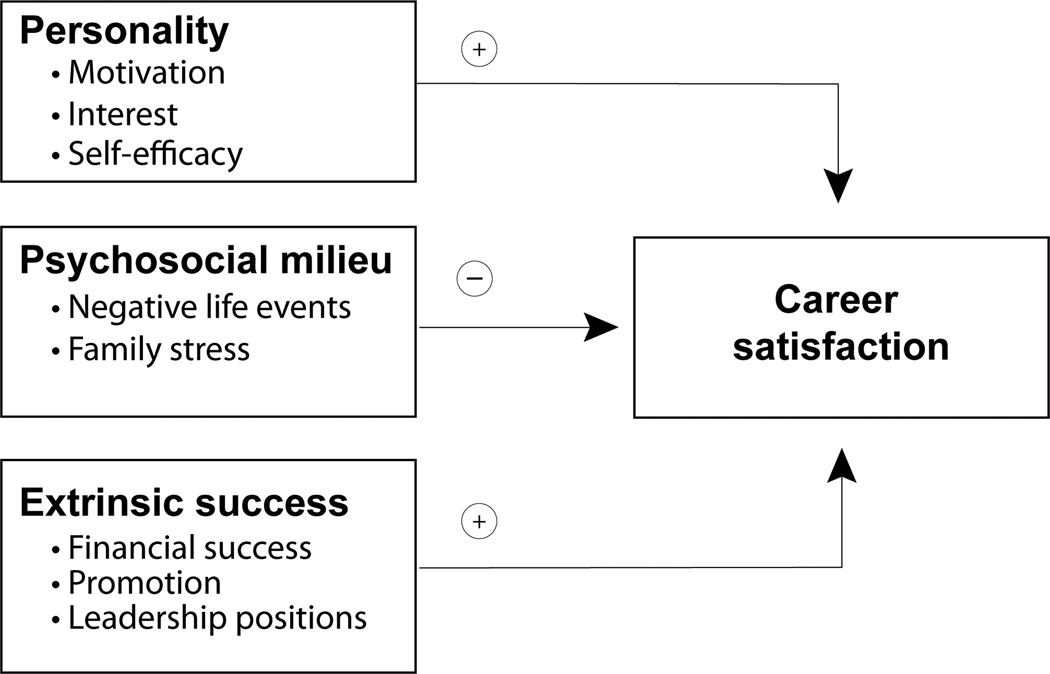
With today's focus on the translation of basic science discoveries into clinical practice, the demand for physician-scientists is growing. Yet, physicians have always found it challenging to juggle the demands of clinical care with the time required to perform research. The Research on Careers Workgroup of the Institute for Clinical Research Education at the University of Pittsburgh developed a comprehensive model for career success that would address, and allow for the evaluation of, the personal factors, organizational factors, and their interplay that contribute to career success. With this model, leaders of training programs could identify early opportunities for intervening with potential physician-scientists to ensure career success. Through an iterative process described in this article, the authors identified and examined potential models for career success from the literature, added other elements determined to be significant, and developed a comprehensive model to assess factors associated with career success for physician-scientists. The authors also present examples of ways in which this model can be adapted and applied to specific situations to assess the effects of different factors on career success.
Figures
References
-
- Bartels SJ, Lebowitz BD, Reynolds CF, 3rd, et al. Programs for developing the pipeline of early-career geriatric mental health researchers: Outcomes and implications for other fields. [Accessed August 3, 2011];Acad Med. 2010 85:26–35. Available at: http://journals.lww.com/academicmedicine/Fulltext/2010/01000/Programs_fo.... - PMC - PubMed
-
- Teo AR. The development of clinical research training: Past history and current trends in the United States. [Accessed August 3, 2011];Acad Med. 2009 84:433–438. Available at: http://journals.lww.com/academicmedicine/Fulltext/2009/04000/The_Develop.... - PubMed
-
- Young RA, Dehaven MJ, Passmore C, Baumer JG. Research participation, protected time, and research output by family physicians in family medicine residencies. Fam Med. 2006;38:341–348. - PubMed
-
- Nathan DG. Clinical research: Perceptions, reality, and proposed solutions. National Institutes of Health Director's Panel on Clinical Research. JAMA. 1998;280:1427–1431. - PubMed
