


The prevalence of hyperuricemia in China: a meta-analysis
- PMID: 22032610
- PMCID: PMC3213156
- DOI: 10.1186/1471-2458-11-832
The prevalence of hyperuricemia in China: a meta-analysis
Abstract
Background: The prevalence of hyperuricemia varied in different populations and it appeared to be increasing in the past decades. Recent studies suggest that hyperuricemia is an independent risk factor for cardiovascular disease. However, there has not yet been a systematic analysis of the prevalence of hyperuricemia in China.
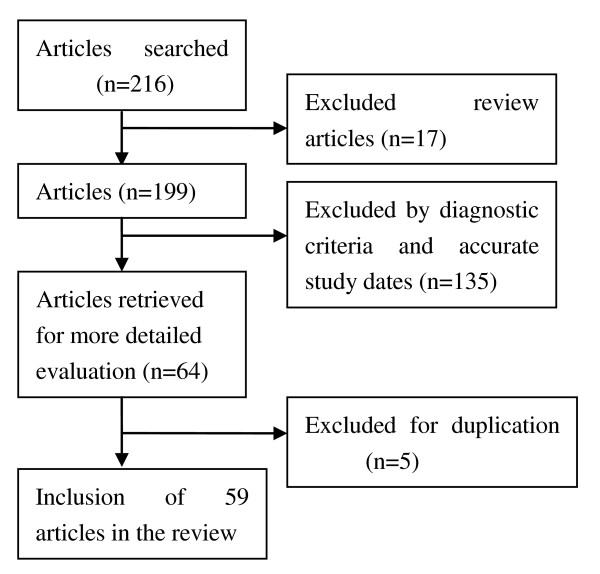
Methods: Epidemiological investigations on hyperuricemia in China published in journals were identified manually and on-line by using CBMDISC, Chongqing VIP database and CNKI database. Those Reported in English journals were identified using MEDLINE database. Selected studies had to describe an original study defined by strict screening and diagnostic criteria. The fixed effects model or random effects model was employed according to statistical test for homogeneity.
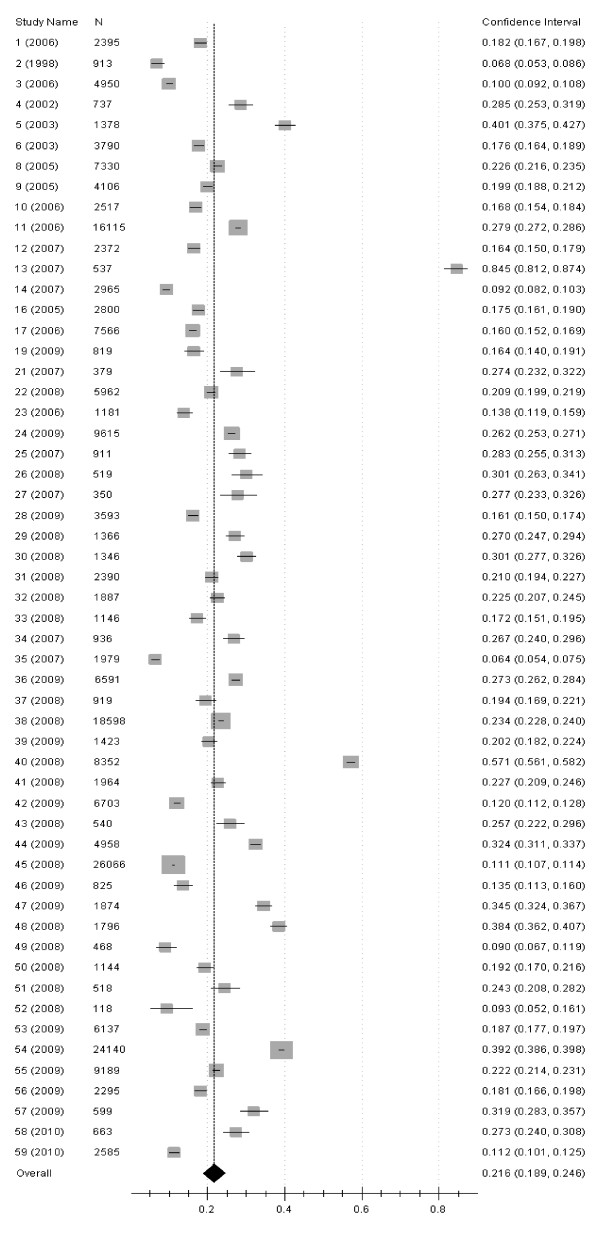
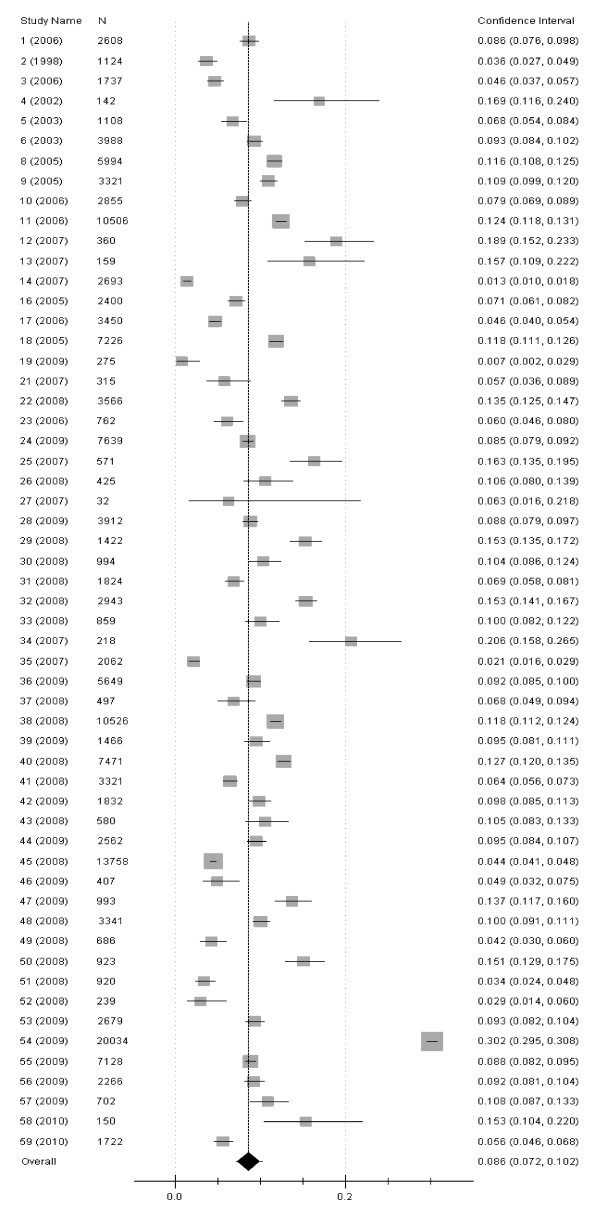
Results: Fifty-nine studies were selected, the statistical information of which was collected for systematic analysis. The results showed that the pooled prevalence of hyperuricemia in male was 21.6% (95%CI: 18.9%-24.6%), but it was only 8.6% (95%CI: 8.2%-10.2%) in female. It was found that thirty years was the risk point age in male and it was fifty years in female.
Conclusions: The prevalence of hyperuricemia is different as the period of age and it increases after 30 years in male and 50 in female. Interventions are necessary to change the risk factors before the key age which is 30 years in male and 50 in female.
Figures
References
-
- Lin KC, Lin HY, Chou P. The interaction between uric acid level and other risk factors on the development of gout among asymptomatic hyperuricemic men in a prospective study. Journal of Rheumatology. 2000;27:1501–1505. - PubMed
-
- Alderman MH, Cohe H, Madhavan S, Kivlighn S. Serum uric acid and cardiovascular events in successfully treated hypertensive patients. Hypertension. 1999;34:144–150. - PubMed
-
- Bonora E, Targher G, Zenere MB, Saggiani F, Cacciatori V, Tosi F. et al. Relationship of uric acid concentration to cardiovascular risk factors in young men. Int J Obes Relat Metab Disord. 1996;20:975–980. - PubMed
Publication types
MeSH terms
LinkOut - more resources
Full Text Sources
Miscellaneous
