


Review
doi: 10.1016/j.micinf.2011.10.001.
Epub 2011 Oct 20.
Iron metabolism and the innate immune response to infection
Affiliations
- PMID: 22033148
- PMCID: PMC3270215
- DOI: 10.1016/j.micinf.2011.10.001
Item in Clipboard
Review
Iron metabolism and the innate immune response to infection
Microbes Infect.
2012 Mar.
Abstract
Host antimicrobial mechanisms reduce iron availability to pathogens. Iron proteins influencing the innate immune response include hepcidin, lactoferrin, siderocalin, haptoglobin, hemopexin, Nramp1, ferroportin and the transferrin receptor. Numerous global health threats are influenced by iron status and provide examples of our growing understanding of the connections between infection and iron metabolism.
Copyright © 2011 Institut Pasteur. Published by Elsevier Masson SAS. All rights reserved.
Figures
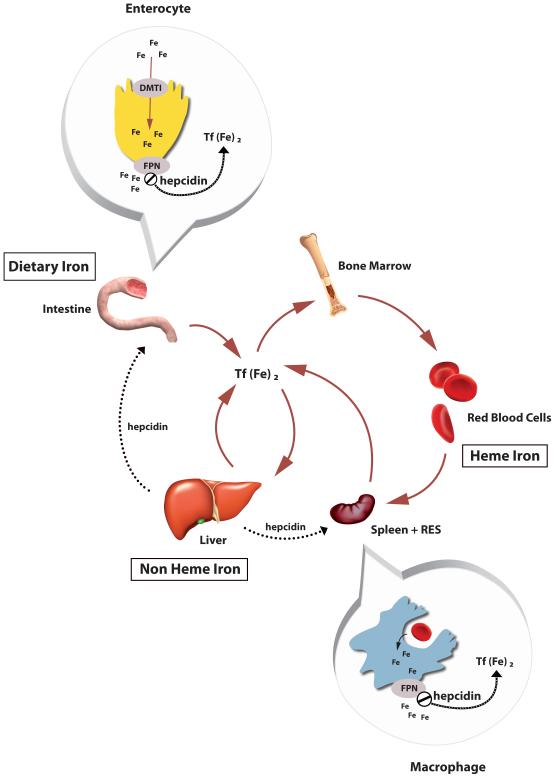
Dietary iron is taken up across intestinal enterocyte by a transport network that involves the apical importer DMT1 (Divalent Metal Transporter 1) and the basolateral exporter Fpn (Ferroportin). Iron circulates bound to Transferrin (Tf) and is delivered to cells by endocytosis of Tf receptors. Excess iron delivered to the liver is stored in ferritin (non-heme iron) while the majority of iron is utilization to manufacture hemoglobin (heme iron). As sensescent red cells are destroyed by macrophages in spleen and reticuloendothelial system, iron is recycle via Fpn. Entry of iron into circulation is controlled by hepcidin which is a regulatory hormone secreted by the liver, and also as part of the innate immune response. Hepcidin binds to Fpn, causing its internalization and ultimate degradation. Part of liver iron homeostasis detecting changes in iron status involves pathways sensing the saturation of circulating Tf and state of iron overload.
References
Publication types
MeSH terms
Substances
Grants and funding
LinkOut - more resources
Full Text Sources
Other Literature Sources
Medical
Miscellaneous
