


Perinatal acidosis and hypoxic-ischemic encephalopathy in preterm infants of 33 to 35 weeks' gestation
- PMID: 22033298
- PMCID: PMC3740949
- DOI: 10.1016/j.jpeds.2011.09.001
Perinatal acidosis and hypoxic-ischemic encephalopathy in preterm infants of 33 to 35 weeks' gestation
Abstract
Objectives: To determine the frequency of hypoxic-ischemic encephalopathy (HIE) in preterm infants of 33 to 35 weeks' gestational age on the basis of physiological screening for perinatal acidosis and neurological assessment of encephalopathy and to correlate neurodevelopmental outcomes with brain magnetic resonance imaging findings.
Study design: This retrospective cohort study included all inborn infants of 33 to 35 weeks' gestation admitted to the neonatal intensive care unit at Parkland Memorial Hospital with perinatal acidosis from October 2005 to September 2008. Their medical records were reviewed, and pertinent data were recorded.
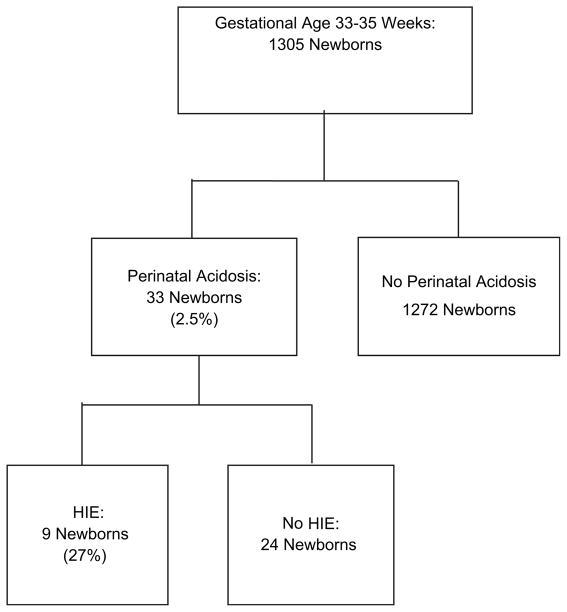
Results: Of 1305 newborns, 2.5% (n=33) had perinatal acidosis, and 27% (n=9) of these had HIE (2, mild; 4, moderate; 3, severe). Persistence of metabolic acidosis on the first arterial blood gas obtained in the first hour of age was significantly associated with HIE (P<.005). Magnetic resonance imaging results were abnormal in 3 of 4 infants with moderate HIE and in both survivors with severe HIE. Death or disability occurred in no infants with mild or moderate HIE, but in all infants with severe HIE.
Conclusion: Screening criteria for HIE that use biochemical and neurological assessments as performed in term newborns can be applied to preterm infants of 33 to 35 weeks' gestation.
Copyright © 2012 Mosby, Inc. All rights reserved.
Conflict of interest statement
The authors declare no conflicts of interest.
Figures
References
-
- Shankaran S, Laptook AR, Ehrenkranz RA, Tyson JE, McDonald SA, Donovan EF, et al. Whole-body hypothermia for neonates with hypoxic-ischemic encephalopathy. N Engl J Med. 2005;353:1574–84. - PubMed
-
- Sarnat HB, Sarnat MS. Neonatal encephalopathy following fetal distress. A clinical and electroencephalographic study. Arch Neurol. 1976;33:696–705. - PubMed
Publication types
MeSH terms
Grants and funding
LinkOut - more resources
Full Text Sources
Medical
