Evaluation of a family-centered prevention intervention for military children and families facing wartime deployments
- PMID: 22033756
- PMCID: PMC3496435
- DOI: 10.2105/AJPH.2010.300088
Evaluation of a family-centered prevention intervention for military children and families facing wartime deployments
Abstract
Objectives: We evaluated the Families OverComing Under Stress program, which provides resiliency training designed to enhance family psychological health in US military families affected by combat- and deployment-related stress.
Methods: We performed a secondary analysis of Families OverComing Under Stress program evaluation data that was collected between July 2008 and February 2010 at 11 military installations in the United States and Japan. We present data at baseline for 488 unique families (742 parents and 873 children) and pre-post outcomes for 331 families.
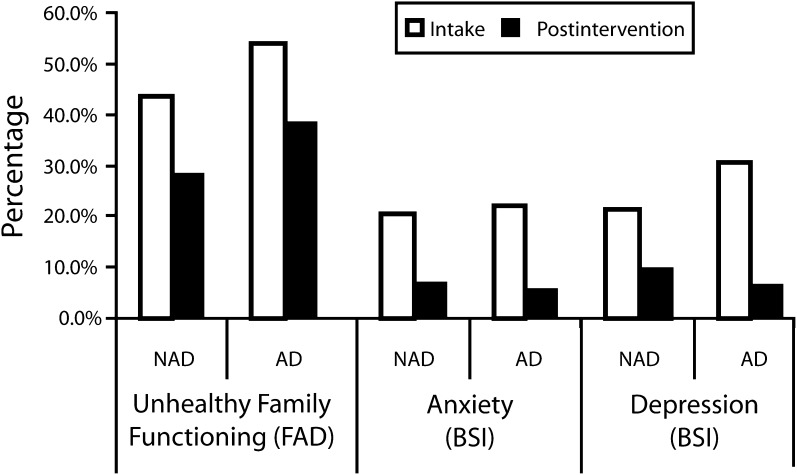
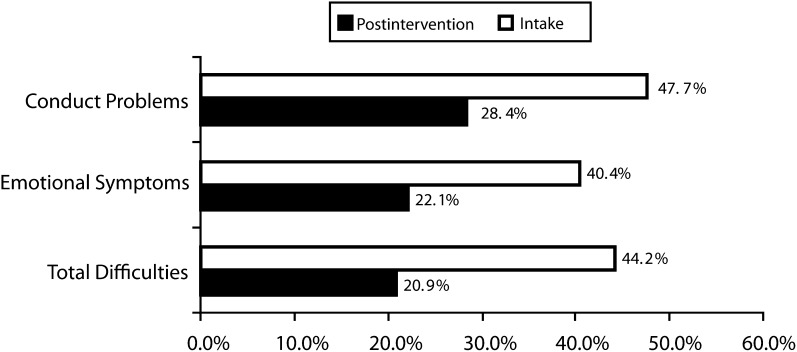
Results: Family members reported high levels of satisfaction with the program and positive impact on parent-child indicators. Psychological distress levels were elevated for service members, civilian parents, and children at program entry compared with community norms. Change scores showed significant improvements across all measures for service member and civilian parents and their children (P < .001).
Conclusions: Evaluation data provided preliminary support for a strength-based, trauma-informed military family prevention program to promote resiliency and mitigate the impact of wartime deployment stress.
Figures
References
-
- Lincoln A, Swift E, Shorteno-Fraser M. Psychological adjustment and treatment of children and families with parents deployed in military combat. J Clin Psychol. 2008;64(8):984–992 - PubMed
-
- Palmer C. A theory of risk and resilience factors in military families. Mil Psychol. 2008;20(3):205–217
-
- Waldrep DA, Cozza SJ, Chun RS. The impact of deployment on the military family. : The National Center for Post Traumatic Stress Disorder, The Iraq War Clinician Guide. 2nd ed Washington, DC: Department of Veterans Affairs; 2004:83–86
-
- National Research Council, Institute of Medicine. Preventing Mental, Emotional, and Behavioral Disorders Among Young People: Progress and Possibilities. Washington, DC: National Academies Press; 1994 - PubMed
-
- Hoge CW, Castro CA, Messer SC, McGurk D, Cotting DI, Koffman RL. Combat duty in Iraq and Afghanistan, mental health problems, and barriers to care. N Engl J Med. 2004;351(1):13–22 - PubMed
MeSH terms
LinkOut - more resources
Full Text Sources
Medical