


Clinical translation of stem cell therapy in traumatic brain injury: the potential of encapsulated mesenchymal cell biodelivery of glucagon-like peptide-1
- PMID: 22034462
- PMCID: PMC3182013
- DOI: 10.31887/DCNS.2011.13.2/aheile
Clinical translation of stem cell therapy in traumatic brain injury: the potential of encapsulated mesenchymal cell biodelivery of glucagon-like peptide-1
Abstract
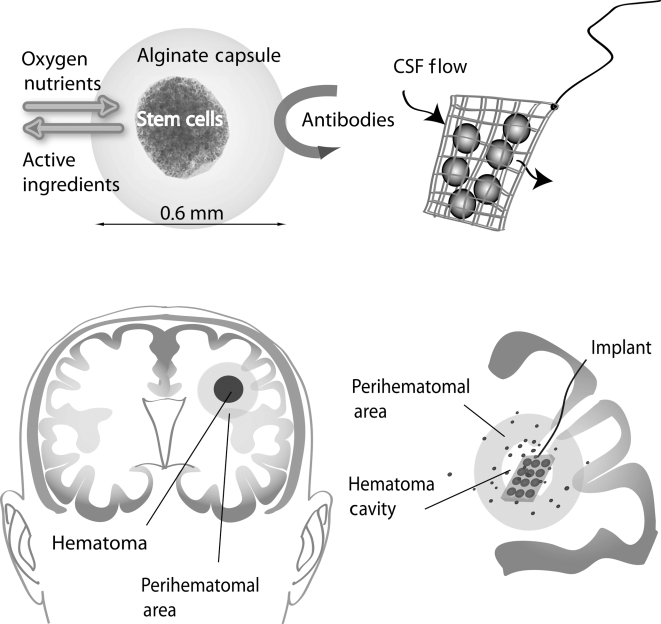
Traumatic brain injury remains a major cause of death and disability; it is estimated that annually 10 million people are affected. Preclinical studies have shown the potential therapeutic value of stem cell therapies. Neuroprotective as well as regenerative properties of stem cells have been suggested to be the mechanism of action in preclinical studies. However, up to now stem cell therapy has not been studied extensively in clinical trials. This article summarizes the current experimental evidence and points out hurdles for clinical application. Focusing on a cell therapy in the acute stage of head injury, the potential of encapsulated cell biodelivery as a novel cell-therapeutic approach will also be discussed.
El daño cerebral traumático sigue siendo una importante causa de muerte e incapacidad, y se estima que anualmente afecta a diez millones de personas. Los estudios preclínicos ban mostrado el potencial valor terapéutico de los tratamientos con células madre. Mediante los estudios preclínicos se ha sugerido que el mecanismo de acción depende de las propiedades neuroprotectoras y regeneradoras de las células madre. Sin embargo, hasta la fecha la terapia con células madre ha sido poco estudiada en ensayos clínicos. Este artículo resume la evidencia experimental actual y menciona los obstáculos para la aplicación clínica. Enfocándose en la terapéutica celular durante la etapa aguda del daño cerebral también se discute el potencial biogenerador de células encapsuladas como una nueva aproximación en la terapia celular.
Les lésions cérébrales traumatiques restent une cause majeure de décès et de handicap ; on estime que 10 millions de personnes par an sont touchées. Des études précliniques ont montré la valeur thérapeutique potentielle des traitements par cellules souches. Les propriétés neuroprotectives comme régénératives des cellules souches semblent être le mécanisme d'action retrouvé dans les études précliniques. Cependant, jusqu'à maintenant, le traitement par cellules souches n'a pas été largement étudié dans les études cliniques. En se concentrant sur le traitement au stade aigu des lésions cérébrales, nous analyserons le potentiel de la biodélivrance des cellules encapsulées comme nouvelle approche de thérapie cellulaire.
Keywords: inflammation; mesenchymal stem cell; neuroprotection; translational research; traumatic brain injury.
Figures
References
-
- Hyder AA., Wunderlich CA., Puvanachandra P., Gururaj G., Kobusingye OC. The impact of traumatic brain injuries: a global perspective. Neuro Rehab. 2007;22:341–353. - PubMed
-
- Rehabilitation of persons with traumatic brain injury. NIH Consens Statement. 1998;16:1–41. - PubMed
-
- Li JY., Christophersen NS., Hall V., Soulet D., Brundin P. Critical issues of clinical human embryonic stem cell therapy for brain repair. Trends Neurosci. 2008;31:146–153. - PubMed
-
- Cattaneo E., McKay R. Proliferation and differentiation of neuronal stem cells regulated by nerve growth factor. Nature. 1990;347:762–765. - PubMed
Publication types
MeSH terms
Substances
LinkOut - more resources
Full Text Sources
Other Literature Sources
