


Regulation of β-adrenergic receptor function: an emphasis on receptor resensitization
- PMID: 22041711
- PMCID: PMC3266006
- DOI: 10.4161/cc.10.21.18042
Regulation of β-adrenergic receptor function: an emphasis on receptor resensitization
Abstract
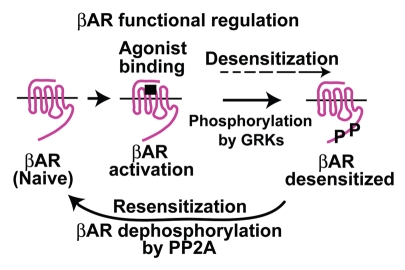
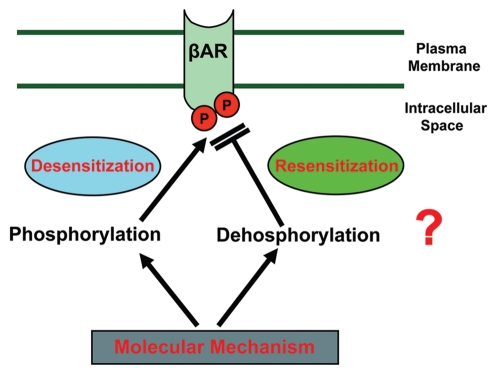
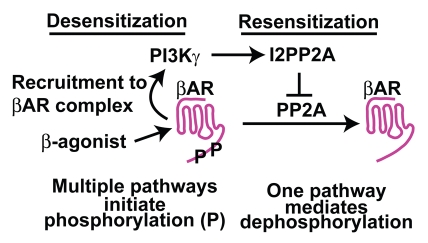
G protein-coupled receptors are the largest family of cell surface receptors regulating multiple cellular processes. β-adrenergic receptor (βAR) is a prototypical member of GPCR family and has been one of the most well studied receptors in determining regulation of receptor function. Agonist activation of βAR leads to conformational change resulting in coupling to G protein generating cAMP as secondary messenger. The activated βAR is phosphorylated resulting in binding of β-arrestin that physically interdicts further G protein coupling leading to receptor desensitization. The phosphorylated βAR is internalized and undergoes resensitization by dephosphorylation mediated by protein phosphatase 2A in the early endosomes. Although desensitization and resensitization are two sides of the same coin maintaining the homeostatic functioning of the receptor, significant interest has revolved around understanding mechanisms of receptor desensitization while little is known about resensitization. In our current review we provide an overview on regulation of βAR function with a special emphasis on receptor resensitization and its functional relevance in the context of fine tuning receptor signaling.
Figures
References
-
- Ferguson SS. Evolving concepts in G protein-coupled receptor endocytosis: the role in receptor desensitization and signaling. Pharmacol Rev. 2001;53:1–24. - PubMed
Publication types
MeSH terms
Substances
Grants and funding
LinkOut - more resources
Full Text Sources
Molecular Biology Databases
