. 2011 May;12(3):180-9.
doi: 10.2174/138920211795677903.

Gene-diet interactions in childhood obesity

Affiliations

Gene-diet interactions in childhood obesity

William S Garver. Curr Genomics. 2011 May.

Abstract

Childhood overweight and obesity have reached epidemic proportions worldwide, and the increase in weight-associated co-morbidities including premature type 2 diabetes mellitus (T2DM) and atherosclerotic cardiovascular disease will soon become major healthcare and economic problems. A number of studies now indicate that the childhood obesity epidemic which has emerged during the past 30 years is a complex multi-factorial disease resulting from interaction of susceptibility genes with an obesogenic environment. This review will focus on gene-diet interactions suspected of having a prominent role in promoting childhood obesity. In particular, the specific genes that will be presented (FTO, MC4R, and NPC1) have recently been associated with childhood obesity through a genome-wide association study (GWAS) and were shown to interact with nutritional components to increase weight gain. Although a fourth gene (APOA2) has not yet been associated with childhood obesity, this review will also present information on what now represents the best characterized gene-diet interaction in promoting weight gain.

Keywords: Adolescent; childhood; gene-diet; high-fat; nutrition; obesity; overweight..


Figures
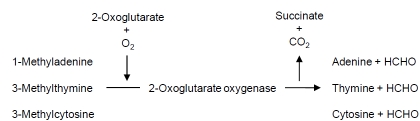
Fig. (1)
Fig. (1)
The biochemical reaction catalyzed by 2-oxoglutarate oxygenase encoded by the FTO gene is responsible for demethylating certain nucleic acid bases (1-methyladenine, 3-methylthymine, and 3-methylcytosine) when associated with single-stranded RNA or DNA. Studies indicate that FTO gene variants interact with the diet by increasing preference for a specific nutrient (fat) and decreasing satiety to promote weight gain.
Fig. (2)
Fig. (2)
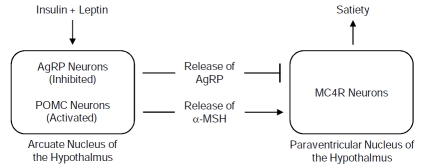
The insulin and leptin-melanocortin signaling pathway is responsible for maintaining energy and metabolic balance by controlling appetite. The melanocortin-4 receptor (MC4R) encoded by the MC4R gene binds to peptide hormones (α-MSH or AgRP) secreted from either α-MSH or AgRP expressing neurons, respectively, present in the arcuate nucleus of the hypothalamus. Studies indicate that MC4R gene variants interact with the diet by increasing preference for a specific nutrient (fat) and decreasing satiety to promote increased weight gain. AgRP, agouti-related peptide; POMC, proopiomelanocortin; α-MSH, α-melanocyte stimulating hormone.
Fig. (3)
Fig. (3)
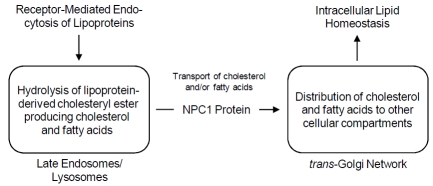
The NPC1 protein encoded by the NPC1 gene regulates the transport of lipids (cholesterol and fatty acids) from late endosomes/lysosomes to other cellular compartments to maintain intracellular, tissue, and whole body lipid homeostasis. Although human-based studies have not yet been performed investigating the molecular basis for the NPC1 gene-diet interaction, studies performed using an NPC1 mouse model indicates that decreased Npc1 gene dosage or Npc1 haploinsufficiency resulting from a null mutation interacts with a high-fat diet to promote weight gain.
Fig. (4)
Fig. (4)
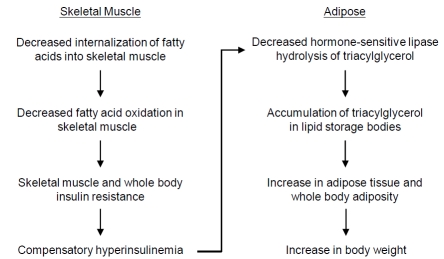
The APOA2 protein encoded by the APOA2 gene has an undefined role in regulating fatty acid and triacylglyerol metabolism in at least two tissues (skeletal muscle and adipose) to maintain energy balance. Although the molecular basis remains undefined, studies indicate that the APOA2 gene variants interact with saturated fats to promote weight gain in diverse populations of adult individuals.

References

    1. Singh G K, Kogan M D, van Dyck P C. Changes in state-specific childhood obesity and overweight prevalence in the United States from 2003 to 2007. Arch. Pediatr. Adolesc. Med. 2010;164:598–607. - PubMed
    1. Ogden C L, Carroll M D, Curtin L R, Lamb M M, Flegal K M. Prevalence of high body mass index in US children and adolescents, 2007-2008. J. Am. Med. Assoc. 2010;303:242–249. - PubMed
    1. de Onis M, Blossner M, Borghi E. Global prevalence and trends of overweight and obesity among preschool children. Am. J. Clin. Nutr. 2010;92:1257–1264. - PubMed
    1. Yach D, Stuckler D, Brownell K D. Epidemiological and economic consequences of the global epidemics of obesity and diabetes. Nat. Med. 2006;12:62–66. - PubMed
    1. Hinney A, Vogel C I G, Hebebrand J. From monogenic to polygenic obesity: recent advances. Eur. Child Adolesc. Psychiatry. 2010;19:297–310. - PMC - PubMed

LinkOut - more resources