


Functional amino acids in growth, reproduction, and health
- PMID: 22043449
- PMCID: PMC3042786
- DOI: 10.3945/an.110.1008
Functional amino acids in growth, reproduction, and health
Abstract
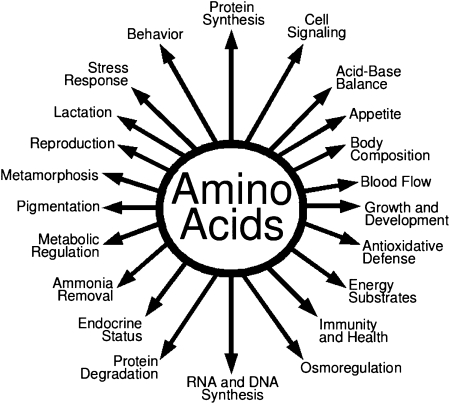
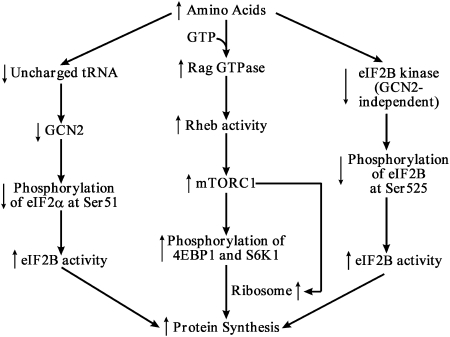
Amino acids (AA) were traditionally classified as nutritionally essential or nonessential for animals and humans based on nitrogen balance or growth. A key element of this classification is that all nonessential AA (NEAA) were assumed to be synthesized adequately in the body as substrates to meet the needs for protein synthesis. Unfortunately, regulatory roles for AA in nutrition and metabolism have long been ignored. Such conceptual limitations were not recognized until recent seminal findings that dietary glutamine is necessary for intestinal mucosal integrity and dietary arginine is required for maximum neonatal growth and embryonic survival. Some of the traditionally classified NEAA (e.g. glutamine, glutamate, and arginine) play important roles in regulating gene expression, cell signaling, antioxidative responses, and immunity. Additionally, glutamate, glutamine, and aspartate are major metabolic fuels for the small intestine and they, along with glycine, regulate neurological function. Among essential AA (EAA), much emphasis has been placed on leucine (which activates mammalian target of rapamycin to stimulate protein synthesis and inhibit proteolysis) and tryptophan (which modulates neurological and immunological functions through multiple metabolites, including serotonin and melatonin). A growing body of literature leads to a new concept of functional AA, which are defined as those AA that regulate key metabolic pathways to improve health, survival, growth, development, lactation, and reproduction of organisms. Both NEAA and EAA should be considered in the classic "ideal protein" concept or formulation of balanced diets to maximize protein accretion and optimize health in animals and humans.
Conflict of interest statement
Author disclosure: G. Wu, no conflicts of interest.
Figures
References
-
- Baker DH. Advances in protein-amino acid nutrition of poultry. Amino Acids. 2009;37:29–41 - PubMed
-
- Wu G. Amino acids: metabolism, functions, and nutrition. Amino Acids. 2009;37:1–17 - PubMed
-
- Watford M. Glutamine metabolism and function in relation to proline synthesis and the safety of glutamine and proline supplementation. J Nutr. 2008;138:S2003–7 - PubMed
-
- Brasse-Lagnel C, Lavoinne A, Husson A. Control of mammalian gene expression by amino acids, especially glutamine. FEBS J. 2009;276:1826–44 - PubMed
Grants and funding
LinkOut - more resources
Full Text Sources
Other Literature Sources
