


Heat shock proteins and cancer vaccines: developments in the past decade and chaperoning in the decade to come
- PMID: 22043955
- PMCID: PMC3243109
- DOI: 10.1586/erv.11.124
Heat shock proteins and cancer vaccines: developments in the past decade and chaperoning in the decade to come
Abstract
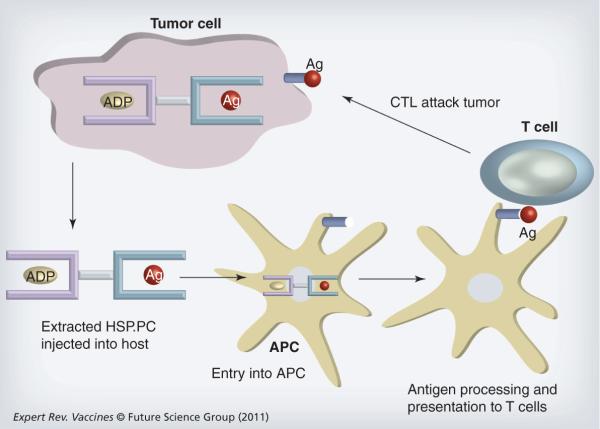
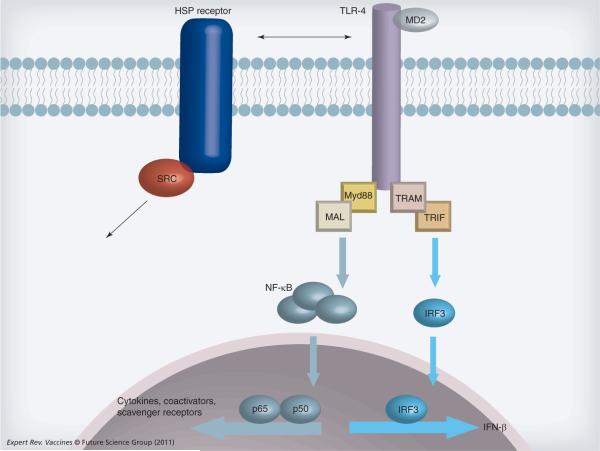
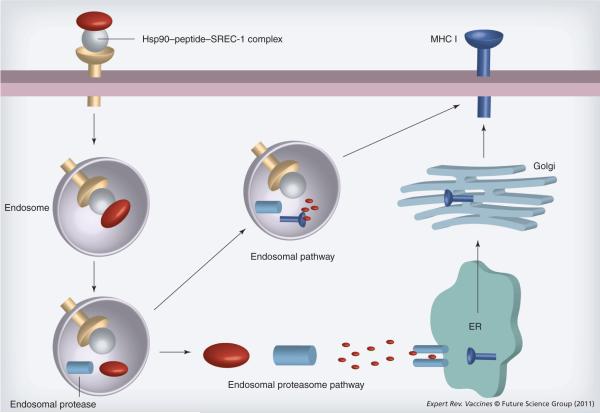
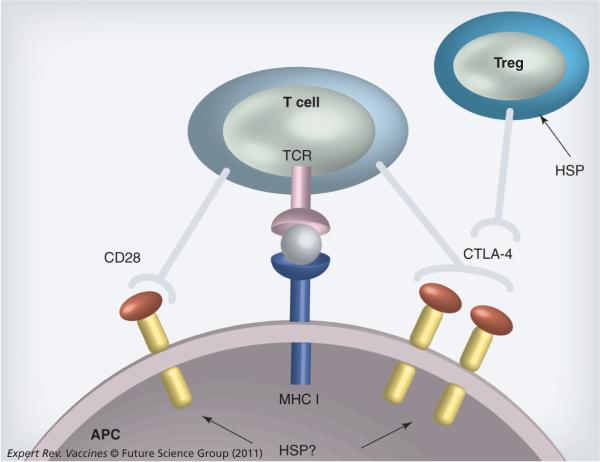
Molecular chaperone-peptide complexes extracted from tumors (heat shock protein [HSP] vaccines) have been intensively studied in the preceding two decades, proving to be safe and effective in treating a number of malignant diseases. They offer personalized therapy and target a cross-section of antigens expressed in patients' tumors. Future advances may rely on understanding the molecular underpinnings of this approach to immunotherapy. One property common to HSP vaccines is the ability to stimulate antigen uptake by scavenger receptors on the antigen-presenting cell surface and trigger T-lymphocyte activation. HSPs can also induce signaling through Toll-Like receptors in a range of immune cells and this may mediate the effectiveness of vaccines.
Figures
References
-
- Pardoll D. Does the immune system see tumors as foreign or self? Annu. Rev. Immunol. 2003;21:807–839. - PubMed
-
- Chouaib S, Thiery J, Gati A, et al. Tumor escape from killing: role of killer inhibitory receptors and acquisition of tumor resistance to cell death. Tissue Antigens. 2002;60:273–281. - PubMed
-
- Moller P, Hammerling G. The role of surface HLA A, B, C molecules in tumor immunity. Cancer Surv. 1992;13:101–127. - PubMed
-
- Engelhard VH, Bullock TN, Colella TA, Sheasley SL, Mullins DW. Antigens derived from melanocyte differentiation proteins: self-tolerance, autoimmunity, and use for cancer immunotherapy. Immunol. Rev. 2002;188:136–146. - PubMed
-
- Disis ML, Cheever MA. Oncogenic proteins as tumor antigens. Curr. Opin. Immunol. 1996;8:637–642. - PubMed
Publication types
MeSH terms
Substances
Grants and funding
LinkOut - more resources
Full Text Sources
Miscellaneous
