


Sewer pipe, wire, epoxy, and finger tapping: the start of fMRI at the Medical College of Wisconsin
- PMID: 22044784
- PMCID: PMC3303998
- DOI: 10.1016/j.neuroimage.2011.10.044
Sewer pipe, wire, epoxy, and finger tapping: the start of fMRI at the Medical College of Wisconsin
Abstract
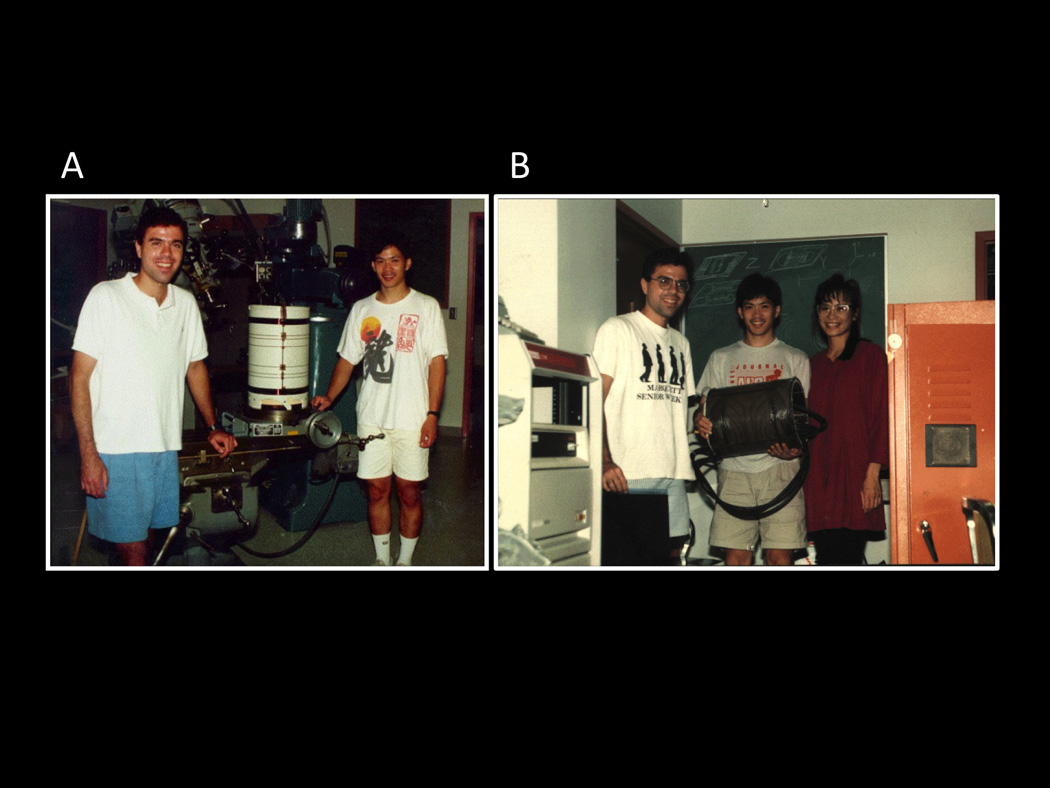
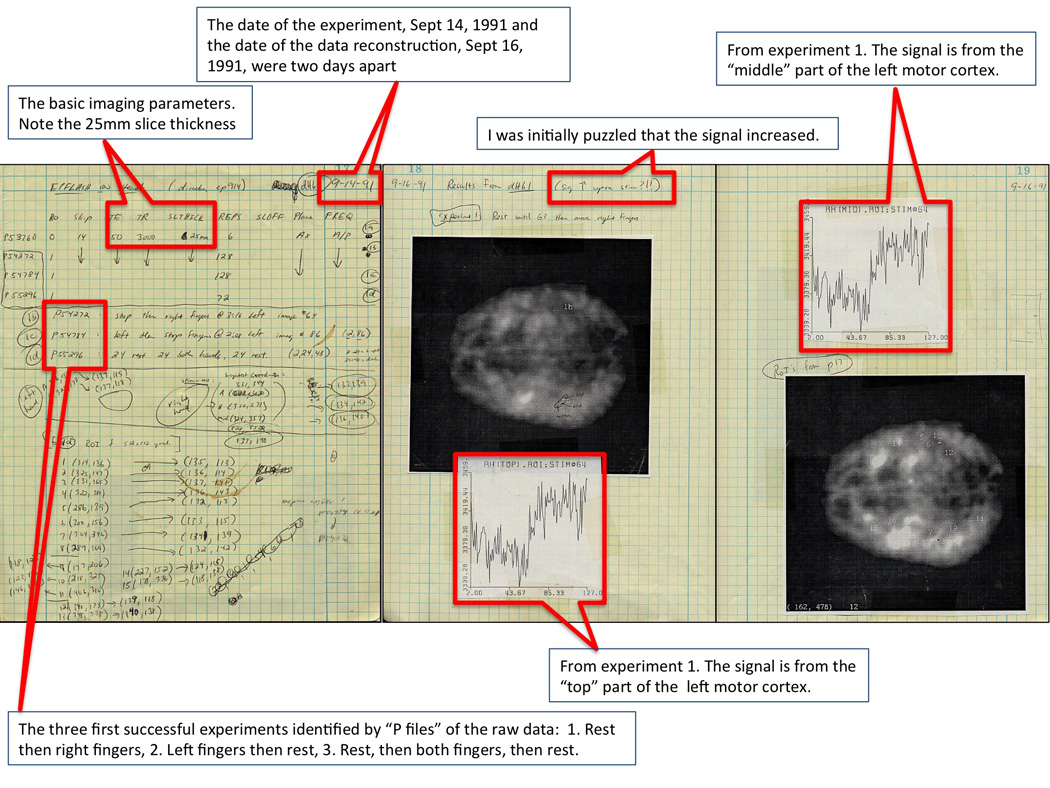
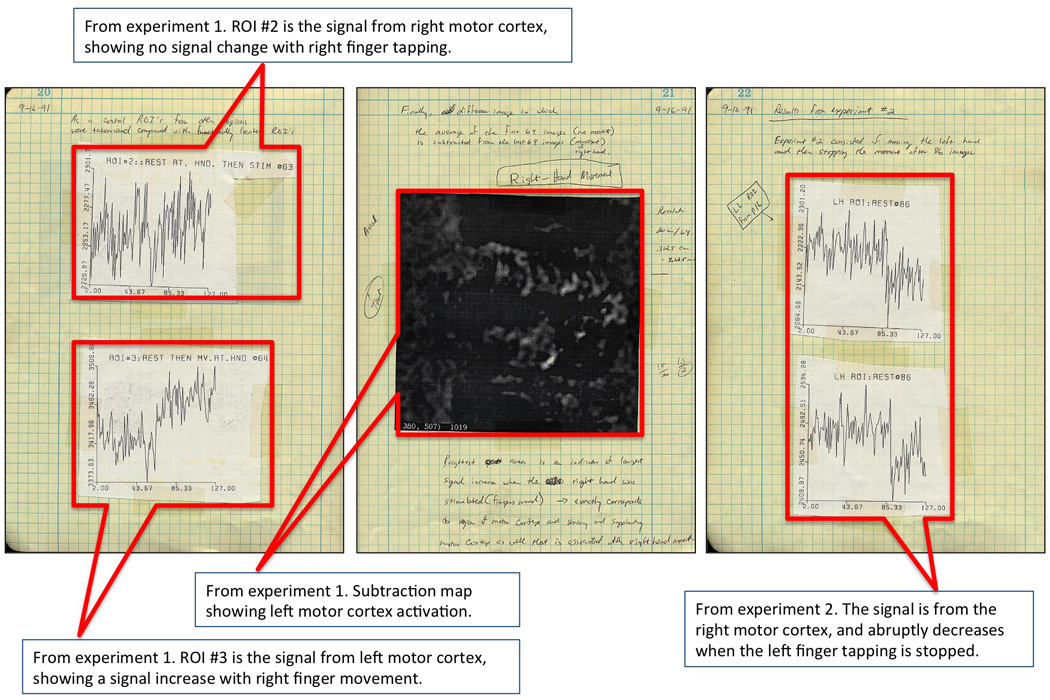
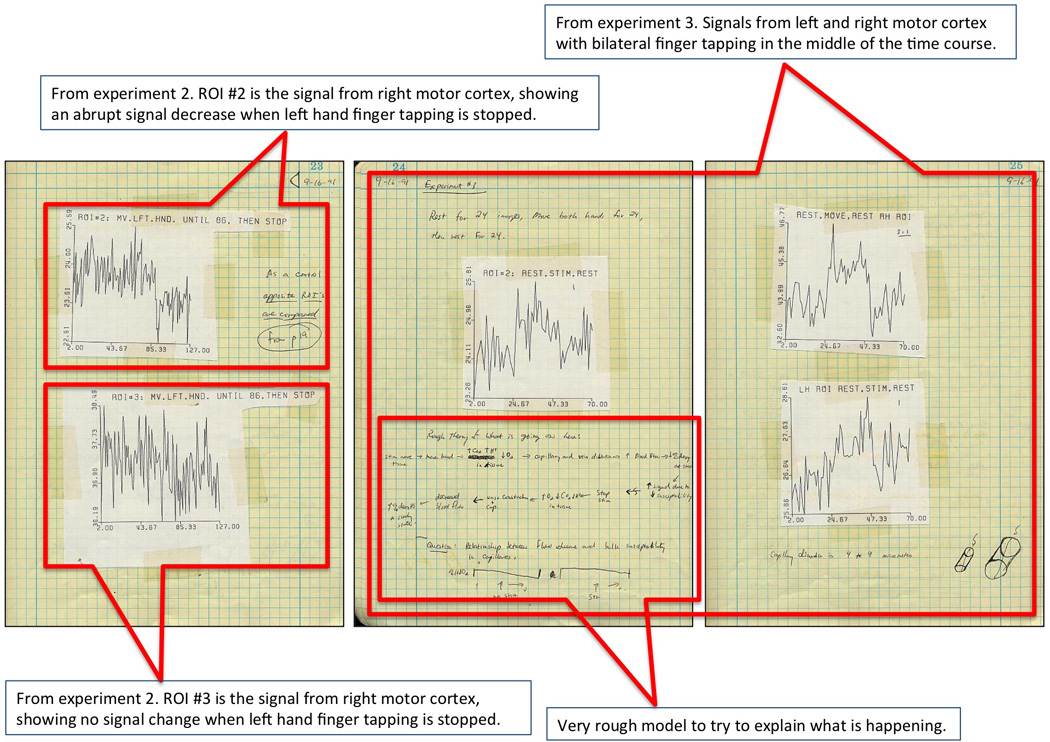
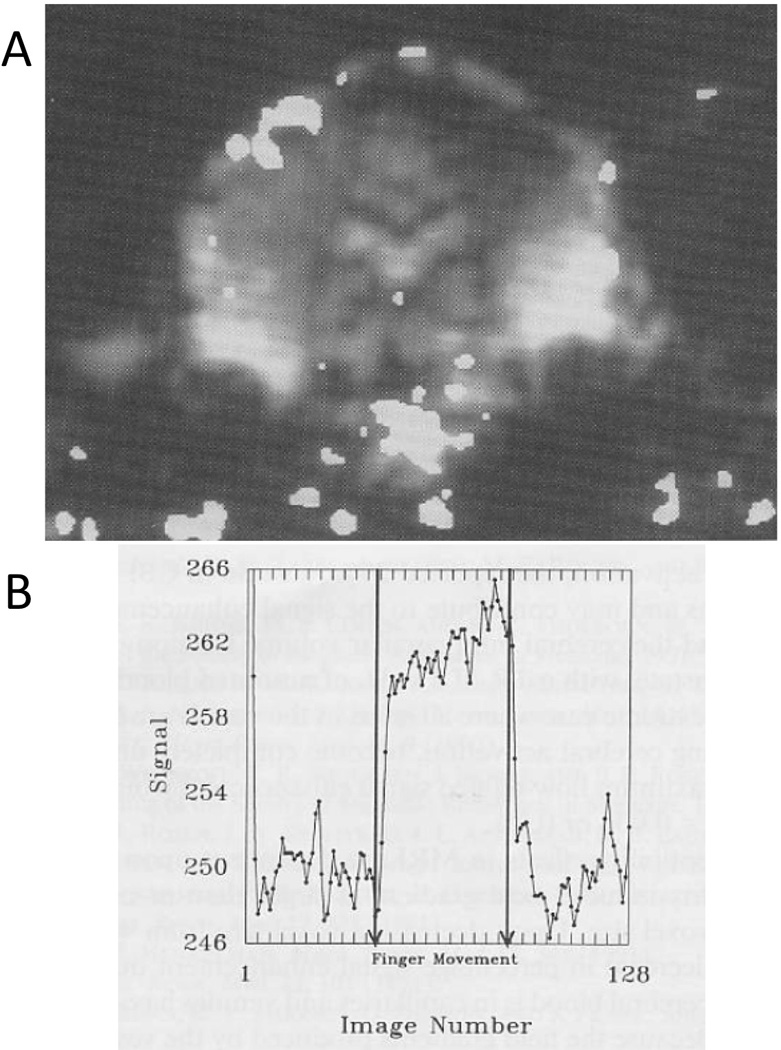
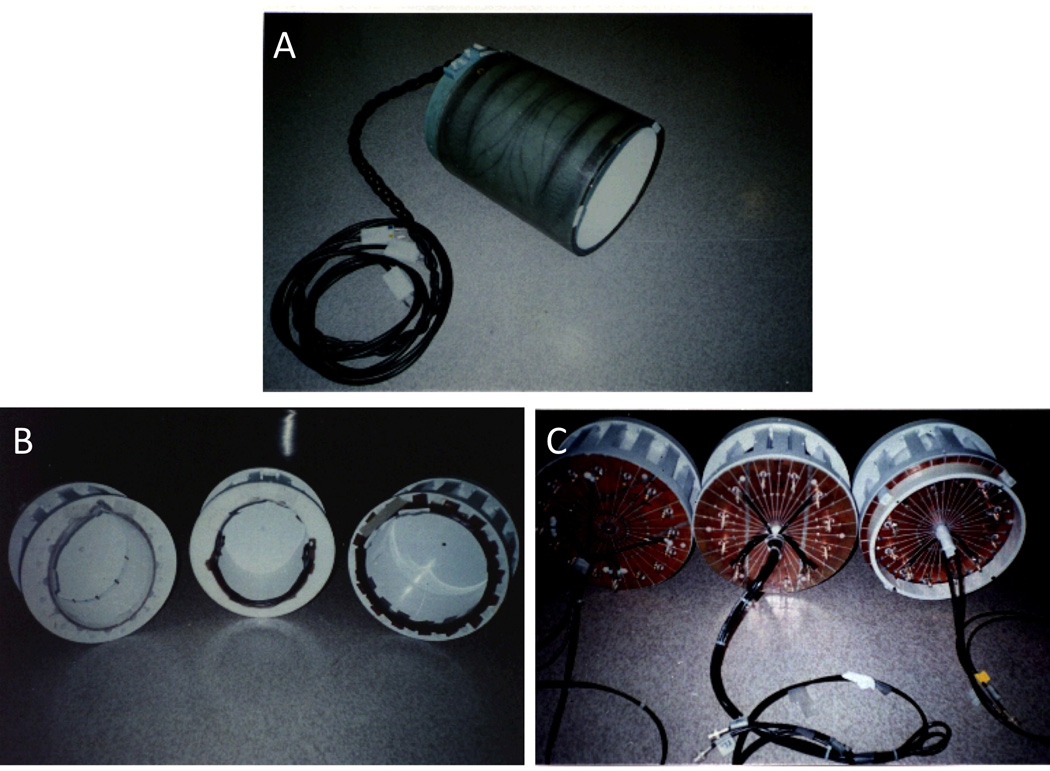
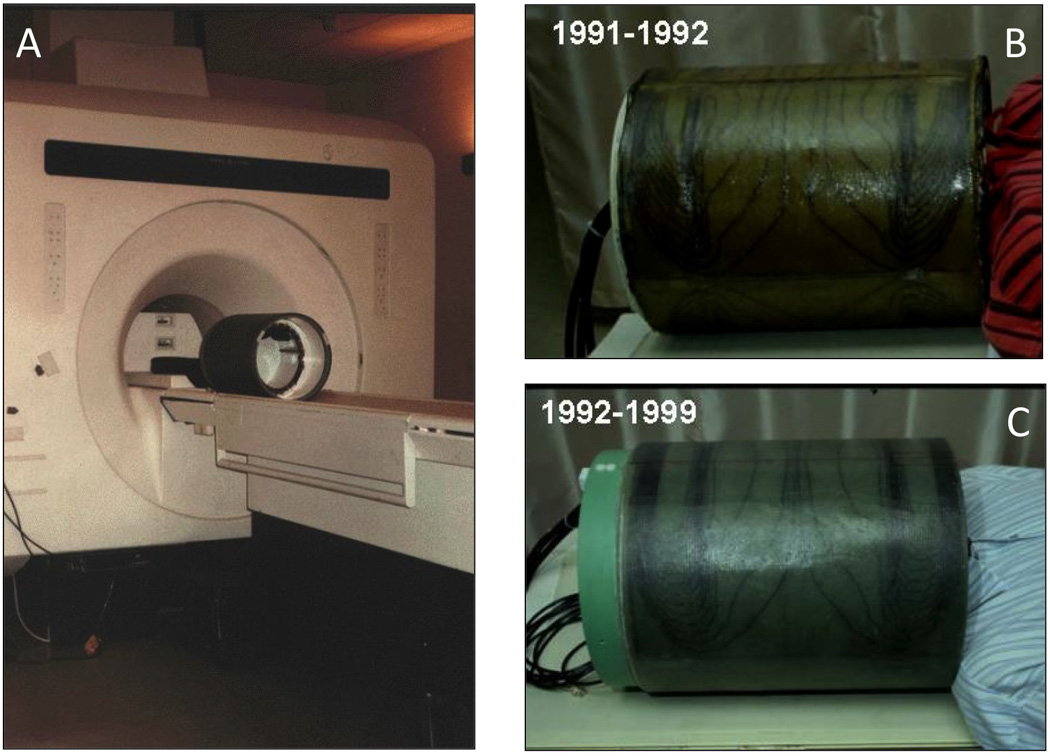
In 1991, the Biophysics Research Institute at the Medical College of Wisconsin was among the first groups to develop functional Magnetic Resonance Imaging (fMRI). Our story is unique on a few levels: We didn't have knowledge of the ability to image human brain activation with MRI using blood oxygenation dependent (BOLD) contrast until early August of 1991 when we attended the Society for Magnetic Resonance in Medicine (SMRM) meeting in San Francisco, yet we produced our first BOLD-based maps of motor cortex activation about a month later. The effort started with two graduate students, Eric Wong and myself. Only a few days prior to that extremely important SMRM meeting, we had developed human echo planar imaging (EPI) capability in-house. Wong designed, built, and interfaced a head gradient coil made out of sewer pipe, wire, and epoxy to a standard GE 1.5T MRI scanner. Also, a few months prior to building this human head gradient coil he developed the EPI pulse sequences and image reconstruction. All of these efforts were towards a different goal--for demonstration of Wong's novel approach to perfusion imaging in the human brain. Following SMRM, where a plenary lecture by Tom Brady from MGH opened our eyes to human brain activation imaging using BOLD contrast, and where we learned that EPI was extremely helpful if not critical to its success, we worked quickly to achieve our first results on September 14, 1991. The story is also unique in that Jim Hyde had set up the Biophysics Research Institute to be optimal for just this type of rapidly advancing basic technology research. It was well equipped for hardware development, had open and dynamic collaborative relationships with other departments, hospitals on campus, and GE, and had a relatively flat hierarchy and relaxed, flexible, collegial atmosphere internally. Since these first brain activation results, MCW Biophysics has continued to be at the forefront of functional MRI innovation, having helped to pioneer real time fMRI, high-resolution fMRI, and functional connectivity mapping.
Published by Elsevier Inc.
Figures
References
-
- Bandettini PA, Jesmanowicz A, Van Kylen J, Birn RM, Hyde JS. Functional MRI of brain activation induced by scanner acoustic noise. Magnetic Resonance in Medicine. 1998;39:410–416. - PubMed
-
- Bandettini PA, Jesmanowicz A, Wong EC, Hyde JS. Processing Strategies for Time-Course Data Sets in Functional Mri of the Human Brain. Magnetic Resonance in Medicine. 1993;30:161–173. - PubMed
-
- Bandettini PA, Wong EC. Effects of Biophysical and Physiological- Parameters on Brain Activation-Induced R(2)Asterisk and R(2) Changes - Simulations Using a Deterministic Diffusion-Model. International Journal of Imaging Systems and Technology. 1995;6:133–152.
-
- Bandettini PA, Wong EC. A hypercapnia-based normalization method for improved spatial localization of human brain activation with fMRI. Nmr in Biomedicine. 1997;10:197–203. - PubMed
-
- Bandettini PA, Wong EC, Hinks RS, Tikofsky RS, Hyde JS. Time course EPI of human brain function during task activation. Magnetic resonance in medicine : official journal of the Society of Magnetic Resonance in Medicine / Society of Magnetic Resonance in Medicine. 1992;25:390–397. - PubMed
Publication types
MeSH terms
Substances
Grants and funding
LinkOut - more resources
Full Text Sources
Medical
