


A study of the clinical and biochemical profile of peritoneal dialysis fluid low in glucose degradation products
- PMID: 22045098
- PMCID: PMC3525436
- DOI: 10.3747/pdi.2010.00176
A study of the clinical and biochemical profile of peritoneal dialysis fluid low in glucose degradation products
Abstract
Objective: Although peritoneal dialysis (PD) is a widely accepted form of renal replacement therapy, concerns remain regarding the bioincompatible nature of standard PD fluid (PDF). Short-term studies of new biocompatible PDFs low in glucose degradation products (GDPs) reveal divergent results with respect to peritoneal integrity.
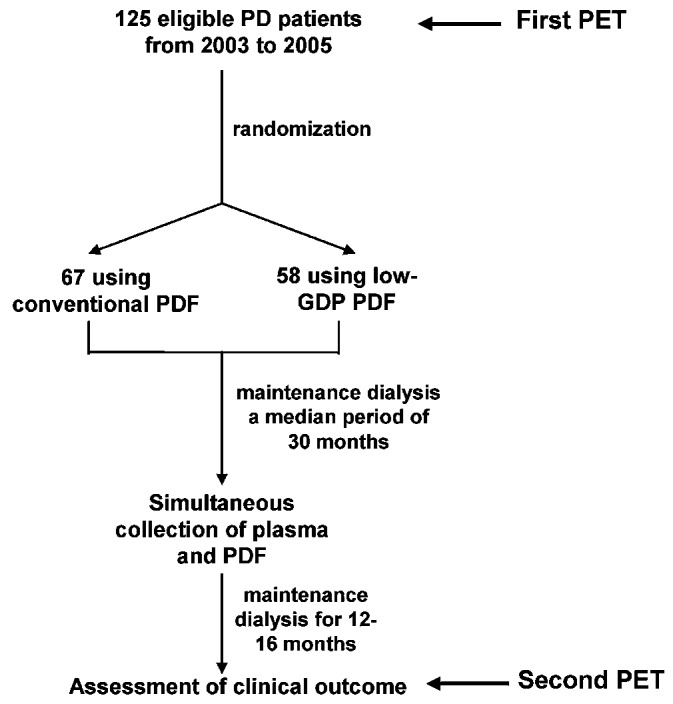
Methods: We studied 125 patients on maintenance PD who were assigned, by simple randomization, to receive either conventional or low-GDP PDF at PD initiation. Parameters of dialysis adequacy and peritoneal transport of small solutes were determined at initiation and after a period of maintenance PD at the time when serum and overnight effluent dialysate were simultaneously collected and assayed for various cytokines, chemokines, adipokines, and cardiac biomarkers. All patients were further followed prospectively for an average of 15 months from the day of serum and effluent collection to determine patient survival and cardiovascular events.
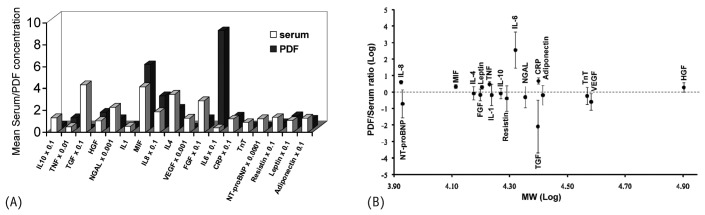
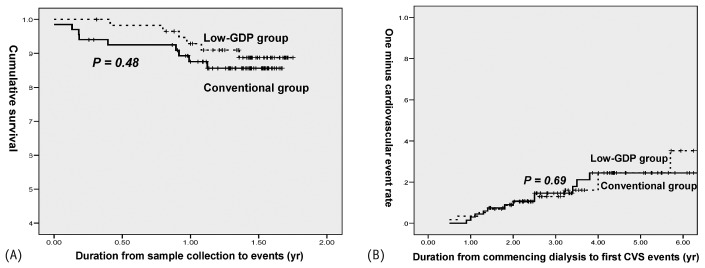
Results: Patients treated with conventional or low-GDP PDF were matched for sex, age, duration of dialysis, dialysis adequacy, and incidence of cardiovascular disease or diabetes. After an average of 2.3 years of PD treatment, the weekly total and peritoneal creatinine clearance, and the total and peritoneal Kt/V were comparable in the groups. However, urine output was higher in patients using low-GDP PDF despite there having been no difference between the groups at PD initiation. Patients using low-GDP PDF also experienced a slower rate of decline of residual glomerular filtration and urine output than did patients on conventional PDF. Compared with serum concentrations, effluent concentrations of tumor necrosis factor α, hepatocyte growth factor, macrophage migration inhibitory factor, interleukins 8 and 6, C-reactive protein, and leptin were found to be higher in both groups of patients after long-term PD, suggesting that the peritoneal cavity was the major source of those mediators. Compared with patients on low-GDP PDF, patients on conventional fluid showed elevated leptin and reduced adiponectin levels in serum and effluent. The effluent concentration of interleukin 8 was significantly lower in patients using low-GDP PDF. The survival rate and incidence of cardiovascular complications did not differ between these groups after maintenance PD for an average of 3.6 years.
Conclusions: It appears that low-GDP PDF results in an improvement of local peritoneal homeostasis through a reduction of chronic inflammatory status in the peritoneum.
Figures
Comment in
-
Trials (and tribulations) of biocompatible peritoneal dialysis fluids.Perit Dial Int. 2012 May-Jun;32(3):247-51. doi: 10.3747/pdi.2012.00044. Perit Dial Int. 2012. PMID: 22641733 Free PMC article. No abstract available.
References
-
- Brownlee M, Cerami A, Vlassara H. Advanced glycation end products in tissue and the biochemical basis of diabetic complications. N Engl J Med 1988; 318:1315–21 - PubMed
-
- Nakamura S, Tachikawa T, Tobita K, Miyazaki S, Sakai S, Morita T, et al. Role of advanced glycation end products and growth factors in peritoneal dysfunction in CAPD patients. Am J Kidney Dis 2003; 41(Suppl 1):S61–7 - PubMed
-
- Chaudhary K, Khanna R. Biocompatible peritoneal dialysis solutions: do we have one? Clin J Am Soc Nephrol 2010; 5:723–32 - PubMed
-
- Lee HY, Choi HY, Park HC, Seo BJ, Do JY, Yun SR, et al. Changing prescribing practice in CAPD patients in Korea: increased utilization of low GDP solutions improves patient outcome. Nephrol Dial Transplant 2006; 21:2893–9 - PubMed
-
- Lee HY, Park HC, Seo BJ, Do JY, Yun SR, Song HY, et al. Superior patient survival for continuous ambulatory peritoneal dialysis patients treated with a peritoneal dialysis fluid with neutral pH and low glucose degradation product concentration (Balance). Perit Dial Int 2005; 25:48–55 - PubMed
Publication types
MeSH terms
Substances
LinkOut - more resources
Full Text Sources
Research Materials
