


Incidence of haematological malignancy by sub-type: a report from the Haematological Malignancy Research Network
- PMID: 22045184
- PMCID: PMC3242607
- DOI: 10.1038/bjc.2011.450
Incidence of haematological malignancy by sub-type: a report from the Haematological Malignancy Research Network
Abstract
Background: Ascertainment of cases and disease classification is an acknowledged problem for epidemiological research into haematological malignancies.
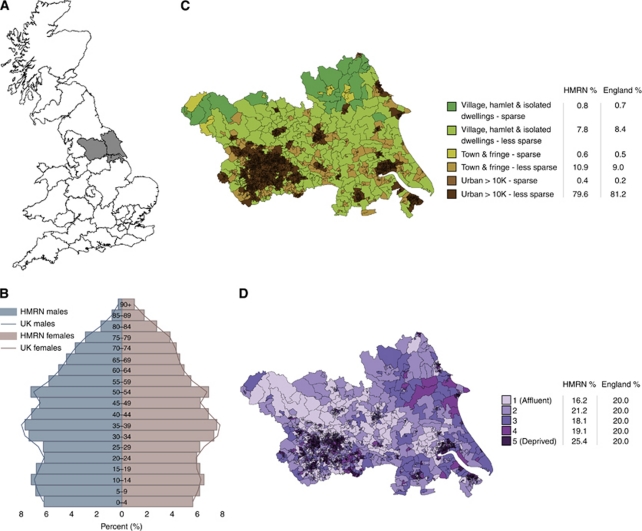
Methods: The Haematological Malignancy Research Network comprises an ongoing population-based patient cohort. All diagnoses (paediatric and adult) across two UK Cancer Networks (population 3.6 million, >2000 diagnoses annually, socio-demographically representative of the UK) are made by an integrated haematopathology laboratory. Diagnostics, prognostics, and treatment are recorded to clinical trial standards, and socio-demographic measures are routinely obtained.
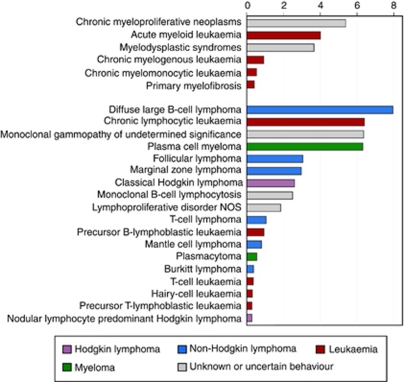
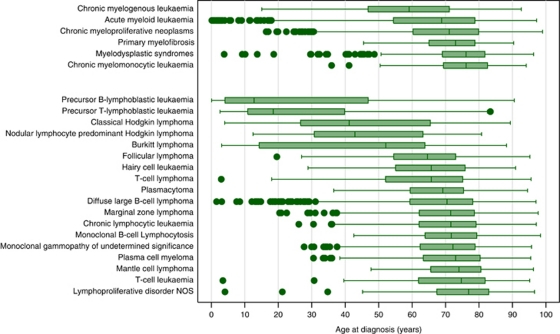
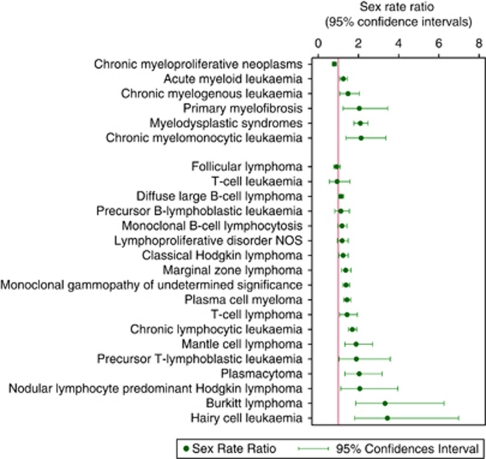
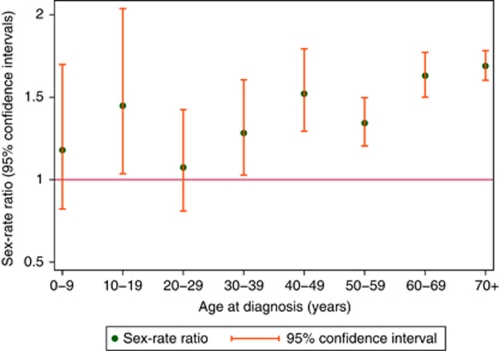
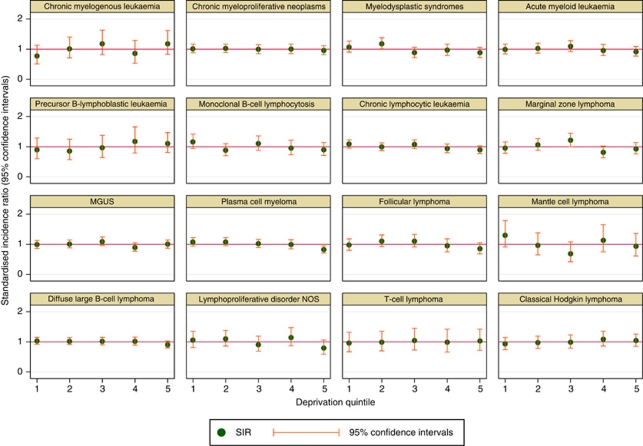
Results: A total of 10,729 haematological malignancies (myeloid=2706, lymphoid=8023) were diagnosed over the 5 years, that is, from 2004 to 2009. Descriptive data (age, sex, and deprivation), sex-specific age-standardised (European population) rates, and estimated UK frequencies are presented for 24 sub-types. The age of patients ranged from 4 weeks to 99 years (median 70.6 years), and the male rate was more than double the female rate for several myeloid and lymphoid sub-types, this difference being evident in both children and adults. No relationship with deprivation was detected.
Conclusion: Accurate population-based data on haematological malignancies can be collected to the standard required to deliver reproducible results that can be extrapolated to national populations. Our analyses emphasise the importance of gender and age as disease determinants, and suggest that aetiological investigations that focus on socio-economic factors are unlikely to be rewarding.
Figures
References
-
- Alexander DD, Mink PJ, Adami H-O, Chang ET, Cole P, Mandel JS, Trichopoulos D (2007a) The non-Hodgkin lymphomas: a review of the epidemiologic literature. Int J Cancer 120(Suppl 12): 1–39 - PubMed
-
- Alexander DD, Mink PJ, Adami H-O, Cole P, Mandel JS, Oken MM, Trichopoulos D (2007b) Multiple myeloma: a review of the epidemiologic literature. Int J Cancer 120(Suppl 12): 40–61 - PubMed
-
- Boyle P (2008) World Cancer Report 2008. IARC Press: Lyon
Publication types
MeSH terms
LinkOut - more resources
Full Text Sources
Medical
