


Comparative Evaluation of the Safety and Efficacy of Long-Term Use of Imidafenacin and Solifenacin in Patients with Overactive Bladder: A Prospective, Open, Randomized, Parallel-Group Trial (the LIST Study)
- PMID: 22046182
- PMCID: PMC3199201
- DOI: 10.1155/2011/854697
Comparative Evaluation of the Safety and Efficacy of Long-Term Use of Imidafenacin and Solifenacin in Patients with Overactive Bladder: A Prospective, Open, Randomized, Parallel-Group Trial (the LIST Study)
Abstract
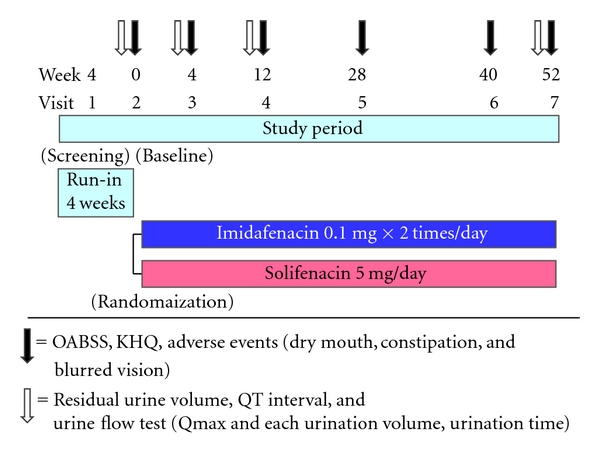
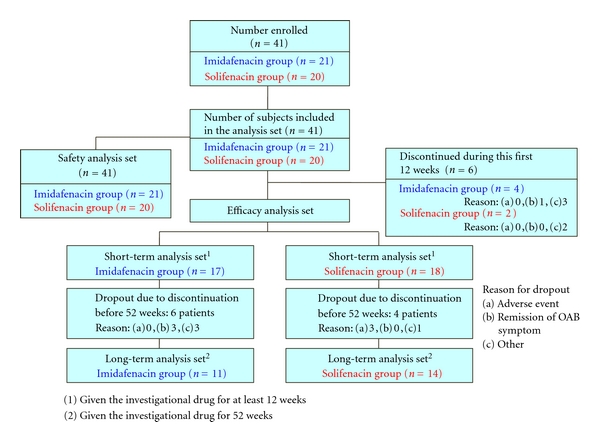
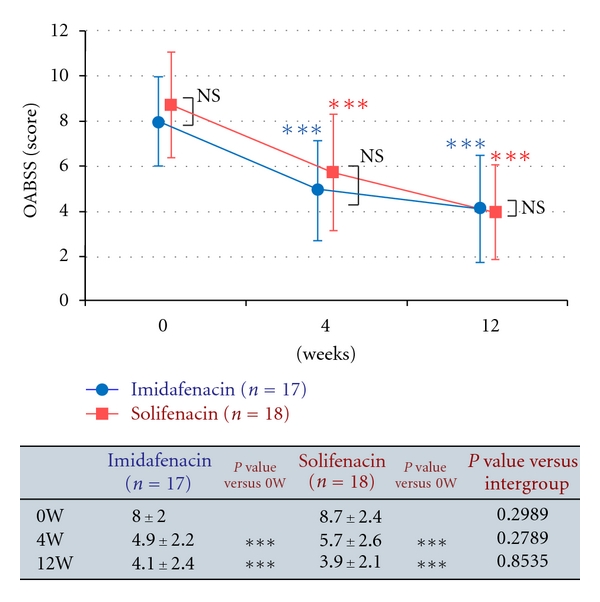
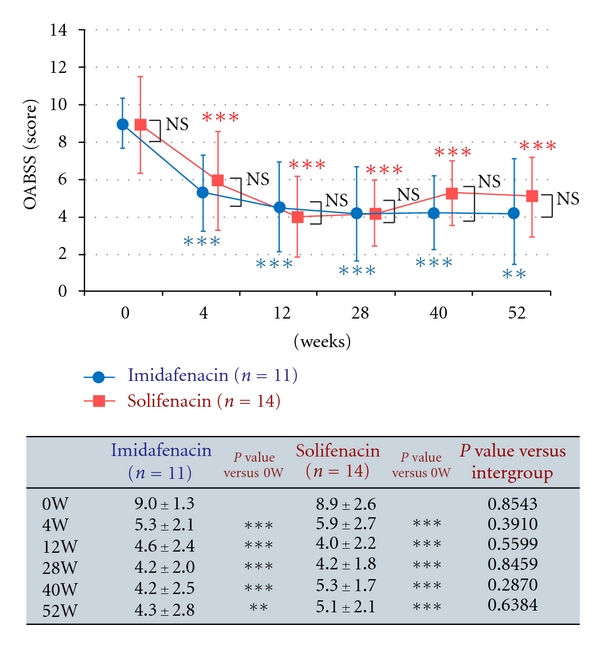
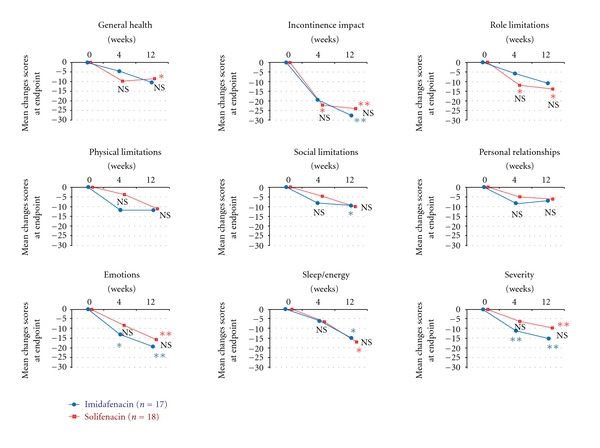
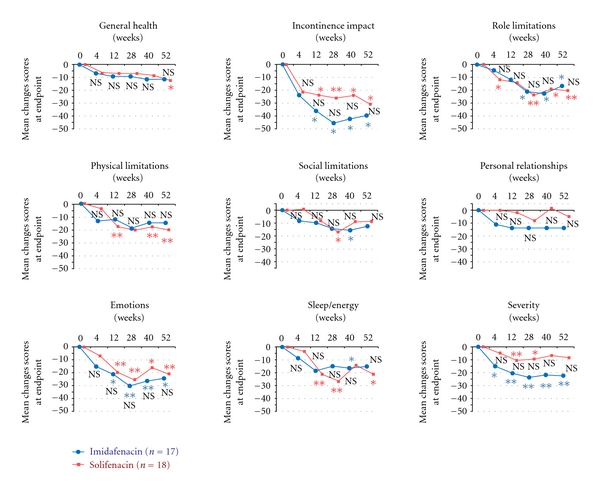
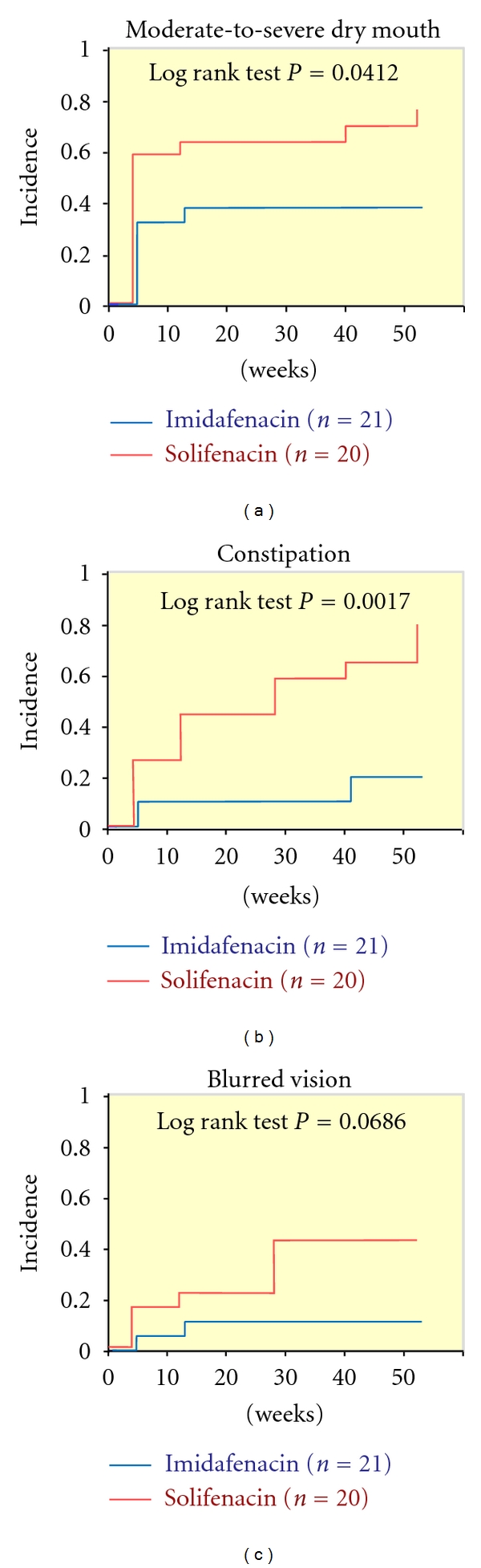
Objectives. Overactive bladder (OAB) is a chronic disease, but comparative trials of anticholinergics, which are commonly used for treatment of OAB, have generally been performed for up to 12 weeks only. There is no comparative study of a long-term intervention. Methods. We conducted a 52-week prospective randomized comparative study to evaluate the efficacy and tolerability of two anticholinergics. Results. Forty-one Japanese patients with untreated OAB were randomly assigned to imidafenacin and solifenacin groups. There was no difference in OABSS and KHQ scores between the two groups, but the severity and incidence of adverse events caused by the anticholinergics showed increased differences between the groups with time. The severity of dry mouth and the incidence of constipation were significantly lower in the imidafenacin group (P = 0.0092 and P = 0.0013, resp.). Conclusions. This study is the first long-term trial to show differences in the properties of anticholinergics that were not detected in short-term studies. Since OAB is a chronic disease, we conclude that imidafenacin is preferable to solifenacin from a perspective of safety.
Figures
References
-
- Abrams P, Cardozo L, Fall M, et al. The standardisation of terminology in lower urinary tract function: report from the standardisation sub-committee of the International Continence Society. Urology. 2003;61(1):37–49. - PubMed
-
- Milsom I, Abrams P, Cardozo L, Roberts RG, Thüroff J, Wein AJ. How widespread are the symptoms of an overactive bladder and how are they managed? A population-based prevalence study. BJU International. 2001;87(9):760–766. - PubMed
-
- Stewart WF, Van Rooyen JB, Cundiff GW, et al. Prevalence and burden of overactive bladder in the United States. World Journal of Urology. 2003;20(6):327–336. - PubMed
-
- Homma Y, Yamaguchi O, Hayashi K. An epidemiological survey of overactive bladder symptoms in Japan. BJU International. 2005;96(9):1314–1318. - PubMed
-
- Abrams P, Kelleher CJ, Kerr LA, Rogers RG. Overactive bladder significantly affects quality of life. American Journal of Managed Care. 2000;6(11, supplement):S580–S590. - PubMed
LinkOut - more resources
Full Text Sources
Other Literature Sources
