


A common cause for a common phenotype: the gatekeeper hypothesis in fetal programming
- PMID: 22047985
- PMCID: PMC3426771
- DOI: 10.1016/j.mehy.2011.09.047
A common cause for a common phenotype: the gatekeeper hypothesis in fetal programming
Abstract
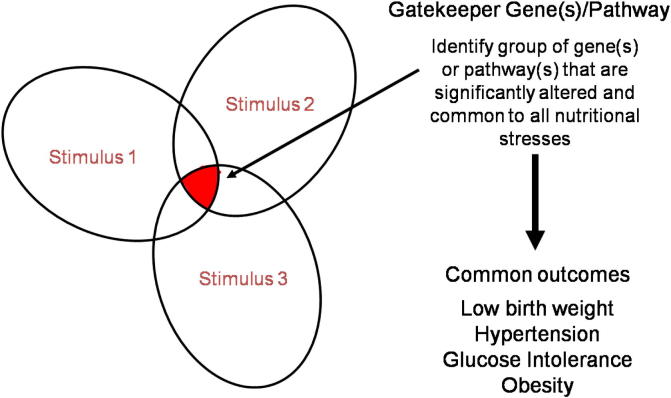
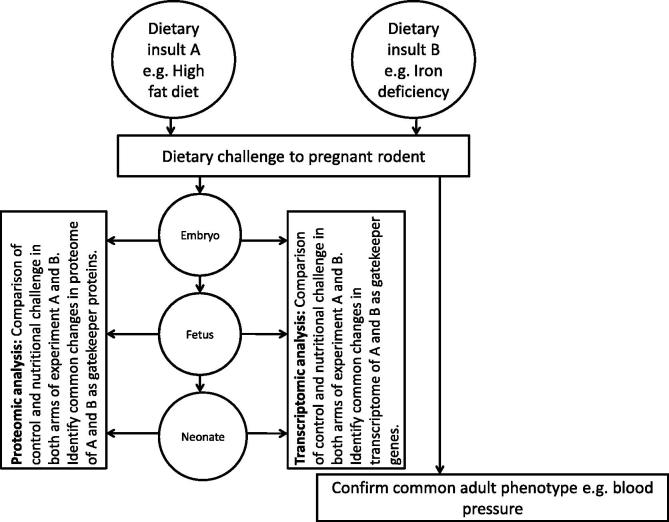
Sub-optimal nutrition during pregnancy has been shown to have long-term effects on the health of offspring in both humans and animals. The most common outcomes of such programming are hypertension, obesity, dyslipidaemia and insulin resistance. This spectrum of disorders, collectively known as metabolic syndrome, appears to be the consequence of nutritional insult during early development, irrespective of the nutritional stress experienced. For example, diets low in protein diet, high in fat, or deficient in iron are all associated with programming of cardiovascular and metabolic disorders when fed during rat pregnancy. In this paper, we hypothesise that the nutritional stresses act on genes or gene pathways common to all of the insults. We have termed these genes and/or gene pathways the "gatekeepers" and hence developed the "gatekeeper hypothesis". In this paper, we examine the background to the hypothesis and postulate some possible mechanisms or pathways that may constitute programming gatekeepers.
Copyright © 2011 Elsevier Ltd. All rights reserved.
Figures
References
-
- Barker D.J.P., Winter P.D., Osmond C., Margetts B., Simmonds S.J. Weight in infancy and death from ischemic heart-disease. Lancet. 1989;2:577–580. - PubMed
-
- Koupilova I., Leon D.A., McKeigue P.M., Lithell H.O. Is the effect of low birth weight on cardiovascular mortality mediated through high blood pressure? J Hypertens. 1999;17:19–25. - PubMed
Publication types
MeSH terms
Grants and funding
LinkOut - more resources
Full Text Sources
Medical
