


The kallikrein-kinin system and oxidative stress
- PMID: 22048723
- PMCID: PMC3657726
- DOI: 10.1097/MNH.0b013e32834d54b1
The kallikrein-kinin system and oxidative stress
Abstract
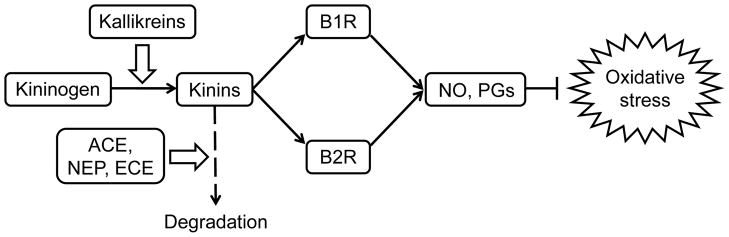
Purpose of review: The kallikrein-kinin system (KKS) constitutes a complex multienzyme cascade that produces several bioactive kinin peptides and their derivatives including bradykinin. In addition to the classical notion of the KKS as a potent vasodilator and a mediator of inflammatory responses, recent studies suggest a link between the KKS and oxidative stress. A number of established mouse models with altered levels of KKS components opened the way to evaluate precise functions of the KKS. Here we review recent findings on the role of the KKS in cardiovascular diseases and chronic kidney diseases, and discuss potential benefits of KKS activation in these diseases.
Recent findings: Deletion of both B1R and B2R in a diabetic mouse model exacerbates its renal phenotypes, suggesting that the KKS exerts protective effects on diabetic nephropathy by suppressing oxidative stress, presumably via nitric oxide and prostaglandins.
Summary: Accumulating evidence has highlighted the importance of the KKS as a protective system against oxidative stress and organ damage in the heart and kidney. The activation of the KKS by angiotensin I-converting enzyme inhibitors and vasopeptidase inhibitors is likely to be beneficial in senescence-associated cardiovascular diseases and chronic kidney diseases.
Figures

References
-
- Morand-Contant M, Anand-Srivastava MB, Couture R. Kinin B1 receptor upregulation by angiotensin II and endothelin-1 in rat vascular smooth muscle cells: Receptors and mechanisms. Am J Physiol Heart Circ Physiol. 2010;299:H1625–1632. - PubMed
-
- Saameli K, Eskes TK. Bradykinin and cardiovascular system: estimation of half-life. Am J Physiol. 1962;203:261–265. - PubMed
-
- Jaspard E, Wei L, Alhenc-Gelas F. Differences in the properties and enzymatic specificities of the two active sites of angiotensin I-converting enzyme (kininase II). Studies with bradykinin and other natural peptides. J Biol Chem. 1993;268:9496–9503. - PubMed
Publication types
MeSH terms
Substances
Grants and funding
LinkOut - more resources
Full Text Sources
Medical
