. 2011 Dec 1;187(11):5653-9.
doi: 10.4049/jimmunol.1102144. Epub 2011 Nov 2.

Antimicrobial peptides inhibit polyinosinic-polycytidylic acid-induced immune responses

Affiliations

Antimicrobial peptides inhibit polyinosinic-polycytidylic acid-induced immune responses

Maroof Hasan et al. J Immunol. .

Abstract

Viral proteins and nucleic acids stimulate TLRs to elicit production of cytokines, chemokines, and IFNs. Because of their immunostimulatory activity, several TLR agonists are being developed as vaccine adjuvants and cancer immunotherapeutics. However, TLR signaling is modified by disease state, which could enhance or impair therapeutic efficacy. For example, in the skin of psoriasis patients, the human cationic antimicrobial peptide LL37 is highly expressed and binds to host DNA. Association with LL37 enhances DNA uptake into intracellular compartments, where it stimulates TLR9-dependent overproduction of IFNs. Polyinosinic-polycytidylic acid (poly(I:C)), an analog of viral dsRNA, is recognized by TLR3 and is currently in preclinical trials as an inducer of type I IFN. If LL37 similarly enhanced IFN production, use of poly(I:C) might be contraindicated in certain conditions where LL37 is elevated. In this study, we show that TLR3 signaling was not enhanced, but was dramatically inhibited, by LL37 or mouse cathelicidin-related antimicrobial peptide in macrophages, microglial cells, and dendritic cells. Inhibition correlated with formation of a strong complex between antimicrobial peptides and poly(I:C), which partially inhibited poly(I:C) binding to TLR3. Therefore, after injury or during existing acute or chronic inflammation, when LL37 levels are elevated, the therapeutic activity of poly(I:C) will be compromised. Our findings highlight the importance of using caution when therapeutically delivering nucleic acids as immunomodulators.


Figures
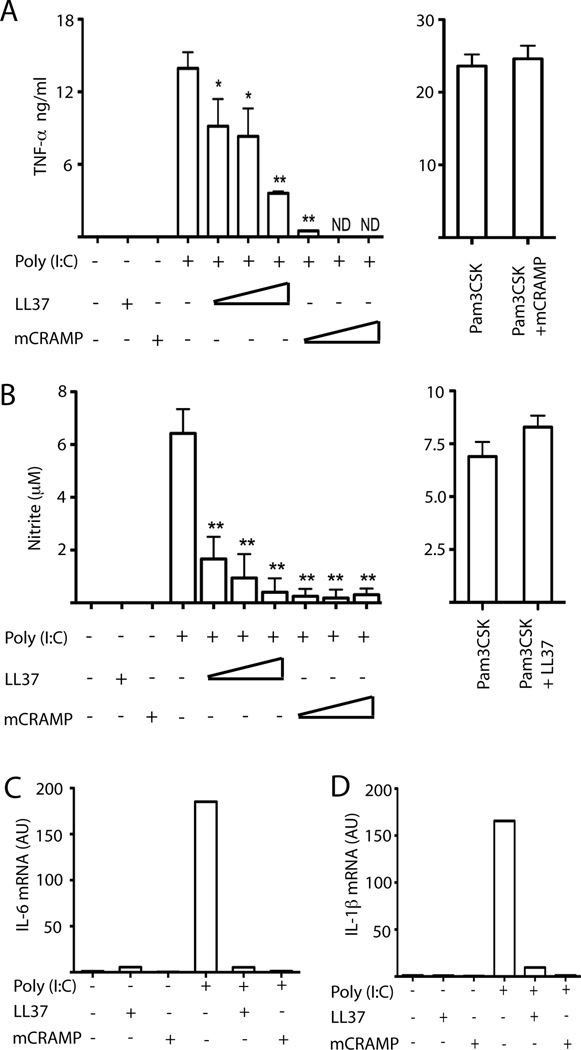
Figure 1
Figure 1
Antimicrobial peptide inhibits poly(I:C) induced TNF-α and nitrite production from RAW 264.7 macrophages. (A, B) RAW 264.7 cells were treated with 5 µM LL37 alone, 1.5 µM mCRAMP alone, 27 pM (5 µg/ml) poly(I:C) alone, 27 pM poly(I:C) plus 1, 2 or 5 µM LL37, 27 pM poly(I:C) plus 0.5, 1 or 1.5 µM mCRAMP, or 1 µg/ml Pam3CSK4. After 24 hours, supernatants were collected and (A) TNF-α and (B) nitrite production were determined. Error bars indicate standard deviation (n=3). **, P< 0.01; *, P< 0.05 compared to poly(I:C) alone; ND, not detected. (C, D) RAW 264.7 cells were treated with 5 µM LL37, 1µM mCRAMP or 27 pM poly(I:C), either alone or in combination. After 24 hours, total mRNA was extracted and assayed by quantitative RT-PCR for (C) IL-6 and (D) IL-1β. Results are representative of three independent experiments.
Figure 2
Figure 2
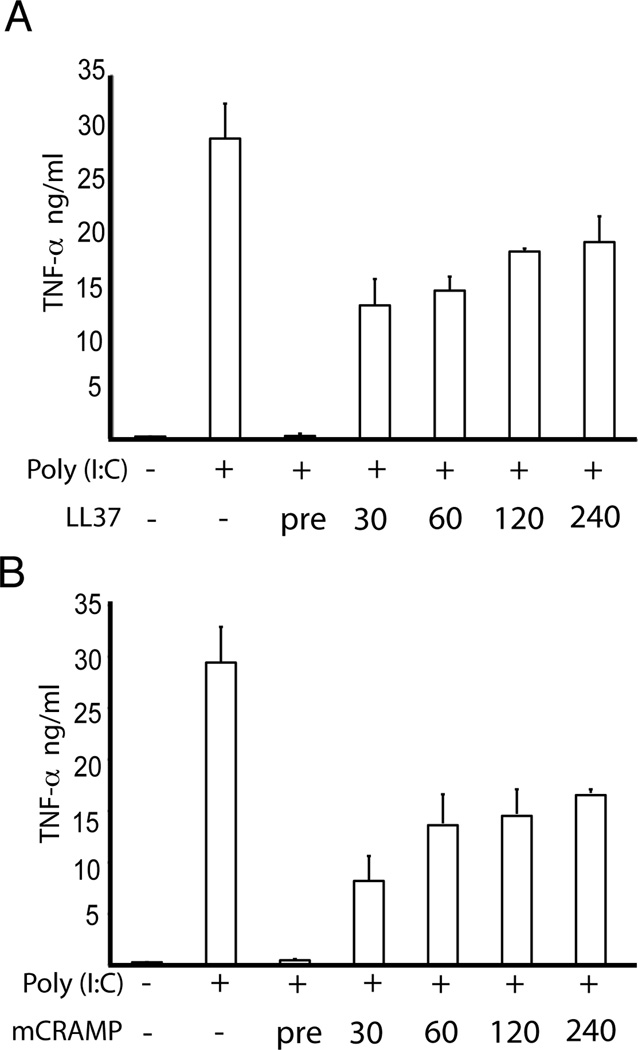
Delayed addition of LL37, or mCRAMP, has less inhibitory effect on poly(I:C) induced TNF-α production. RAW 264.7 cells were treated with 27 pM (5 µg/ml) poly(I:C) alone, 27 pM poly(I:C) plus 5 µM LL37 or 1.5 µM mCRAMP, where LL37 or mCRAMP were added as a preformed complex with poly(I:C) or 30 minutes, 1, 2 or 4 hours after the addition of poly(I:C). Supernatants were collected after 24 hours and TNF-α production was determined. Error bars indicate standard deviation (n=4). Results are representative of two experiments.
Figure 3
Figure 3
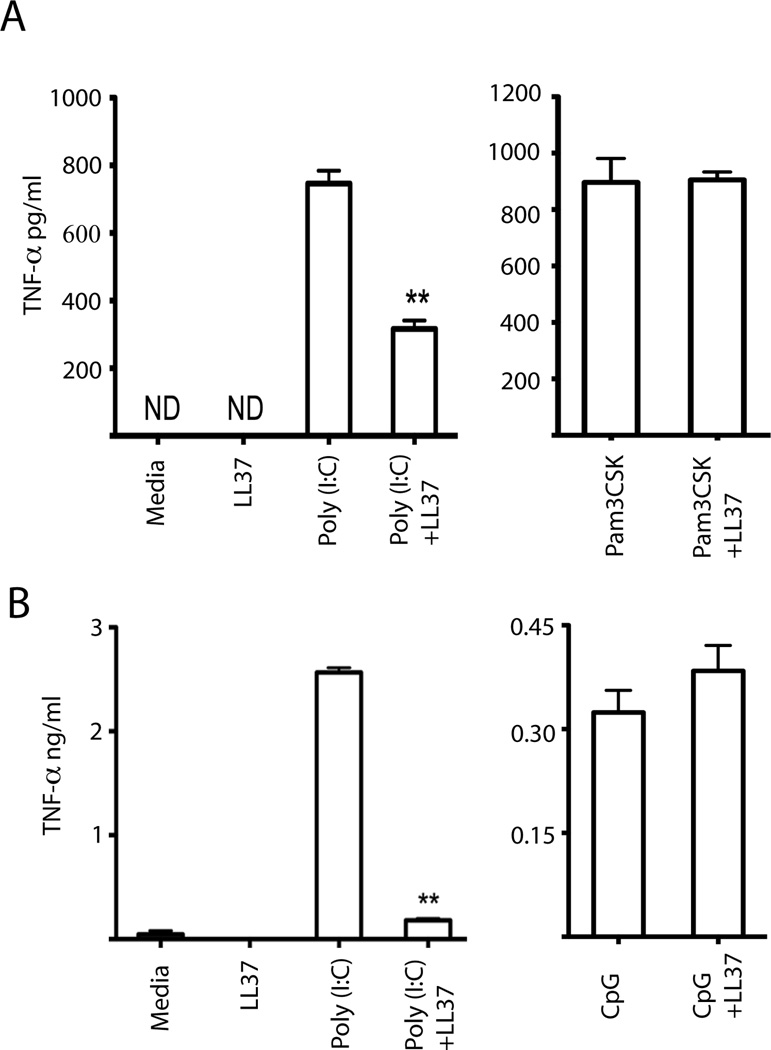
Antimicrobial peptides inhibit poly(I:C)-induced TNF-α production. (A) Bone marrow-derived macrophages were exposed to 5 µM LL37, 27 pM poly(I:C), or 1 µg/ml Pam3CSK4, either alone or in combination. Supernatants were collected after 24 hours and assayed for TNF-α production by ELISA. Error bars indicate standard deviation (n=3). (B) As in (A) except bone marrow-derived dendritic cells were stimulated with 5 µM LL37, 27 pM poly(I:C), or 1 µM CpG DNA, either alone or in combination. Error bars indicate standard deviation (n=3). **, P<0.01 compared to poly(I:C) alone; ND, not detected. Results are representative of three independent experiments.
Figure 4
Figure 4
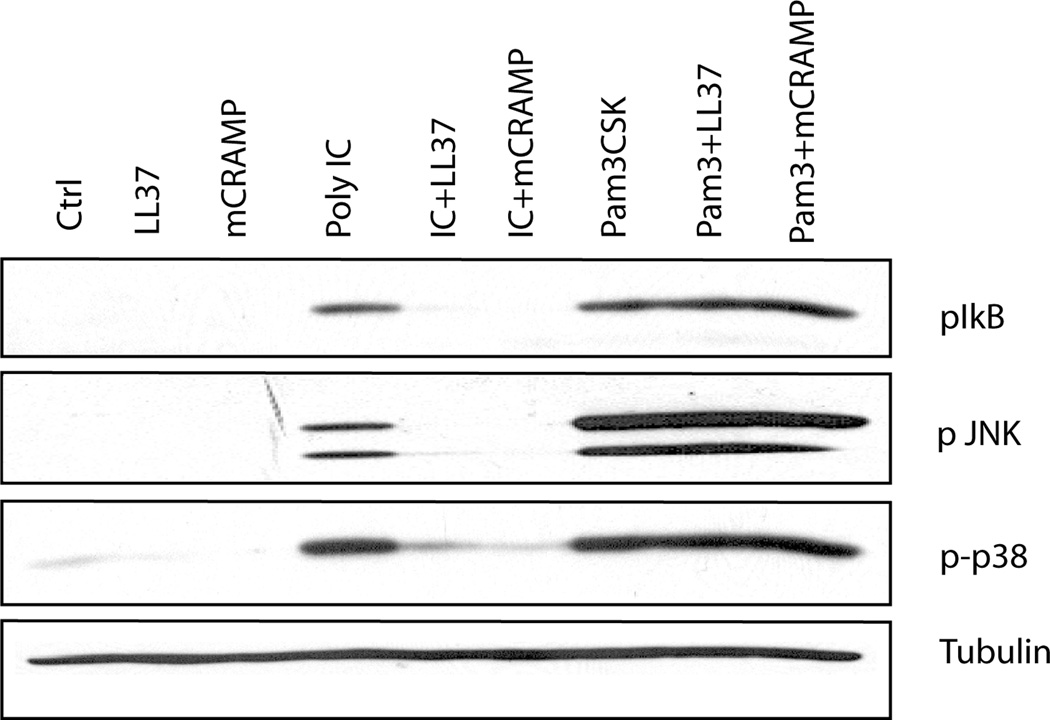
Antimicrobial peptide inhibits poly(I:C) induced phosphorylation of IκB-α, JNK and p38. RAW 264.7 cells were stimulated for 30 minutes with media (Ctrl), 5 µM LL37, 1 µM mCRAMP, 27 pM poly(I:C), or 1 µg/ml Pam3CSK4 either alone or in combination. Whole cell lysates were resolved by SDS-PAGE and immunoblotted for phosphorylated IκB-α (Ser32), JNK (Thr183/Tyr185), p38 (Thr180/Tyr182) or α-tubulin. Results are representative of three independent experiments.
Figure 5
Figure 5
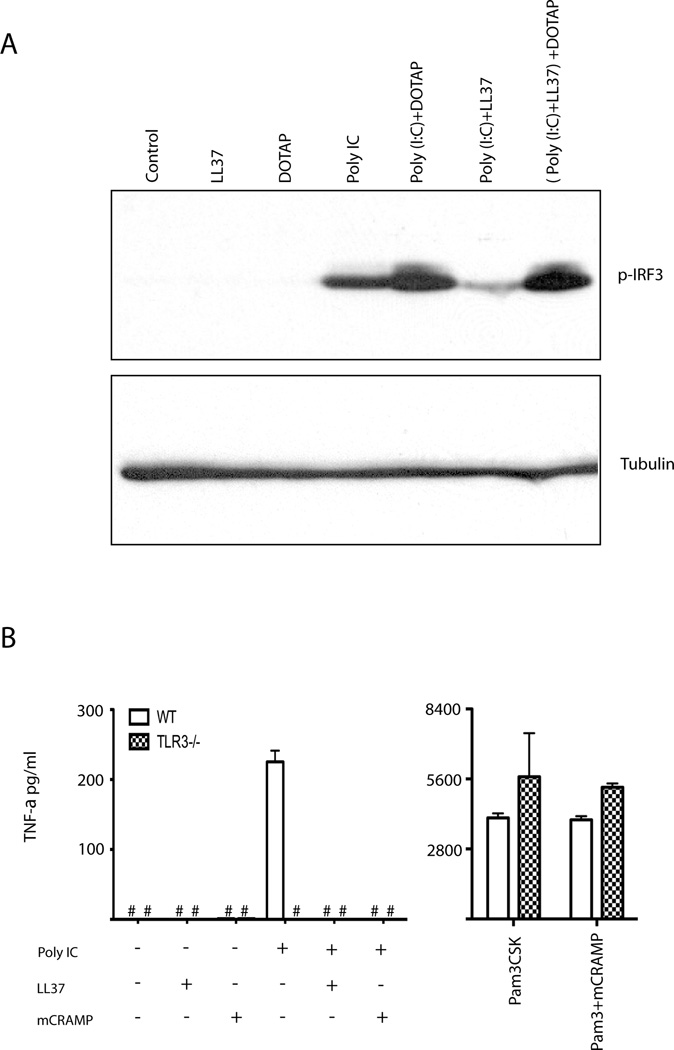
Antimicrobial peptide selectively inhibits TLR3-dependent, but not MDA5-dependent, signaling. (A) RAW 264.7 cells were stimulated for 90 minutes with media (Control), 5 µM LL37, 27 pM poly(I:C), either alone or in combination. In some samples, poly(I:C) or poly(I:C)-LL37 complexes were incubated with DOTAP prior to adding to cells, as described in the methods. Whole cell lysates were resolved by SDS-PAGE and immunoblotted for phosphorylated IRF3 (Ser396) and α-tubulin. Representative of two independent experiments. (B) Wild type and TLR3−/− microglial cells were stimulated with 5 µM LL37, 1 µM mCRAMP, 27 pM poly(I:C), or 1 µg/ml Pam3CSK, either alone or in combination. At 24 hours supernatants were assayed for TNF-α production by ELISA. Error bars indicate standard deviation (n=3). #, not detected. Representative of two independent experiments.
Figure 6
Figure 6
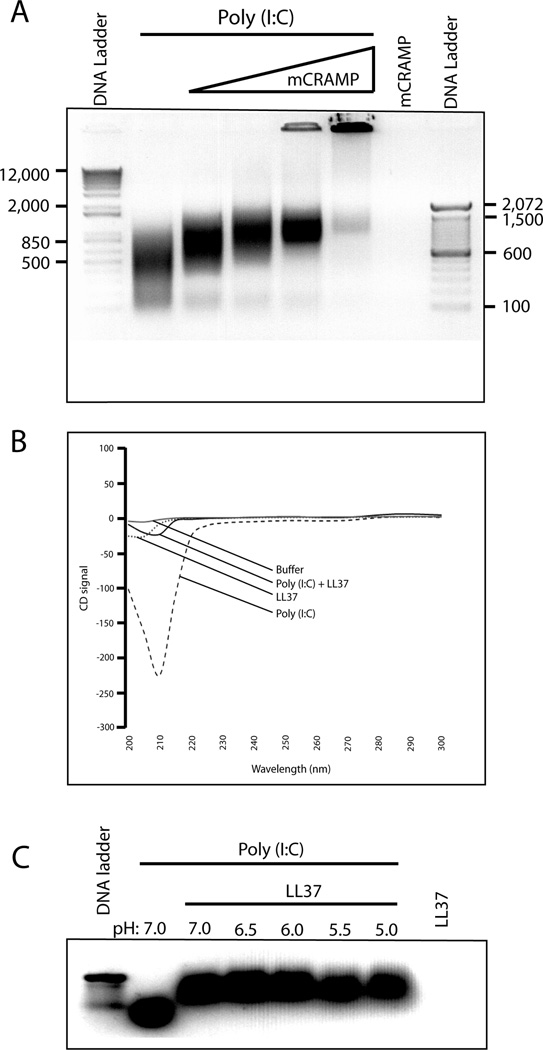
Antimicrobial peptides bind to synthetic poly(I:C) and form a pH resistant complex. (A) Poly(I:C) (10.8 picomoles) was incubated for one hour with 131, 263, 526, or 1000 picomoles of mCRAMP, representing approximately a 10 to 100 fold molar excess. Complexes were electrophoresed on a 0.8% agarose gel and imaged on a Syngene ChemiGenius Bio Imaging System. Representative of three independent experiments. (B) Poly(I:C) (50 pM), or 50 µM LL37 alone, or in combination, were incubated for 1 hour and circular dichroism spectra were measured at room temperature (25 °C) in a 1-cm path length quartz cell with a 2 ml volume. Spectra were recorded for each condition from 200 to 300 nm in 5-nm increments with 30-s temperature equilibrations, followed by 30-s data averaging. Representative of two independent experiments. (C) Poly(I:C) (10 pM) was incubated with 5 µM LL37 for 1 hour in neutral buffer. The buffer was then adjusted to pH 7.0, 6.5, 6.0, 5.5 or 5.0 for 3 hours. Complexes were electrophoresed on a 0.8% agarose gel and imaged on a Syngene ChemiGenius Bio Imaging System. Results are representative of three independent experiments.
Figure 7
Figure 7
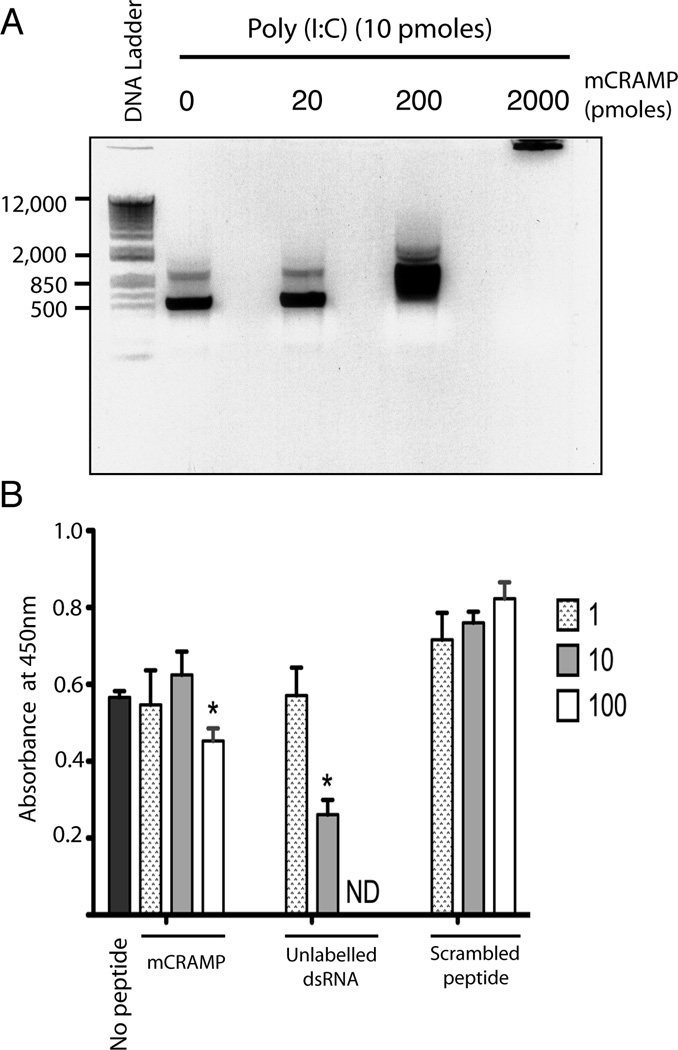
Antimicrobial peptide partially inhibits dsRNA binding to TLR3. (A) 540 bp dsRNA (10 picomoles) was incubated for 1 hr at 37°C with 20 to 2000 fold molar excess of mCRAMP and examined by gel shift analysis as in Figure 6. Representative of two experiments. (B) Biotinylated dsRNA (29 pmol/ml) was incubated alone (no peptide), or with equivalent, 10 or 100 molar excess of mCRAMP, scrambled peptide, or unlabeled 540 bp dsRNA as previously described (22). Binding to TLR3 (absorbance at 450 nM) was determined as described in methods. Error bars indicate standard deviation (n=3). * P<0.02. Representative of two independent experiments.

References

    1. Akira S, Takeda K, Kaisho T. Toll-like receptors: critical proteins linking innate and acquired immunity. Nat Immunol. 2001;2:675–680. - PubMed
    1. O'Neill LA, Fitzgerald KA, Bowie AG. The Toll-IL-1 receptor adaptor family grows to five members. Trends Immunol. 2003;24:286–290. - PubMed
    1. Takeda K, Kaisho T, Akira S. Toll-like receptors. Annu Rev Immunol. 2003;21:335–376. - PubMed
    1. Chockalingam A, Brooks JC, Cameron JL, Blum LK, Leifer CA. TLR9 traffics through the Golgi complex to localize to endolysosomes and respond to CpG DNA. Immunol Cell Biol. 2009;87:209–217. - PMC - PubMed
    1. Kim YM, Brinkmann MM, Paquet ME, Ploegh HL. UNC93B1 delivers nucleotide-sensing toll-like receptors to endolysosomes. Nature. 2008;452:234–238. - PubMed

MeSH terms