Effects of mindfulness training on body awareness to sexual stimuli: implications for female sexual dysfunction
- PMID: 22048839
- PMCID: PMC3711258
- DOI: 10.1097/PSY.0b013e318234e628
Effects of mindfulness training on body awareness to sexual stimuli: implications for female sexual dysfunction
Abstract
Objectives: Treatments of female sexual dysfunction have been largely unsuccessful because they do not address the psychological factors that underlie female sexuality. Negative self-evaluative processes interfere with the ability to attend and register physiological changes (interoceptive awareness). This study explores the effect of mindfulness meditation training on interoceptive awareness and the three categories of known barriers to healthy sexual functioning: attention, self-judgment, and clinical symptoms.
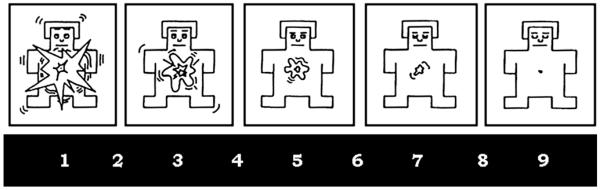
Methods: Forty-four college students (30 women) participated in either a 12-week course containing a "meditation laboratory" or an active control course with similar content or laboratory format. Interoceptive awareness was measured by reaction time in rating physiological response to sexual stimuli. Psychological barriers were assessed with self-reported measures of mindfulness and psychological well-being.
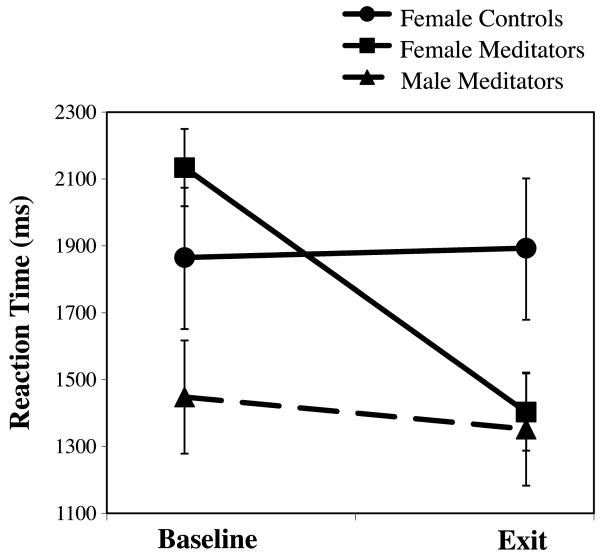
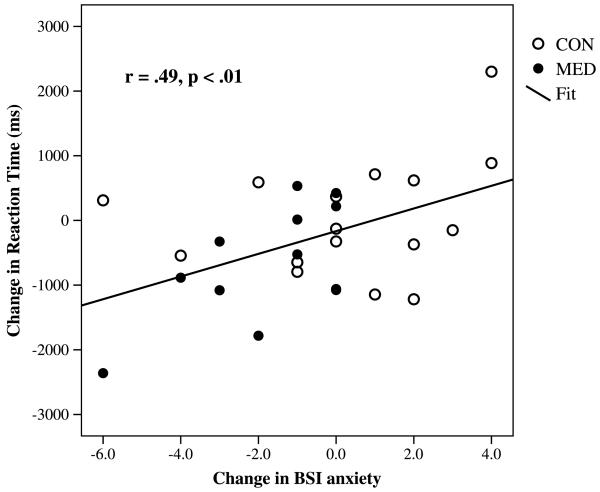
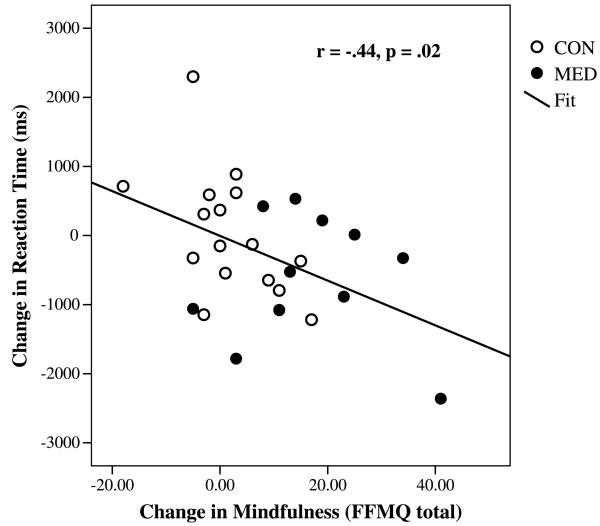
Results: Women who participated in the meditation training became significantly faster at registering their physiological responses (interoceptive awareness) to sexual stimuli compared with active controls (F(1,28) = 5.45, p = .03, η(p)(2) = 0.15). Female meditators also improved their scores on attention (t = 4.42, df = 11, p = .001), self-judgment, (t = 3.1, df = 11, p = .01), and symptoms of anxiety (t = -3.17, df = 11, p = .009) and depression (t = -2.13, df = 11, p < .05). Improvements in interoceptive awareness were correlated with improvements in the psychological barriers to healthy sexual functioning (r = -0.44 for attention, r = -0.42 for self-judgment, and r = 0.49 for anxiety; all p < .05).
Conclusions: Mindfulness-based improvements in interoceptive awareness highlight the potential of mindfulness training as a treatment of female sexual dysfunction.
Figures
References
-
- Laumann EO, Paik A, Rosen RC. Sexual dysfunction in the United States: prevalence and predictors. JAMA. 1999;281:537–44. - PubMed
-
- Hartley H. The ‘pinking’ of Viagra culture: drug industry efforts to create and repackage sex drugs for women. Sexualities. 2006;9:363–78.
-
- Triggle D. Treating desires not diseases: a pill for every ill and an ill for every pill? Drug Discov Today. 2007;12:3–4. - PubMed
-
- Bancroft J. The medicalization of female sexual dysfunction: the need for caution. Arch Sex Behav. 2002;31:451–5. - PubMed
-
- Bancroft J, Loftus J, Long JS. Distress about sex: a national survey of women in heterosexual relationships. Arch Sex Behav. 2003;32:193–208. - PubMed
Publication types
MeSH terms
Grants and funding
LinkOut - more resources
Full Text Sources
Medical
Miscellaneous