


Proximal component modularity in THA--at what cost? An implant retrieval study
- PMID: 22048865
- PMCID: PMC3369081
- DOI: 10.1007/s11999-011-2155-9
Proximal component modularity in THA--at what cost? An implant retrieval study
Abstract
Background: While modular femoral heads have been used in THA for decades, a recent innovation is a second neck-stem taper junction. Clinical advantages include intraoperative adjustment of leg length, femoral anteversion, and easier revision, all providing flexibility to the surgeon; however, there have been reports of catastrophic fracture, cold welding, and corrosion and fretting of the modular junction.
Questions/purposes: We asked whether (1) the neck-stem junction showed the same degradation mechanisms, if any, as the head-neck junction, (2) the junction contributed to THA revision, (3) the alloy affected the degree of degradation, and (4) the trunion machine finish affected the degradation mechanisms.
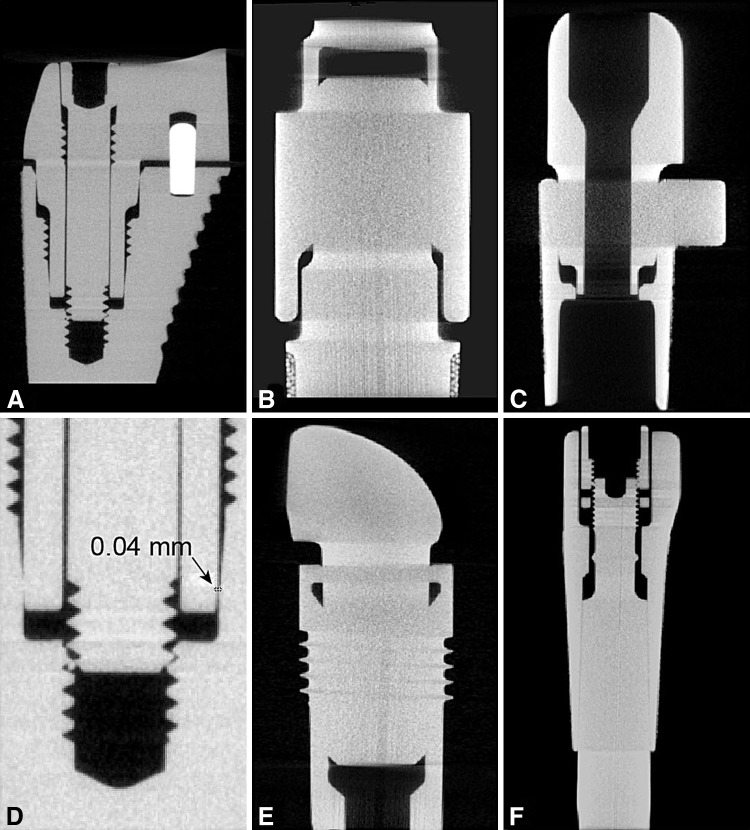
Methods: We compared 57 retrievals from seven total hip modular designs, three cobalt-chromium-molybdenum and four titanium based: Bionik(®) (four), GMRS(®) (four), Margron(®) (22), Apex(®) (five), M-series(®) (five), ZMR(®) (two), and S-ROM(®) (15). Macroscopic inspection, microscopy, and micro-CT were conducted to determine the effects of materials and design.
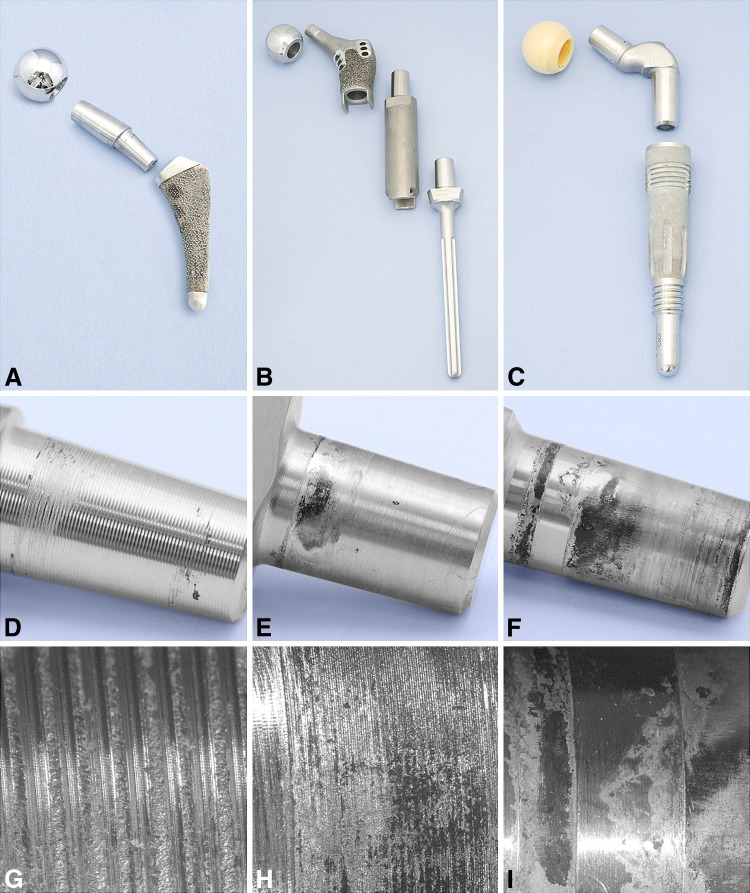
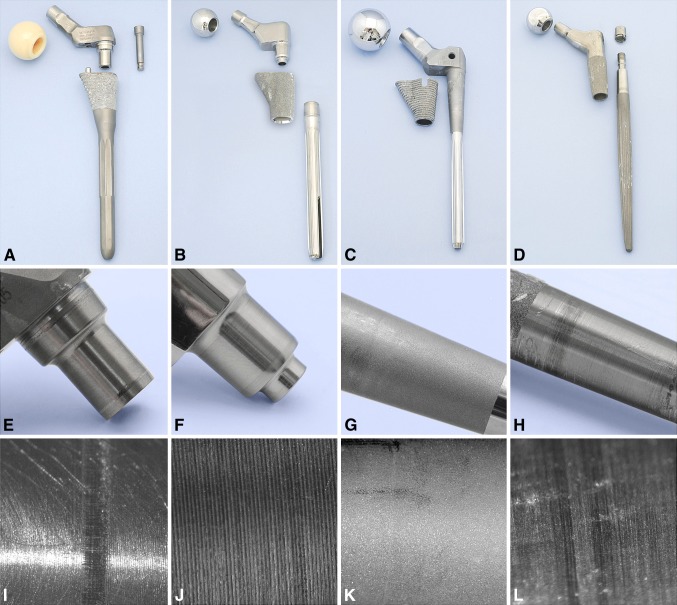
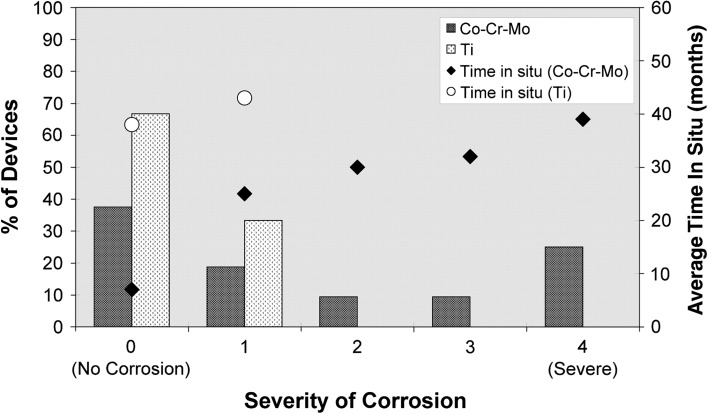
Results: The cobalt-chromium-molybdenum components showed crevice corrosion and fretting of the neck-stem taper, whereas the titanium components had less corrosion; however, there were several cases of cold welding where disassembly could not be achieved in theater.
Conclusions: Even with modern taper designs and corrosion-resistant materials, corrosion, fretting, and particulate debris were observed to a greater extent in the second neck-stem junction. Titanium-based modular arthroplasty may lessen the degree of degradation, but cold welding of the components may occur.
Clinical relevance: Degradation of the second junction contributed to 8 cases of metallosis and two cases of aseptic lymphocyte-laminated vascular-associated lesions contributing to revision.
Figures
References
-
- Australian Orthopaedic Association. AOA National Joint Replacement Registry. Annual Report 2010. Available at: http://www.dmac.adelaide.edu.au/aoanjrr/documents/aoanjrrreport_2010.pdf. Accessed May 10, 2011.
-
- Berry DJ, Knoch M, Schleck CD, Harmsen WS. The cumulative long-term risk of dislocation after primary total hip arthroplasty. J Bone Joint Surg Am. 2004;86:9–14. - PubMed
-
- Cameron HU. The proximal modular neck in THA: a bridge too far: opposes. Orthopedics. 2010;33:641. - PubMed
-
- Collier JP, Mayor MB, Williams IR, Surprenant VA, Surprenant HP, Currier BH. The tradeoffs associated with modular hip prostheses. Clin Orthop Relat Res. 1995;311:91–101. - PubMed
MeSH terms
Substances
LinkOut - more resources
Full Text Sources
Medical
Miscellaneous
