Mechanically adaptive intracortical implants improve the proximity of neuronal cell bodies
- PMID: 22049097
- PMCID: PMC3386315
- DOI: 10.1088/1741-2560/8/6/066011
Mechanically adaptive intracortical implants improve the proximity of neuronal cell bodies
Abstract
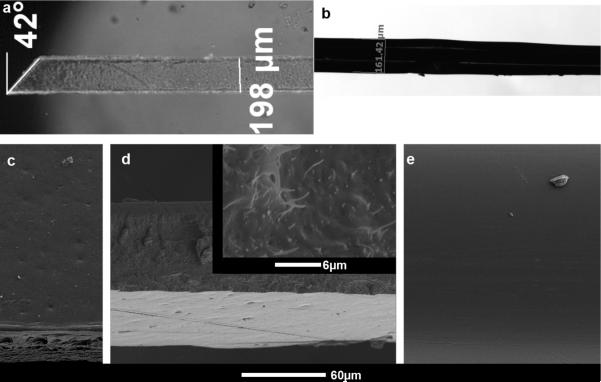
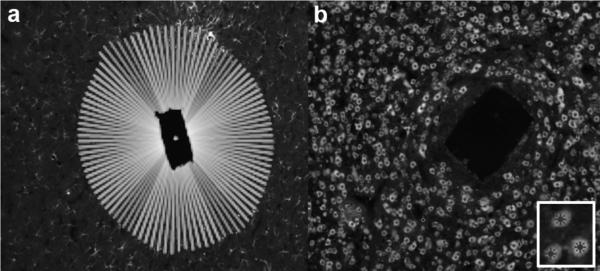
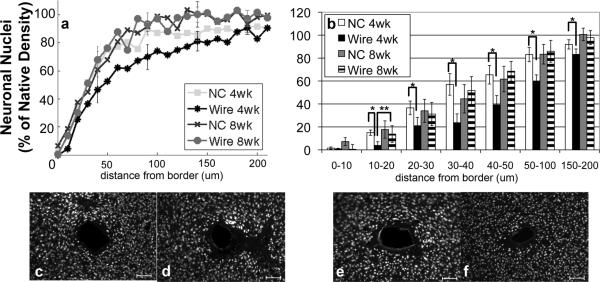
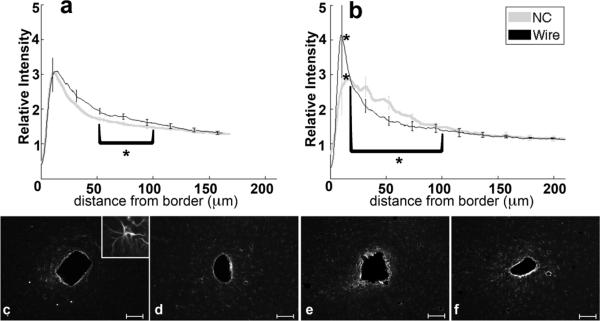
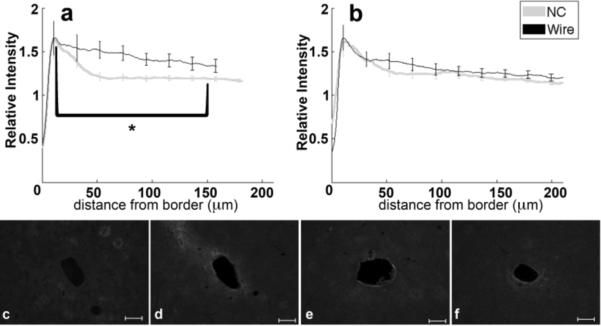
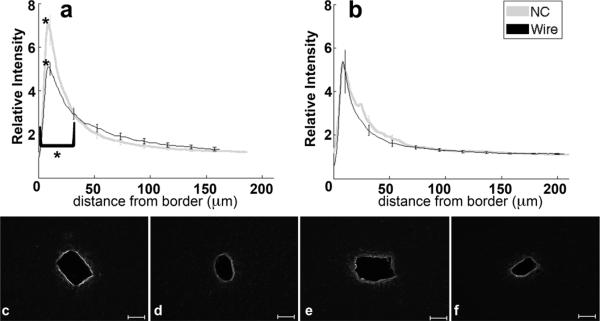
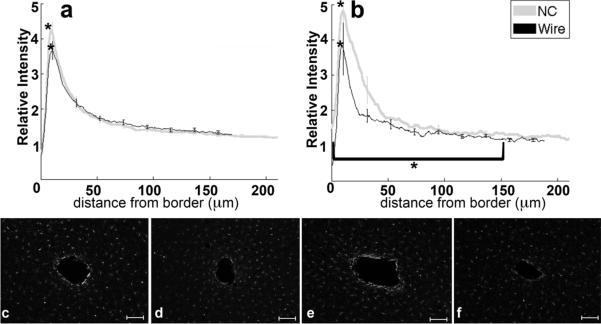
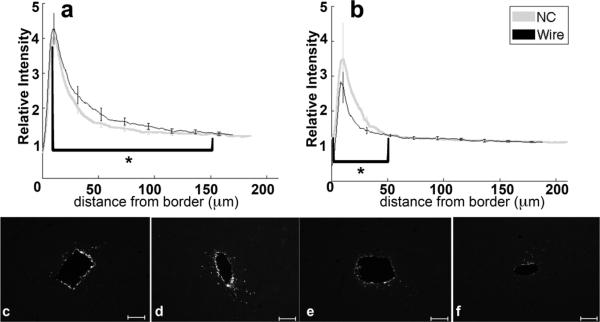
The hypothesis is that the mechanical mismatch between brain tissue and microelectrodes influences the inflammatory response. Our unique, mechanically adaptive polymer nanocomposite enabled this study within the cerebral cortex of rats. The initial tensile storage modulus of 5 GPa decreases to 12 MPa within 15 min under physiological conditions. The response to the nanocomposite was compared to surface-matched, stiffer implants of traditional wires (411 GPa) coated with the identical polymer substrate and implanted on the contralateral side. Both implants were tethered. Fluorescent immunohistochemistry labeling examined neurons, intermediate filaments, macrophages, microglia and proteoglycans. We demonstrate, for the first time, a system that decouples the mechanical and surface chemistry components of the neural response. The neuronal nuclei density within 100 µm of the device at four weeks post-implantation was greater for the compliant nanocomposite compared to the stiff wire. At eight weeks post-implantation, the neuronal nuclei density around the nanocomposite was maintained, but the density around the wire recovered to match that of the nanocomposite. The glial scar response to the compliant nanocomposite was less vigorous than it was to the stiffer wire. The results suggest that mechanically associated factors such as proteoglycans and intermediate filaments are important modulators of the response of the compliant nanocomposite.
Figures
References
-
- Alberts B. In: Molecular Biology of the Cell. Alberts B, et al., editors. Garland Publishing Inc.; New York, New York: 1994. pp. 948–1009.
-
- Alonso G. NG2 proteoglycan-expressing cells of the adult rat brain: possible involvement in the formation of glial scar astrocytes following stab wound. Glia. 2005;49:318–38. - PubMed
-
- Biran R, Martin DC, Tresco PA. Neuronal cell loss accompanies the brain tissue response to chronically implanted silicon microelectrode arrays. Exp Neurol. 2005;195:115–26. - PubMed
-
- Biran R, Martin DC, Tresco PA. The brain tissue response to implanted silicon microelectrode arrays is increased when the device is tethered to the skull. J Biomed Mater Res A. 2007;82:169–78. - PubMed
Publication types
MeSH terms
Grants and funding
LinkOut - more resources
Full Text Sources
Other Literature Sources