


Dietary energy density is associated with body weight status and vegetable intake in U.S. children
- PMID: 22049295
- PMCID: PMC3223877
- DOI: 10.3945/jn.111.146092
Dietary energy density is associated with body weight status and vegetable intake in U.S. children
Abstract
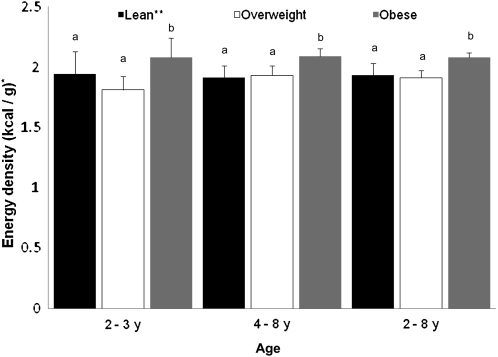
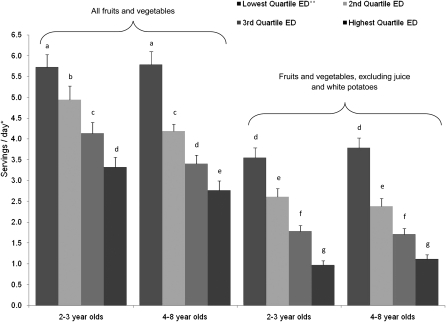
The objective was to determine the relationship between dietary energy density (ED; kcal/g) and measured weight status in children. The present study used data from a nationally representative sample of 2442 children between 2 and 8 y old who participated in the 2001-2004 NHANES. Survey measures included 24-h dietary recall data, measurement of MyPyramid servings of various food groups, and anthropometry. The relationship among dietary ED, body weight status as calculated using the 2000 CDC growth charts, and food intake was evaluated using quartiles of ED. Additionally, other dietary characteristics associated with ED among children are described. Specific survey procedures were used in the analysis to account for sample weights, unequal selection probability, and the clustered design of the NHANES sample. In this sample, dietary ED was positively associated with body weight status in U.S. children aged 2-8 y. Obese children had a higher dietary ED than lean children (2.08 ± 0.03 vs. 1.93 ± 0.05; P = 0.02). Diets high in ED were also found to be associated with greater intakes of energy and added sugars, more energy from fat; and significantly lower intake of fruits and vegetables. Interventions that lower dietary ED by means of increasing fruit and vegetable intake and decreasing fat consumption may be an effective strategy for reducing childhood obesity.
Conflict of interest statement
Author disclosures: J. A. Vernarelli, D. C. Mitchell, T. J. Hartman, and B. J. Rolls, no conflicts of interest.
Figures
References
-
- Ogden CL, Carroll MD, Curtin LR, Lamb MM, Flegal KM. Prevalence of high body mass index in US children and adolescents, 2007–2008. JAMA. 2010;303:242–9 - PubMed
-
- Ledikwe JH, Blanck HM, Kettel Khan L, Serdula MK, Seymour JD, Tohill BC, Rolls BJ. Dietary energy density is associated with energy intake and weight status in US adults. Am J Clin Nutr. 2006;83:1362–8 - PubMed
-
- Rolls BJ, Leahy KE. Reductions in dietary energy density to moderate children's energy intake. : Dube L, Bechara A, Dagher A, Drewnowski A, Lebel J, James P, Yada RY, Obesity prevention: the role of brain and society on individual behavior. 1st ed London: Elsevier; 2010. p. 543–54
-
- Mendoza JA, Drewnowski A, Cheadle A, Christakis DA. Dietary energy density is associated with selected predictors of obesity in U.S. children. J Nutr. 2006;136:1318–22 - PubMed
Publication types
MeSH terms
Grants and funding
LinkOut - more resources
Full Text Sources
Medical
