


Protein trafficking, ergosterol biosynthesis and membrane physics impact recombinant protein secretion in Pichia pastoris
- PMID: 22050768
- PMCID: PMC3219557
- DOI: 10.1186/1475-2859-10-93
Protein trafficking, ergosterol biosynthesis and membrane physics impact recombinant protein secretion in Pichia pastoris
Abstract
Background: The increasing availability of 'omics' databases provide important platforms for yeast engineering strategies since they offer a lot of information on the physiology of the cells under diverse growth conditions, including environmental stresses. Notably, only a few of these approaches have considered a performance under recombinant protein production conditions. Recently, we have identified a beneficial effect of low oxygen availability on the expression of a human Fab fragment in Pichia pastoris. Transcriptional analysis and data mining allowed for the selection of potential targets for strain improvement. A first selection of these candidates has been evaluated as recombinant protein secretion enhancers.
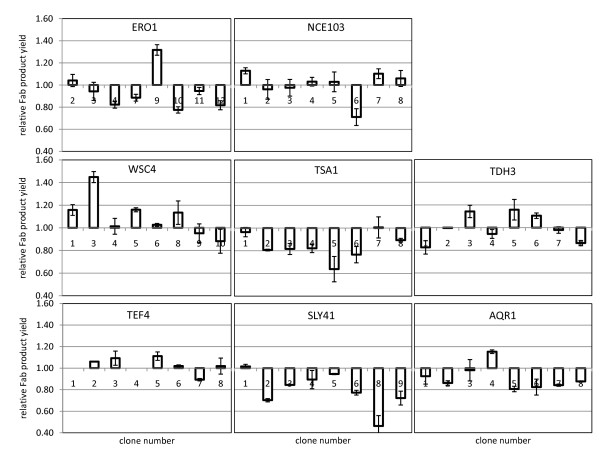
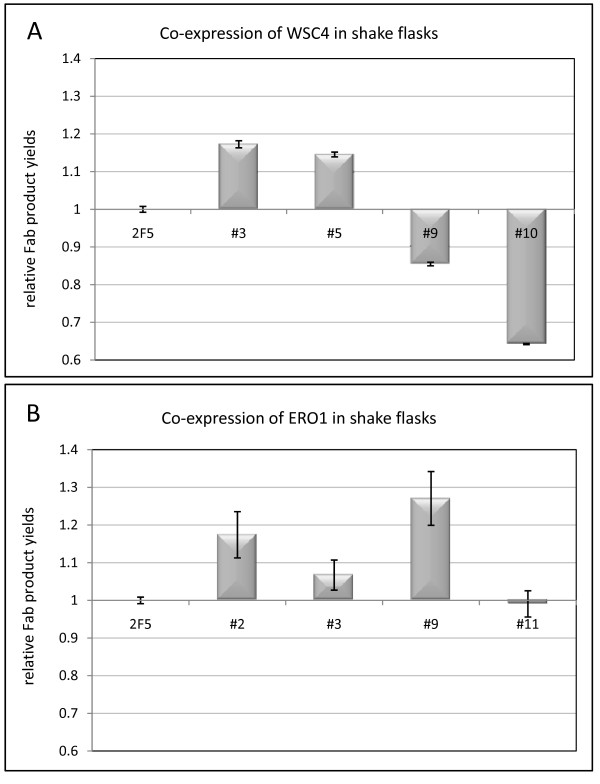
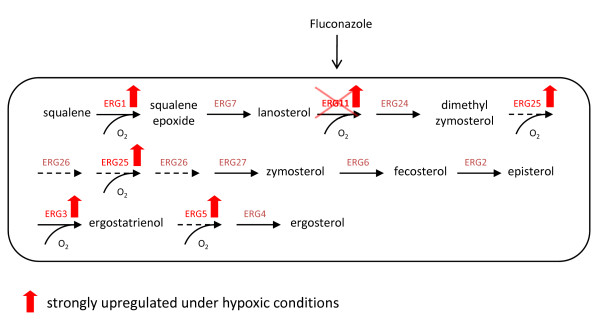
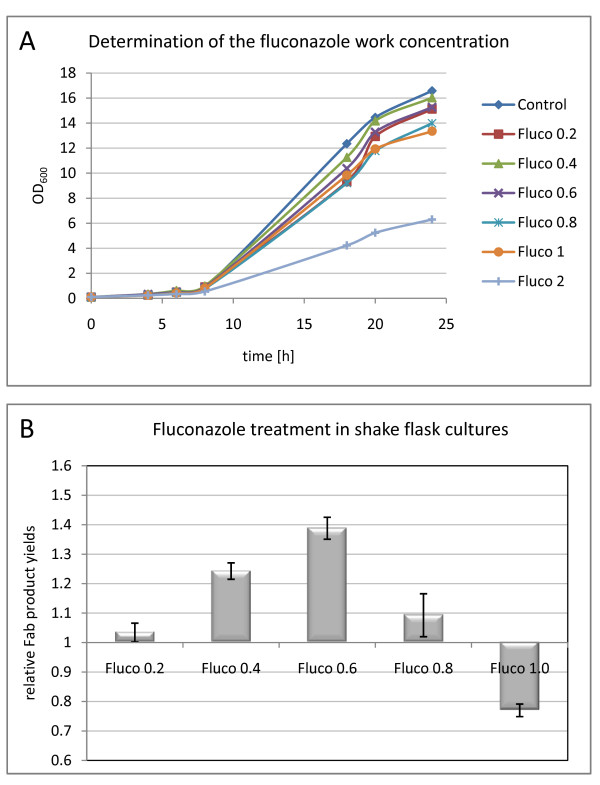
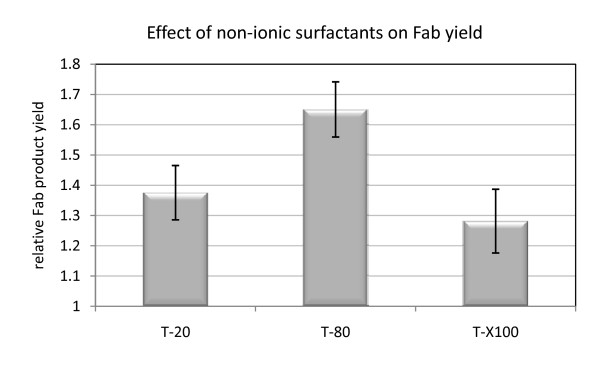
Results: Based on previous transcriptomics analyses, we selected 8 genes for co-expression in the P. pastoris strain already secreting a recombinant Fab fragment. Notably, WSC4 (which is involved in trafficking through the ER) has been identified as a novel potential target gene for strain improvement, with up to a 1.2-fold increase of product yield in shake flask cultures. A further transcriptomics-based strategy to modify the yeast secretion system was focused on the ergosterol pathway, an aerobic process strongly affected by oxygen depletion. By specifically partially inhibiting ergosterol synthesis with the antifungal agent fluconazole (inhibiting Erg11p), we tried to mimic the hypoxic conditions, in which the cellular ergosterol content was significantly decreased. This strategy led to an improved Fab yield (2-fold) without impairing cellular growth. Since ergosterol shortage provokes alterations in the plasma membrane composition, an important role of this cellular structure in protein secretion is suggested. This hypothesis was additionally supported by the fact that the addition of non-ionic surfactants also enhanced Fab secretion.
Conclusions: The current study presents a systems biotechnology-based strategy for the engineering of the industrially important yeast P. pastoris combining the use of host specific DNA microarray technologies and physiological studies under well defined environmental conditions. Such studies allowed for the identification of novel targets related with protein trafficking and ergosterol biosynthesis for improved recombinant protein production. Nevertheless, further studies will be required to elucidate the precise mechanisms whereby membrane biogenesis and composition impact on protein secretion in P. pastoris.
Figures
References
-
- Beltran G, Novo M, Leberre V, Sokol S, Labourdette D, Guillamon JM, Mas A, François J, Rozes N. Integration of transcriptomic and metabolic analyses for understanding the global responses of low-temperature winemaking fermentations. FEMS Yeast Res. 2006;6:1167–1183. doi: 10.1111/j.1567-1364.2006.00106.x. - DOI - PubMed
Publication types
MeSH terms
Substances
LinkOut - more resources
Full Text Sources
Other Literature Sources
Molecular Biology Databases
