Anger, hostility, and aggression as predictors of persistent smoking during pregnancy
- PMID: 22051206
- PMCID: PMC3211963
- DOI: 10.15288/jsad.2011.72.926
Anger, hostility, and aggression as predictors of persistent smoking during pregnancy
Abstract
Objective: We examined the role of anger, hostility, and aggression, in addition to depression and stress, in predicting persistent smoking during pregnancy in a low-income sample.
Method: The sample consisted of 270 pregnant women (189 smokers, 81 nonsmokers) recruited into a prospective study of prenatal cigarette exposure in the first trimester. Persistent pregnancy smoking was defined as self-reporting daily smoking in at least two trimesters, a positive salivary cotinine level in at least two trimesters, or infant meconium positive for nicotine and/ or its metabolites.
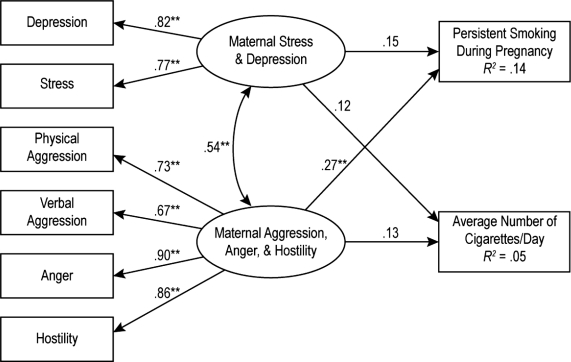
Results: Persistent smokers reported higher prenatal stress and negative affect symptoms (depression, anger, hostility, aggression) than nonpersistent smokers or nonsmokers. However, in the context of model testing, maternal anger, hostility, and aggression each accounted for unique variance in persistent smoking, whereas symptoms of depression and stress did not.
Conclusions: To date, interventions for pregnant low-income smokers have been largely ineffective. The current results suggest that anger management interventions may be particularly effective for low-income persistent pregnant smokers and may be more likely to prevent relapse than depression-focused interventions.
Figures
References
-
- Andres RL, Day MC. Perinatal complications associated with maternal tobacco use. Seminars in Neonatology. 2000;5:231–241. - PubMed
-
- Beck AT, Steer RA. Internal consistencies of the original and revised Beck Depression Inventory. Journal of Clinical Psychology. 1984;40:1365–1367. - PubMed
-
- Brown RA, Burgess ES, Sales SD, Whiteley JA, Evans DM, Miller IW. Reliability and validity of a smoking timeline follow-back interview. Psychology of Addictive Behaviors. 1998;12:101–112.
-
- Bullock LF, Mears JL, Woodcock C, Record R. Retrospective study of the association of stress and smoking during pregnancy in rural women. Addictive Behaviors. 2001;26:405–413. - PubMed
-
- Buschgens CJM, Swinkels SHN, van Aken MAG, Ormel J, Verhulst FC, Buitelaar JK. Externalizing behaviors in preadolescents: familial risk to externalizing behaviors, prenatal and perinatal risks, and their interactions. European Child & Adolescent Psychiatry. 2009;18:65–74. - PubMed
Publication types
MeSH terms
Substances
Grants and funding
LinkOut - more resources
Full Text Sources
Medical