Meta-Analysis
. 2012 Mar;102(3):592-615.
doi: 10.1037/a0025948. Epub 2011 Nov 7.

Subjective well-being and adaptation to life events: a meta-analysis

Affiliations
Meta-Analysis

Subjective well-being and adaptation to life events: a meta-analysis

Maike Luhmann et al. J Pers Soc Psychol. 2012 Mar.

Abstract

Previous research has shown that major life events can have short- and long-term effects on subjective well-being (SWB). The present meta-analysis examines (a) whether life events have different effects on affective and cognitive well-being and (b) how the rate of adaptation varies across different life events. Longitudinal data from 188 publications (313 samples, N = 65,911) were integrated to describe the reaction and adaptation to 4 family events (marriage, divorce, bereavement, childbirth) and 4 work events (unemployment, reemployment, retirement, relocation/migration). The findings show that life events have very different effects on affective and cognitive well-being and that for most events the effects of life events on cognitive well-being are stronger and more consistent across samples. Different life events differ in their effects on SWB, but these effects are not a function of the alleged desirability of events. The results are discussed with respect to their theoretical implications, and recommendations for future studies on adaptation are given.


Figures
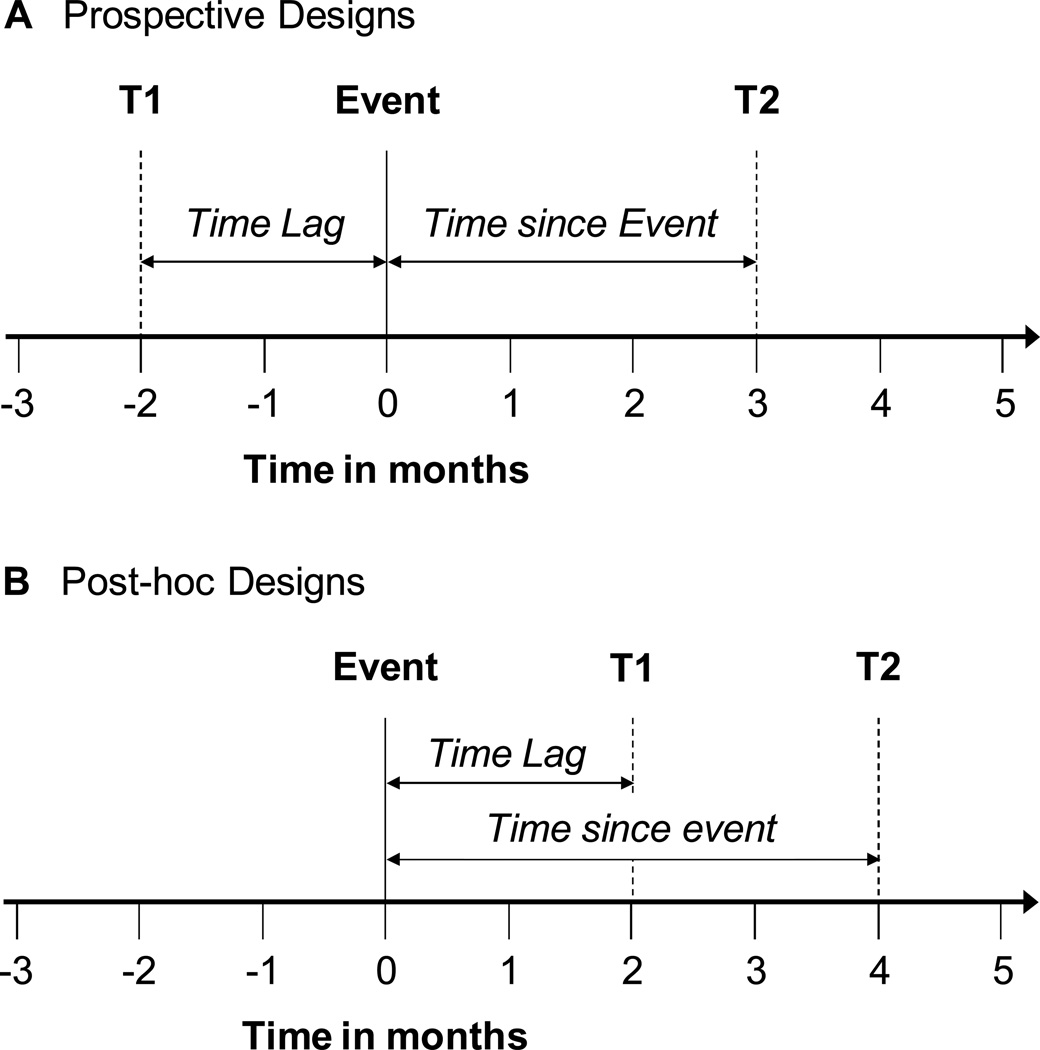
Figure 1
Figure 1
Meaning of Time Lag and Time since Event in prospective and post-hoc designs.
Figure 2
Figure 2
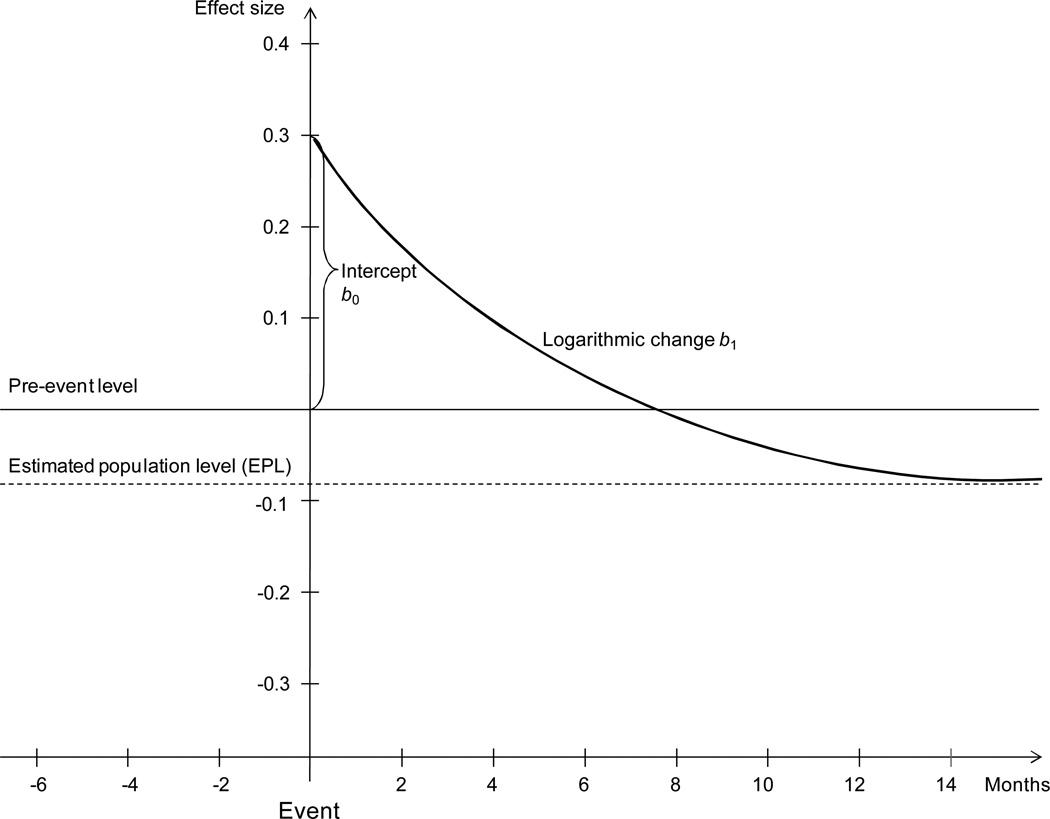
Example for a prospective adaptation pattern. The solid horizontal line represents the average pre-event level of SWB. The dashed horizontal line represents the estimated population level. The immediate hedonic reaction to the event is reflected in the intercept b0 of the change curve. The rate of change over time is reflected in the logarithmic change parameter b1. The time lag between the first measurement occasion and the event is not depicted but fixed to a value of zero.
Figure 3
Figure 3
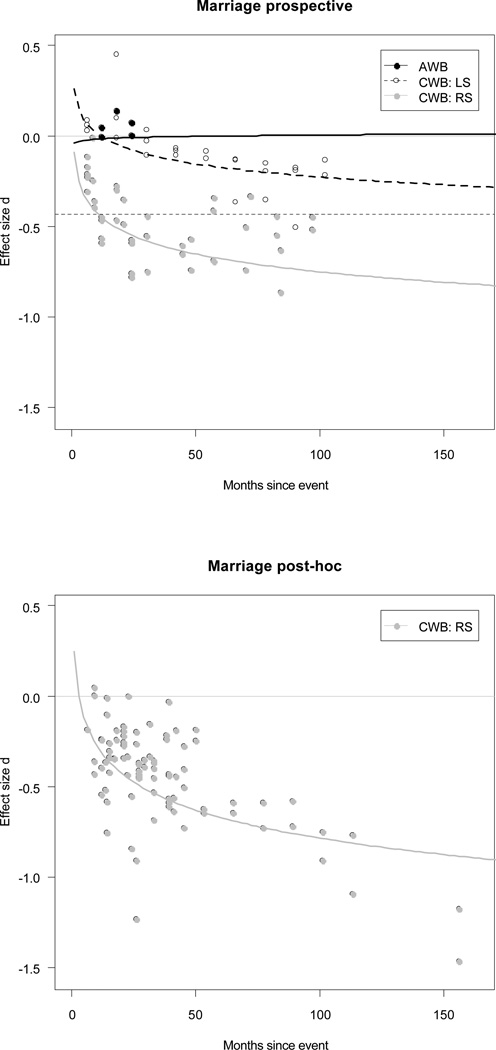
Observed effect sizes and predicted adaptation curves for marriage. The dashed horizontal line in the top panel represents the EPL of CWB (based on 3 effect sizes). The time lag between the baseline and the event is held constant at zero months. AWB = affective well-being, CWB = cognitive well-being, LS = life satisfaction, RS = relationship satisfaction.
Figure 4
Figure 4
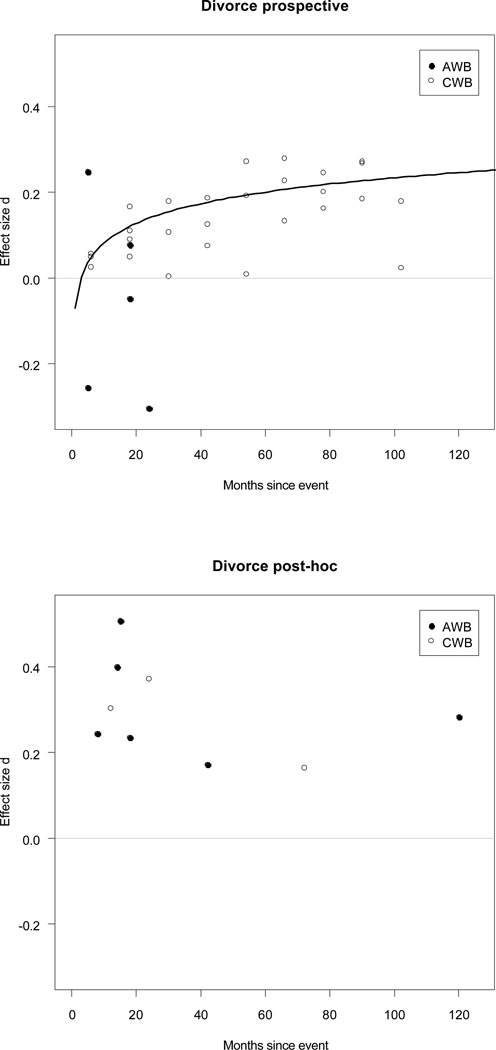
Observed effect sizes and predicted adaptation curve for divorce. The time lag between the baseline and the event is held constant at zero months. AWB = affective well-being, CWB = cognitive well-being.
Figure 5
Figure 5
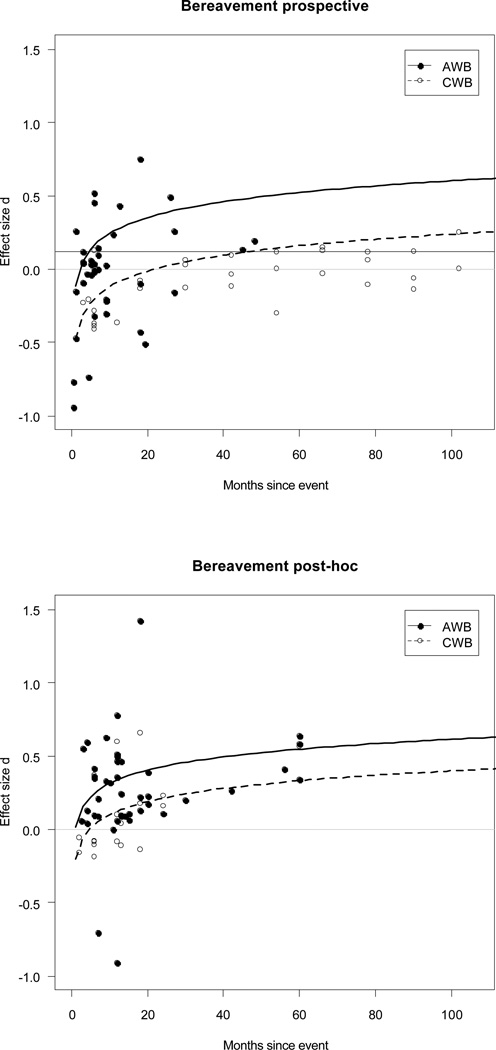
Observed effect sizes and predicted adaptation curves for bereavement. The black horizontal line in the top panel represents the EPL of AWB (based on 7 effect sizes). The time lag between the baseline and the event is held constant at zero months. AWB = affective well-being, CWB = cognitive well-being.
Figure 6
Figure 6
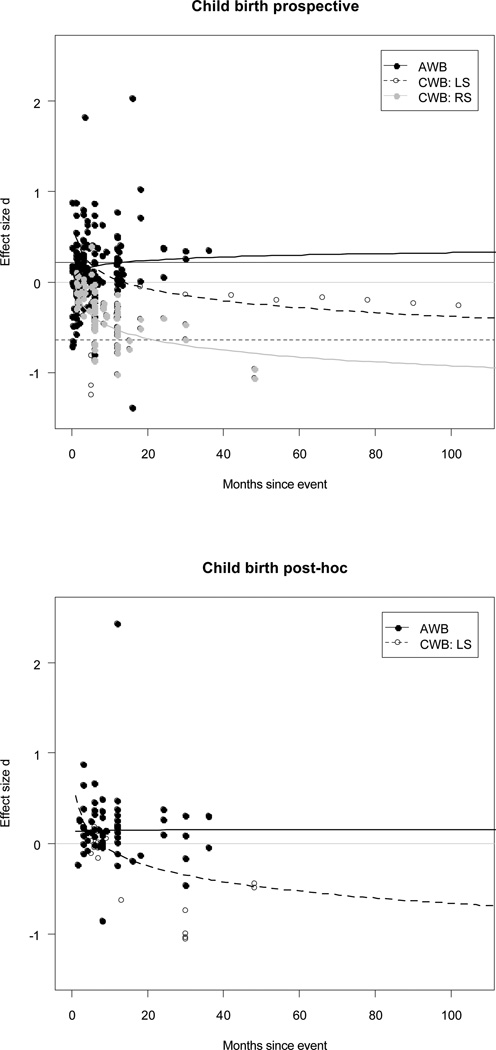
Observed effect sizes and predicted adaptation curves for child birth. The dashed horizontal line in the top panel represents the EPL of AWB (based on 32 effect sizes). The black horizontal line in the top panel represents the EPL of CWB (based on 12 effect sizes). The time lag between the baseline and the event is held constant at zero months. AWB = affective well-being, CWB = cognitive well-being, LS = life satisfaction, RS = relationship satisfaction.
Figure 7
Figure 7
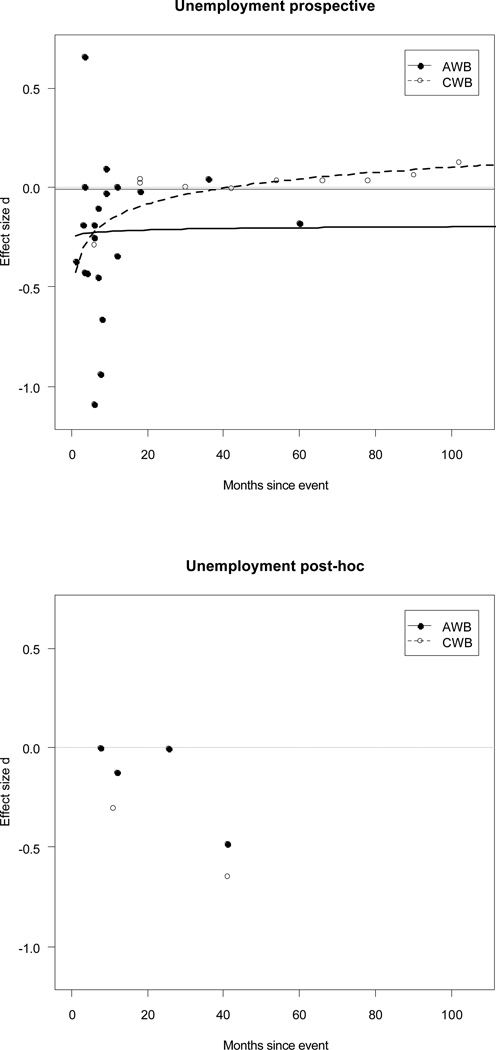
Observed effect sizes and predicted adaptation curves for unemployment. The black horizontal line in the top panel represents the EPL of AWB (based on 10 effect sizes). The time lag between the baseline and the event is held constant at zero months. AWB = affective well-being, CWB = cognitive well-being.
Figure 8
Figure 8
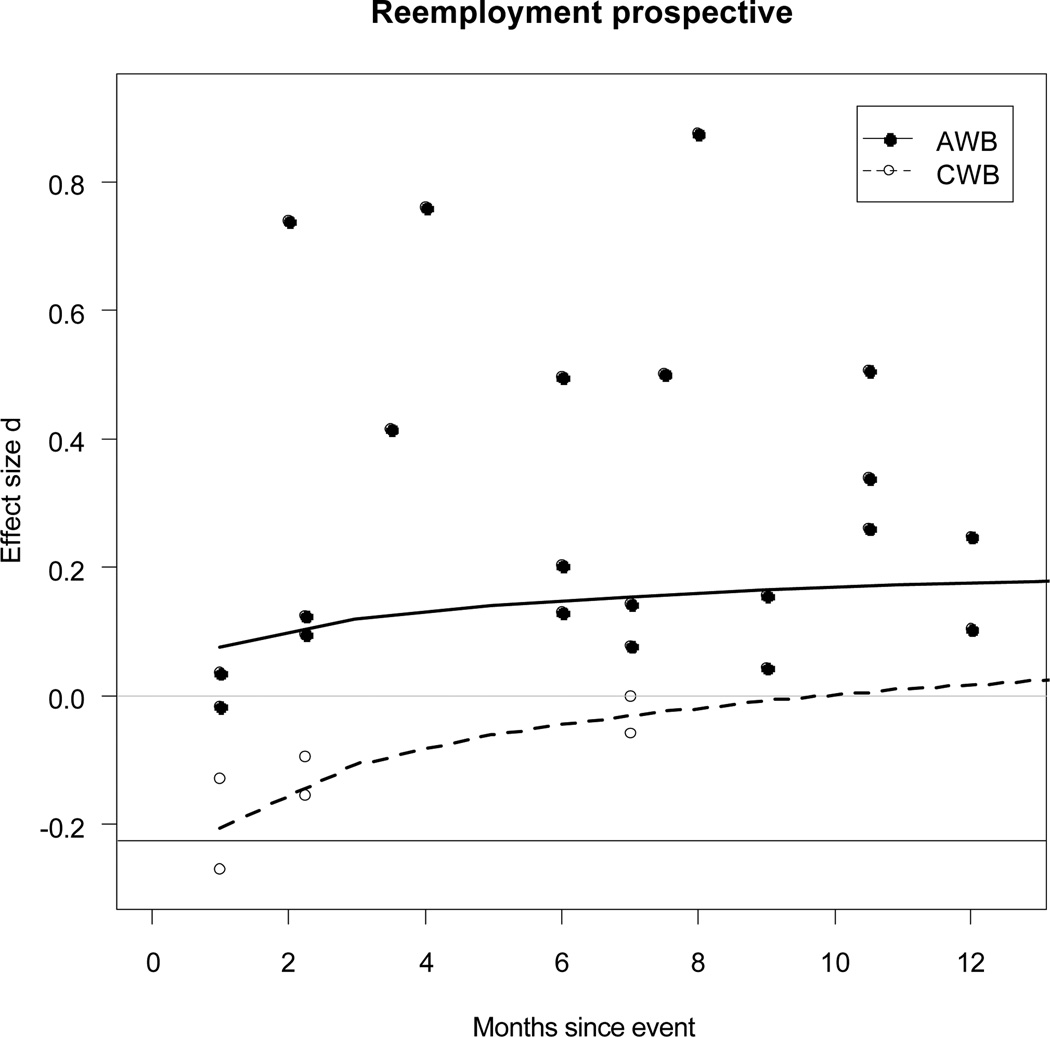
Observed effect sizes and predicted adaptation curves for reemployment. The black horizontal line in the top panel represents the EPL of AWB (based on 11 effect sizes). The time lag between the baseline and the event is held constant at zero months. AWB = affective well-being, CWB = cognitive well-being.
Figure 9
Figure 9
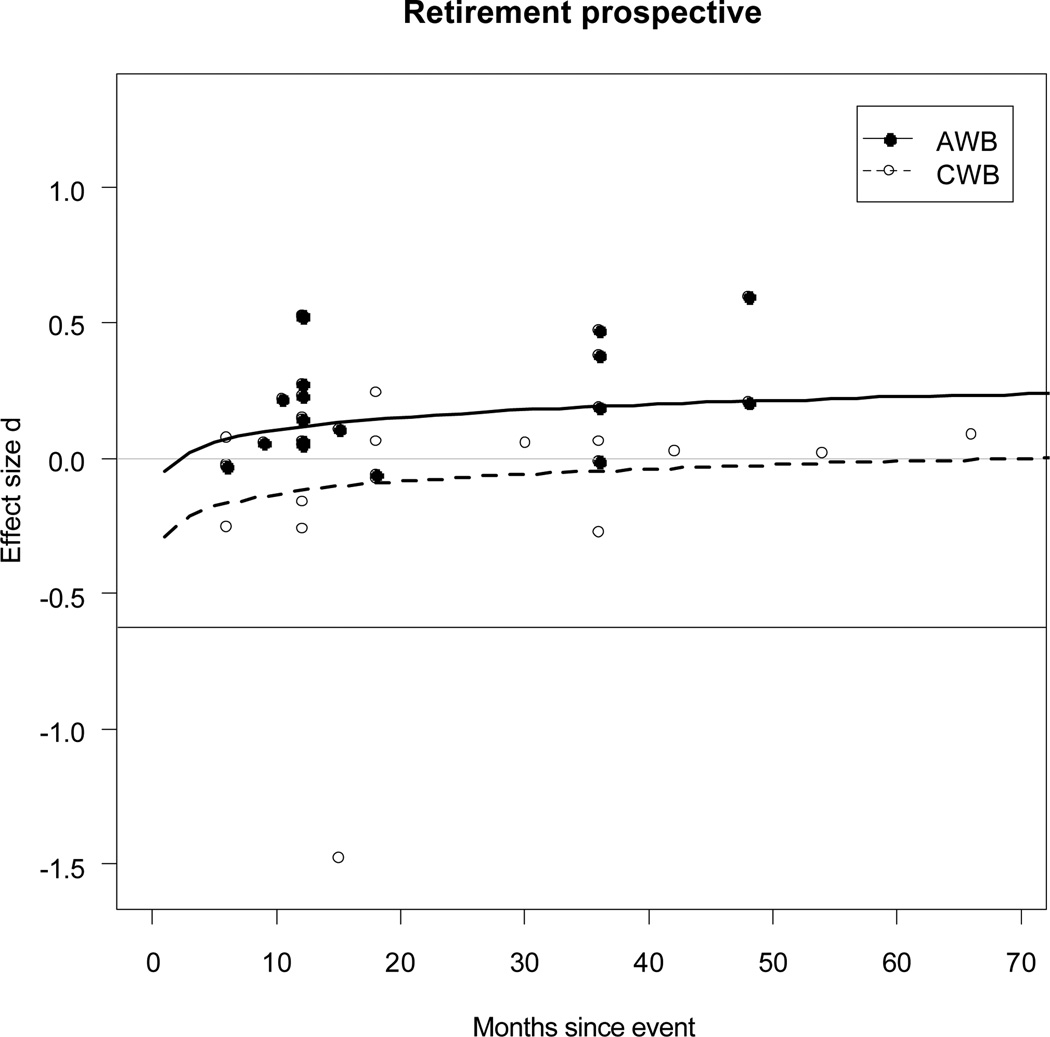
Observed effect sizes and predicted adaptation curves for retirement. The black horizontal line in the top panel represents the EPL of AWB (based on 5 effect sizes). The time lag between the baseline and the event is held constant at zero months. AWB = affective well-being, CWB = cognitive well-being.
Figure 10
Figure 10
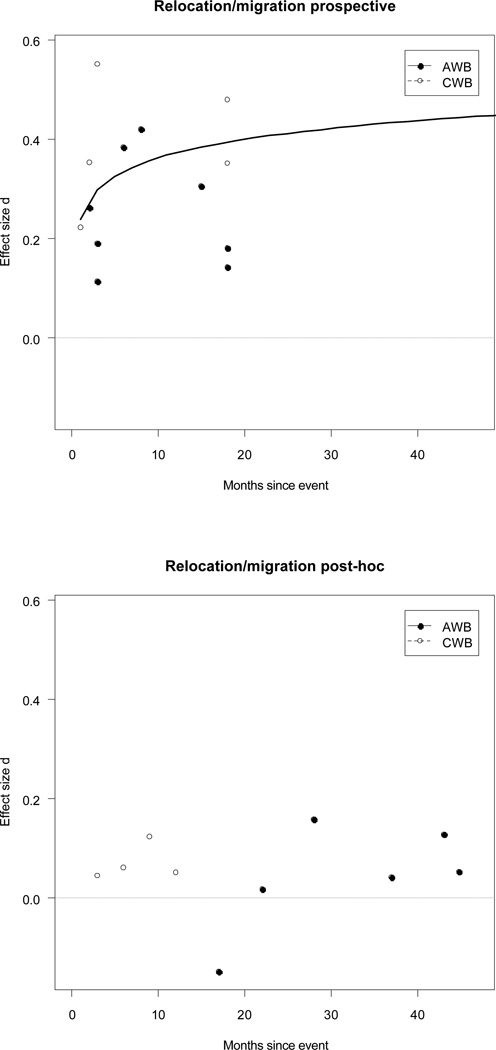
Observed effect sizes and predicted adaptation curves for relocation/migration. The time lag between the baseline and the event is held constant at zero months. AWB = affective well-being, CWB = cognitive well-being. The depicted adaptation curve in the top panel reflects adaptation for both AWB and CWB.

References

    1. Affonso D, Lovett S, Paul S, Sheptak S. A standardized interview that differentiates pregnancy and postpartum symptoms from perinatal clinical depression. Birth. 1990;17(3):121–130. - PubMed
    1. Ahlborg T, Misvaer N, Möller A. Perception of marital quality by parents with small children: A follow-up study when the firstborn is 4 years old. Journal of Family Nursing. 2009;15(2):237–263. - PubMed
    1. Ahn S. Effects of maternal employment and infant's prematurity on postpartum health. Dissertation Abstracts International: Section B: The Sciences and Engineering. 2001;62(2-B):775.
    1. Ali J, Avison W. Employment transitions and psychological distress: The contrasting experiences of single and married mothers. Journal of Health and Social Behavior. 1997;38(4):345–362. - PubMed
    1. Aneshensel C, Botticello A, Yamamoto-Mitani N. When caregiving ends: The course of depressive symptoms after bereavement. Journal of Health and Social Behavior. 2004;45(4):422–440. - PubMed

Publication types