


Reporting of sex as a variable in cardiovascular studies using cultured cells
- PMID: 22060014
- PMCID: PMC3224776
- DOI: 10.1186/2042-6410-2-11
Reporting of sex as a variable in cardiovascular studies using cultured cells
Abstract
Background: Chromosomal complement, including that provided by the sex chromosomes, influences expression of proteins and molecular signaling in every cell. However, less than 50% of the scientific studies published in 2009 using experimental animals reported sex as a biological variable. Because every cell has a sex, we conducted a literature review to determine the extent to which sex is reported as a variable in cardiovascular studies on cultured cells.
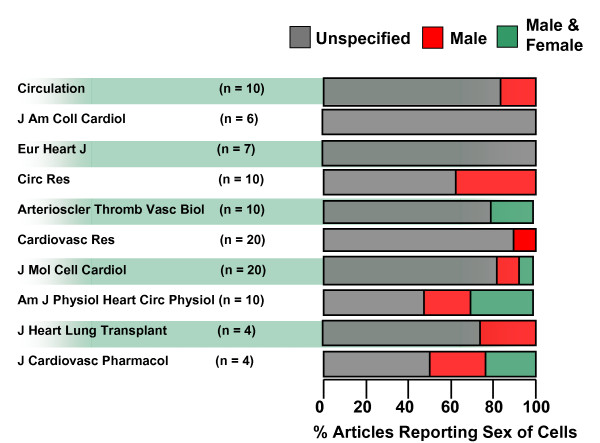
Methods: Articles from 10 cardiovascular journals with high impact factors (Circulation, J Am Coll Cardiol, Eur Heart J, Circ Res, Arterioscler Thromb Vasc Biol, Cardiovasc Res, J Mol Cell Cardiol, Am J Physiol Heart Circ Physiol, J Heart Lung Transplant and J Cardiovasc Pharmacol) and published in 2010 were searched using terms 'cultured' and 'cells' in any order to determine if the sex of those cells was reported. Studies using established cell lines were excluded.
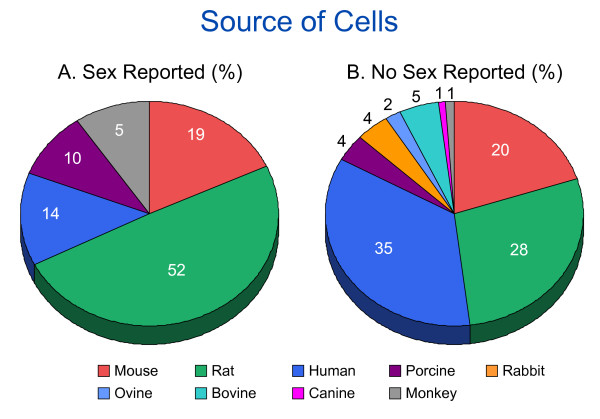
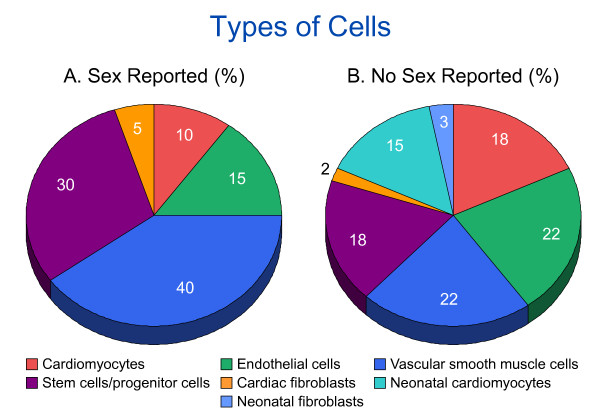
Results: Using two separate search strategies, we found that only 25 of 90 articles (28%) and 20 of 101 articles (19.8%) reported the sex of cells. Of those reporting the sex of cells, most (68.9%; n = 31) used only male cells and none used exclusively female cells. In studies reporting the sex of cells of cardiovascular origin, 40% used vascular smooth-muscle cells, and 30% used stem/progenitor cells. In studies using cells of human origin, 35% did not report the sex of those cells. None of the studies using neonatal cardiac myocytes reported the sex of those cells.
Conclusions: The complement of sex chromosomes in cells studied in culture has the potential to affect expression of proteins and 'mechanistic' signaling pathways. Therefore, consistent with scientific excellence, editorial policies should require reporting sex of cells used in in vitro experiments.
Figures
References
-
- Wizemann TM, Pardue ML. Board on Health Sciences Policy. Washington, DC.: Institute of Medicine; 2001. Exploring the Biological Contributions to Human Health: Does Sex Matter? - PubMed
