


Insights into inflammatory bowel disease using Toxoplasma gondii as an infectious trigger
- PMID: 22064707
- PMCID: PMC4094106
- DOI: 10.1038/icb.2011.93
Insights into inflammatory bowel disease using Toxoplasma gondii as an infectious trigger
Abstract
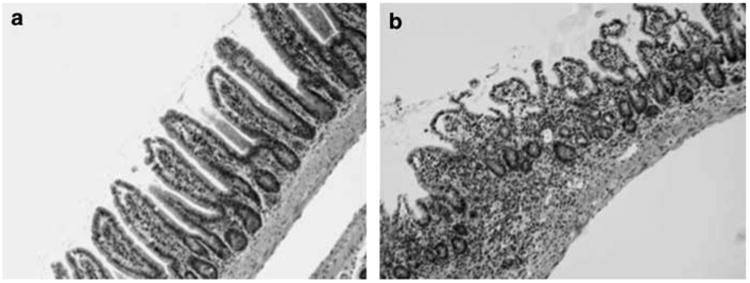
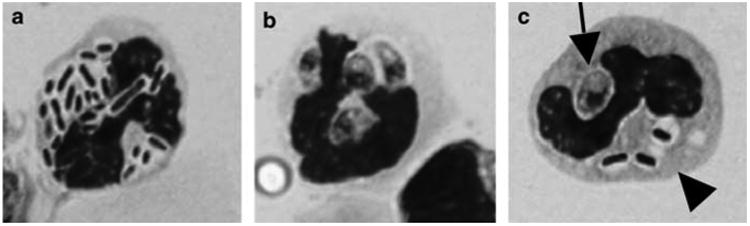
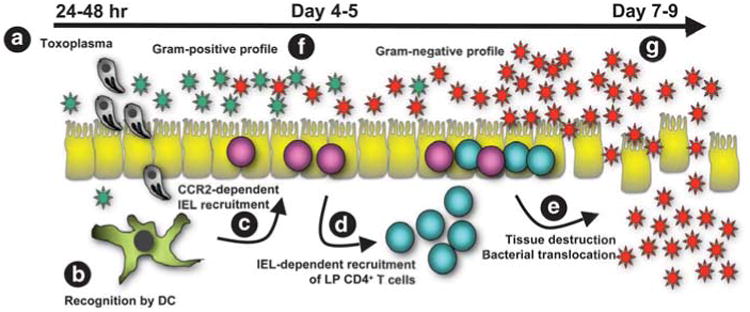
Oral infection of certain inbred mouse strains with the protozoan Toxoplasma gondii triggers inflammatory pathology resembling lesions seen during human inflammatory bowel disease, in particular Crohn's disease (CD). Damage triggered by the parasite is largely localized to the distal portion of the small intestine, and as such is one of only a few models for ileal inflammation. This is important because ileal involvement is a characteristic of CD in over two-thirds of patients. The disease induced by Toxoplasma is mediated by Th1 cells and the cytokines tumor necrosis factor-α and interferon-γ. Inflammation is dependent upon IL-23, also identified by genome-wide association studies as a risk factor in CD. Development of lesions is concomitant with emergence of E. coli that display enhanced adhesion to the intestinal epithelium and subepithelial translocation. Furthermore, depletion of gut flora renders mice resistant to Toxoplasma-triggered ileitis. Recent findings suggest complex CCR2-dependent interactions between lamina propria T cells and intraepithelial lymphocytes in fueling proinflammatory pathology in the intestine. The advantage of the Toxoplasma model is that disease develops rapidly (within 7-10 days of infection) and can be induced in immunodeficient mice by adoptive transfer of mucosal T cells from infected donors. We propose that Toxoplasma acts as a trigger setting into motion a series of events culminating in loss of tolerance in the intestine and emergence of pathogenic T cell effectors. The Toxoplasma trigger model is providing new leaps in our understanding of immunity in the intestine.
Figures
References
-
- Baumgart DC, Carding SR. Inflammatory bowel disease: cause and immunobiology. Lancet. 2007;369:1627–1640. - PubMed
-
- Xavier RJ, Podolsky DK. Unravelling the pathogenesis of inflammatory bowel disease. Nature. 2007;448:427–434. - PubMed
-
- Brand S. Crohn's disease: Th1, Th17 or both? The change of a paradigm: new immunological and genetic insights implicate Th17 cells in the pathogenesis of Crohn's disease. Gut. 2009;58:1152–1167. - PubMed
-
- Rhodes JM, Campbell BJ. Inflammation and colorectal cancer: IBD-associated and sporadic cancer compared. Trends Mol Med. 2002;8:10–16. - PubMed
Publication types
MeSH terms
Substances
Grants and funding
LinkOut - more resources
Full Text Sources
