


Fenestrated pedicle screws for cement-augmented purchase in patients with bone softening: a review of 21 cases
- PMID: 22065147
- PMCID: PMC3225622
- DOI: 10.1007/s10195-011-0164-9
Fenestrated pedicle screws for cement-augmented purchase in patients with bone softening: a review of 21 cases
Abstract
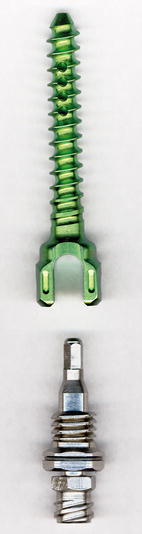
Background: This prospective mixed cohort study was designed to evaluate the middle- to long-term purchase of cement-augmented pedicular screws in patients with poor bone quality. The growing number of surgical procedures performed in the spine has highlighted the problem of screws loosening in patients with poor bone stock due to osteoporosis and/or tumors. Different methods of increasing screw purchase have been reported in the literature, including polymethylmethacrylate (PMMA) augmentation.
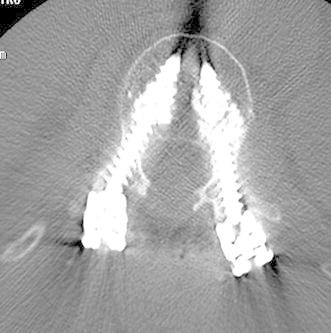
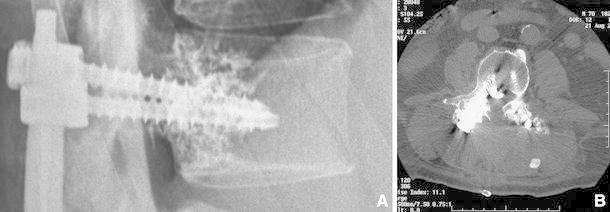
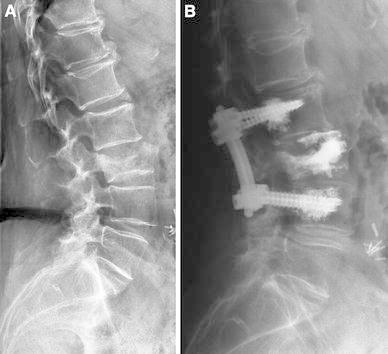
Materials and methods: From September 2006 to April 2008, 21 patients with a poor bone stock condition due to osteoporosis or tumor underwent posterior stabilization by fenestrated pedicle screws and PMMA augmentation. Pain improvement and long-term clinical outcome were assessed by visual analogue scale (VAS) score and SF-36 health survey (SF-36) questionnaire. Implant stability was evaluated by plain radiography and CT scans performed three days after surgery and every three months thereafter. After the first 12 months, radiologic controls were taken once a year in all surviving patients. Complications were evaluated in all cases.
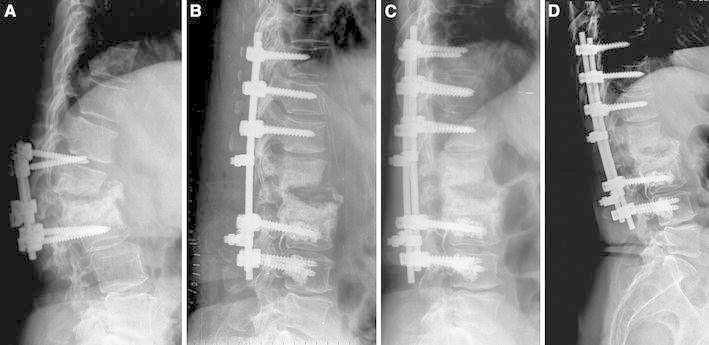
Results: All patients were clinically and radiographically followed up for a mean of 36 months. VAS scores and SF-36 questionnaires showed a statistically significant reduction in pain and improvement in the quality of life. No radiological loosening or pulling out of screws was observed. In two cases, cement leakage occurred intraoperatively: one patient who suffered from a transitory nerve root palsy improved spontaneously, while the surgeon immediately removed the excess cement before setting in the other case. In three cases, the post-op CT scan revealed a small amount of cement in the canal without clinical relevance.
Conclusions: Fenestrated screws for cement augmentation provided effective and lasting purchase in patients with poor bone quality due to osteoporosis or tumors. No case of loosening was recorded after a mean follow-up of 36 months. The only clinical complication strictly related to PMMA screw augmentation did not require further surgery.
Figures
References
Publication types
MeSH terms
Substances
LinkOut - more resources
Full Text Sources
Other Literature Sources
Medical
Miscellaneous
