


Lower specific infectivity of protease-resistant prion protein generated in cell-free reactions
- PMID: 22065744
- PMCID: PMC3228482
- DOI: 10.1073/pnas.1111255108
Lower specific infectivity of protease-resistant prion protein generated in cell-free reactions
Abstract
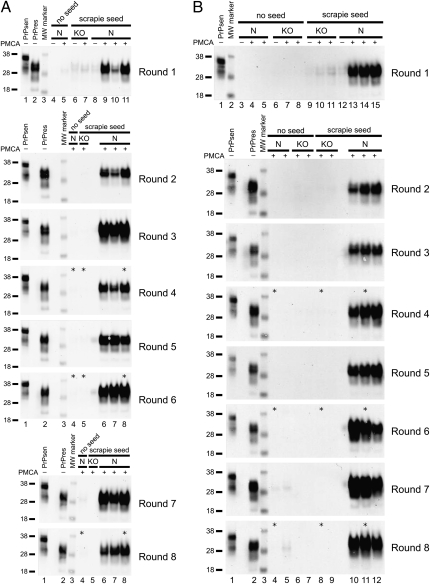
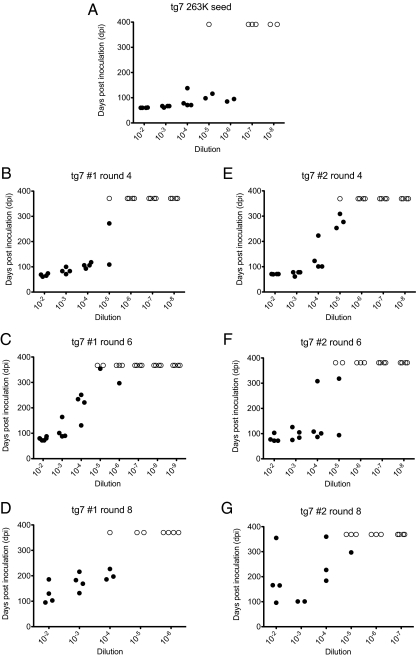
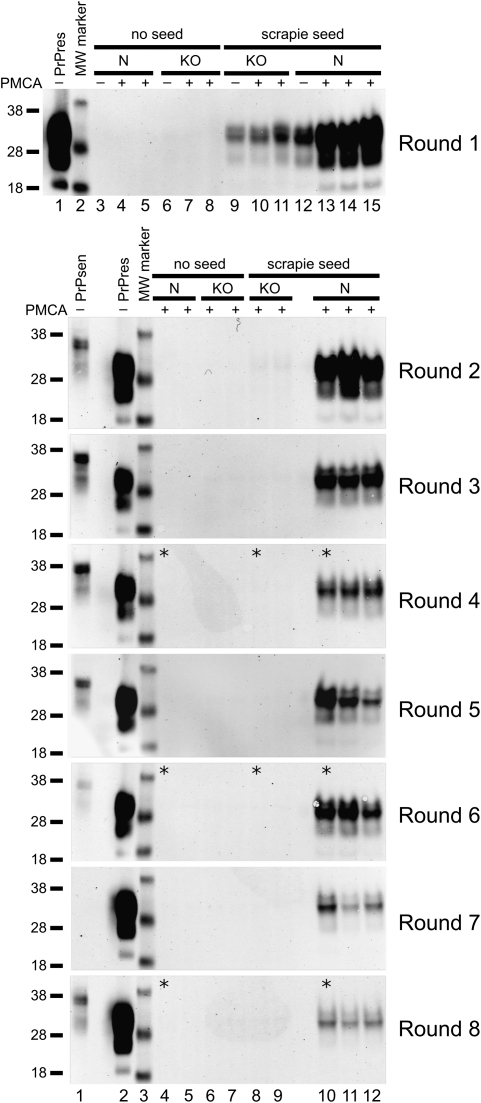
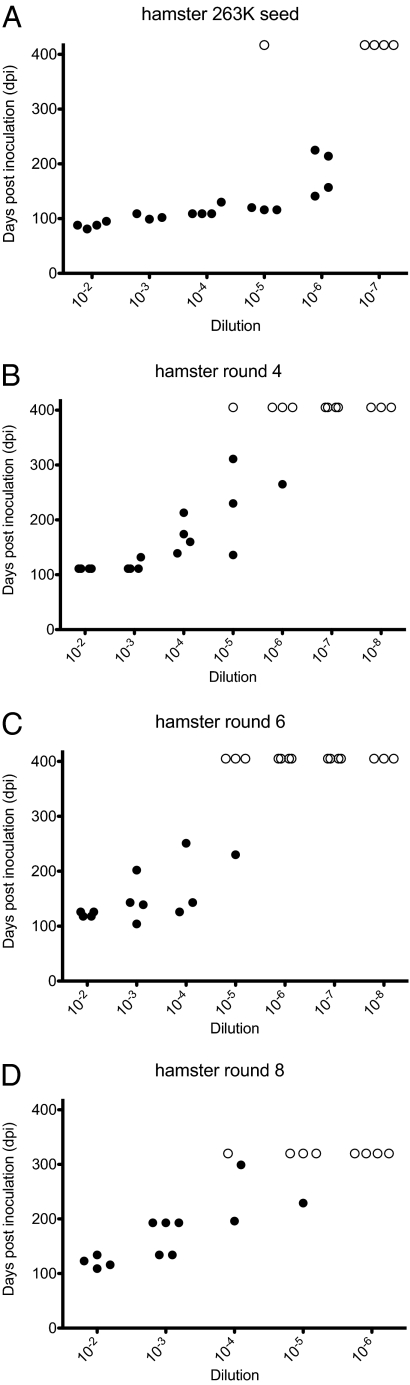
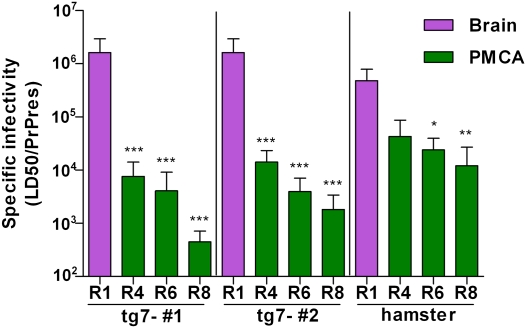
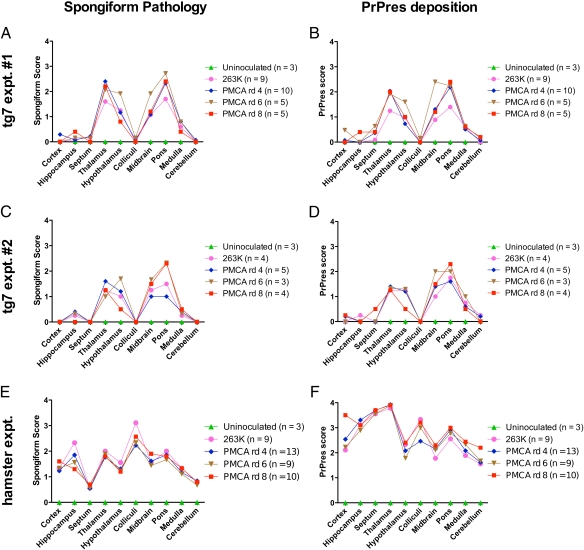
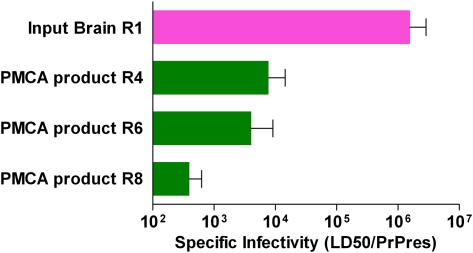
Prions are unconventional infectious agents that cause transmissible spongiform encephalopathy (TSE) diseases, or prion diseases. The biochemical nature of the prion infectious agent remains unclear. Previously, using a protein misfolding cyclic amplification (PMCA) reaction, infectivity and disease-associated protease-resistant prion protein (PrPres) were both generated under cell-free conditions, which supported a nonviral hypothesis for the agent. However, these studies lacked comparative quantitation of both infectivity titers and PrPres, which is important both for biological comparison with in vivo-derived infectivity and for excluding contamination to explain the results. Here during four to eight rounds of PMCA, end-point dilution titrations detected a >320-fold increase in infectivity versus that in controls. These results provide strong support for the hypothesis that the agent of prion infectivity is not a virus. PMCA-generated samples caused the same clinical disease and neuropathology with the same rapid incubation period as the input brain-derived scrapie samples, providing no evidence for generation of a new strain in PMCA. However, the ratio of the infectivity titer to the amount of PrPres (specific infectivity) was much lower in PMCA versus brain-derived samples, suggesting the possibility that a substantial portion of PrPres generated in PMCA might be noninfectious.
Conflict of interest statement
The authors declare no conflict of interest.
Figures
Comment in
-
Viruses do replicate in cell-free systems.Proc Natl Acad Sci U S A. 2012 Feb 21;109(8):E461; author reply E462. doi: 10.1073/pnas.1118908109. Epub 2012 Jan 30. Proc Natl Acad Sci U S A. 2012. PMID: 22308429 Free PMC article. No abstract available.
References
-
- Chesebro B. Introduction to the transmissible spongiform encephalopathies or prion diseases. Br Med Bull. 2003;66:1–20. - PubMed
-
- Büeler H, et al. Mice devoid of PrP are resistant to scrapie. Cell. 1993;73:1339–1347. - PubMed
-
- Rohwer RG. The scrapie agent: “a virus by any other name”. In: Chesebro BW, editor. Transmissible Spongiform Encephalopathies, Scrapie, BSE and Related Disorders, Current Topics in Microbiology and Immunology. Vol. 172. New York: Springer; 1991. pp. 195–232. - PubMed
-
- Griffith JS. Self-replication and scrapie. Nature. 1967;215:1043–1044. - PubMed
Publication types
MeSH terms
Substances
Grants and funding
LinkOut - more resources
Full Text Sources
