Lactate shuttles at a glance: from physiological paradigms to anti-cancer treatments
- PMID: 22065843
- PMCID: PMC3209642
- DOI: 10.1242/dmm.007724
Lactate shuttles at a glance: from physiological paradigms to anti-cancer treatments
Abstract
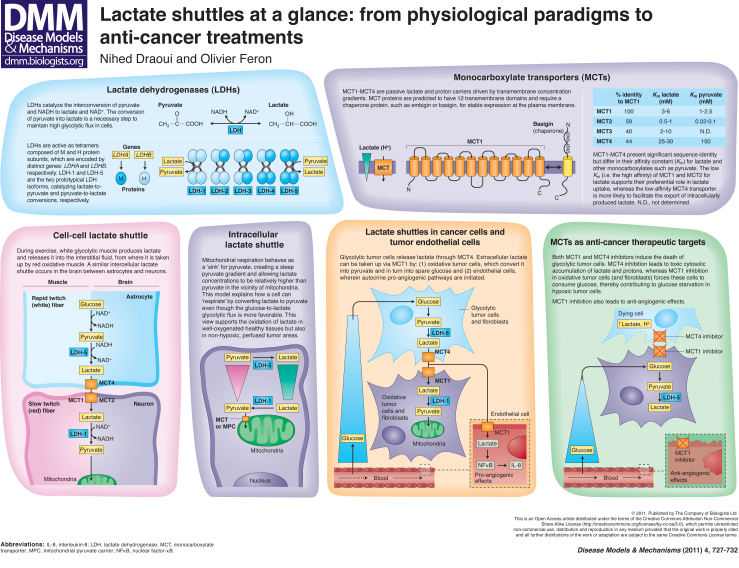
Hypoxia and oncogene expression both stimulate glycolytic metabolism in tumors, thereby leading to lactate production. However, lactate is more than merely a by-product of glycolysis: it can be used as a metabolic fuel by oxidative cancer cells. This phenomenon resembles processes that have been described for skeletal muscle and brain that involve what are known as cell-cell and intracellular lactate shuttles. Two control points regulate lactate shuttles: the lactate dehydrogenase (LDH)-dependent conversion of lactate into pyruvate (and back), and the transport of lactate into and out of cells through specific monocarboxylate transporters (MCTs). In tumors, MCT4 is largely involved in hypoxia-driven lactate release, whereas the uptake of lactate into both tumor cells and tumor endothelial cells occurs via MCT1. Translating knowledge of lactate shuttles to the cancer field offers new perspectives to therapeutically target the hypoxic tumor microenvironment and to tackle tumor angiogenesis.
References
-
- Bonuccelli G., Tsirigos A., Whitaker-Menezes D., Pavlides S., Pestell R. G., Chiavarina B., Frank P. G., Flomenberg N., Howell A., Martinez-Outschoorn U. E., et al. (2010). Ketones and lactate ‘fuel’ tumor growth and metastasis: evidence that epithelial cancer cells use oxidative mitochondrial metabolism. Cell Cycle 9, 3506–3514 - PMC - PubMed
-
- Bouzier-Sore A. K., Voisin P., Canioni P., Magistretti P. J., Pellerin L. (2003). Lactate is a preferential oxidative energy substrate over glucose for neurons in culture. J. Cereb. Blood Flow Metab. 23, 1298–1306 - PubMed
-
- Bouzin C., Feron O. (2007). Targeting tumor stroma and exploiting mature tumor vasculature to improve anti-cancer drug delivery. Drug Resist. Updat. 10, 109–120 - PubMed
-
- Brooks G. A. (1985). Anaerobic threshold: review of the concept and directions for future research. Med. Sci. Sports Exerc. 17, 22–34 - PubMed
-
- Brooks G. A. (1998). Mammalian fuel utilization during sustained exercise. Comp. Biochem. Physiol. 120B, 89–107 - PubMed
Publication types
MeSH terms
Substances
LinkOut - more resources
Full Text Sources
Other Literature Sources