


Proximal and distal kinematics in female runners with patellofemoral pain
- PMID: 22071426
- PMCID: PMC3984468
- DOI: 10.1016/j.clinbiomech.2011.10.005
Proximal and distal kinematics in female runners with patellofemoral pain
Abstract
Background: Female runners have a high incidence of developing patellofemoral pain. Abnormal mechanics are thought to be an important contributing factor to patellofemoral pain. However, the contribution of abnormal trunk, hip, and foot mechanics to the development of patellofemoral pain within this cohort remains elusive. Therefore the aim of this study was to determine if significant differences during running exist in hip, trunk and foot kinematics between females with and without patellofemoral pain.
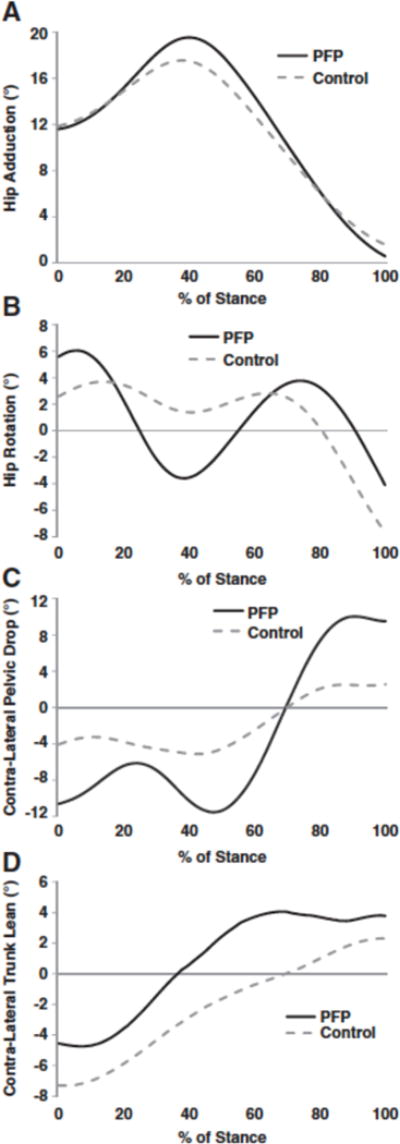
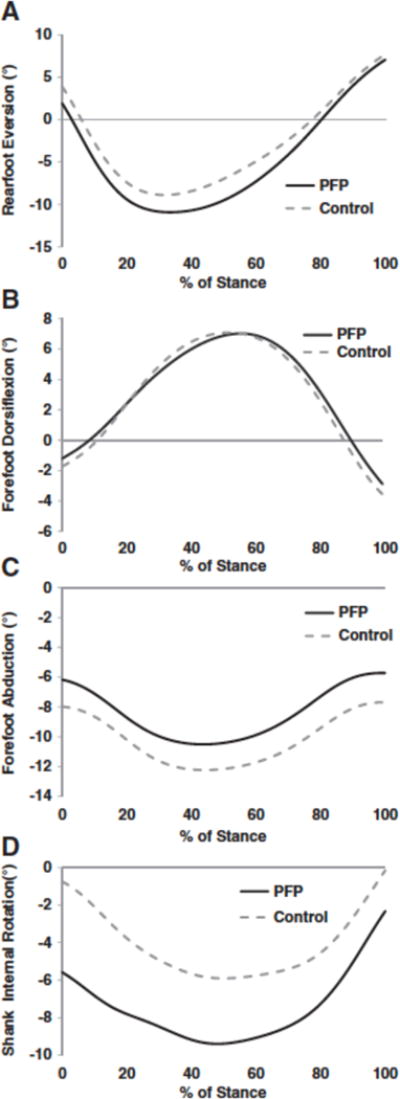
Methods: 32 female runners (16 patellofemoral pain, 16 healthy control) participated in this study. All individuals underwent an instrumented gait analysis. Between-group comparisons were made for hip adduction, hip internal rotation, contra-lateral pelvic drop, contra-lateral trunk lean, rearfoot eversion, tibial internal rotation, as well as forefoot dorsiflexion and abduction
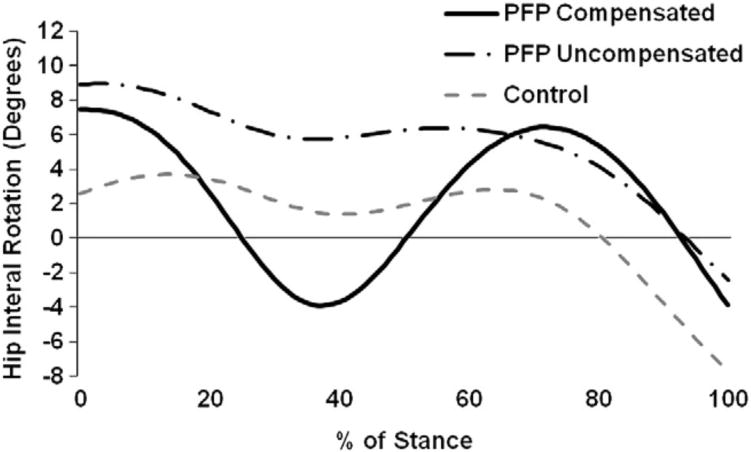
Findings: The patellofemoral pain group had significantly greater peak hip adduction and hip internal rotation. No differences in contra-lateral pelvic drop were found. A trend towards reduced contra-lateral trunk lean was found in the patellofemoral pain group. No significant differences were found in any of the rearfoot or forefoot variables but significantly greater shank internal rotation was found in the patellofemoral pain group.
Interpretation: We found greater hip adduction, hip internal rotation and shank internal rotation in female runners with patellofemoral pain. We also found less contra-lateral trunk lean in the patellofemoral pain group. This may be a potential compensatory mechanism for the poor hip control seen. Rehabilitation programs that correct abnormal hip and shank kinematics are warranted in this population.
Copyright © 2011 Elsevier Ltd. All rights reserved.
Conflict of interest statement
Conflict of interest
The authors have no conflicts of interest to report.
Figures
References
-
- Barton CJ. Kinematic gait characteristics associated with patellofemoral pain syndrome: a systematic review. Gait & Posture. 2009;30:405–416. - PubMed
-
- Blond L, Hansen L. Patellofemoral pain syndrome in athletes: a 5.7-year retrospective follow-up study of 250 athletes. Acta Orthop Belg. 1998;64:393–400. - PubMed
-
- Boling MC. Outcomes of a weight-bearing rehabilitation program for patients diagnosed with patellofemoral pain syndrome. Arch Phys Med Rehabil. 2006;87:1428–1435. - PubMed
MeSH terms
Grants and funding
LinkOut - more resources
Full Text Sources
Medical
