. 2011 Nov 9;3(108):108ra114.
doi: 10.1126/scitranslmed.3002950.

Differential inhibitor sensitivity of anaplastic lymphoma kinase variants found in neuroblastoma

Affiliations

Differential inhibitor sensitivity of anaplastic lymphoma kinase variants found in neuroblastoma

Scott C Bresler et al. Sci Transl Med. .

Abstract

Activating mutations in the anaplastic lymphoma kinase (ALK) gene were recently discovered in neuroblastoma, a cancer of the developing autonomic nervous system that is the most commonly diagnosed malignancy in the first year of life. The most frequent ALK mutations in neuroblastoma cause amino acid substitutions (F1174L and R1275Q) in the intracellular tyrosine kinase domain of the intact ALK receptor. Identification of ALK as an oncogenic driver in neuroblastoma suggests that crizotinib (PF-02341066), a dual-specific inhibitor of the ALK and Met tyrosine kinases, will be useful in treating this malignancy. Here, we assessed the ability of crizotinib to inhibit proliferation of neuroblastoma cell lines and xenografts expressing mutated or wild-type ALK. Crizotinib inhibited proliferation of cell lines expressing either R1275Q-mutated ALK or amplified wild-type ALK. In contrast, cell lines harboring F1174L-mutated ALK were relatively resistant to crizotinib. Biochemical analyses revealed that this reduced susceptibility of F1174L-mutated ALK to crizotinib inhibition resulted from an increased adenosine triphosphate-binding affinity (as also seen in acquired resistance to epidermal growth factor receptor inhibitors). Thus, this effect should be surmountable with higher doses of crizotinib and/or with higher-affinity inhibitors.


Figures
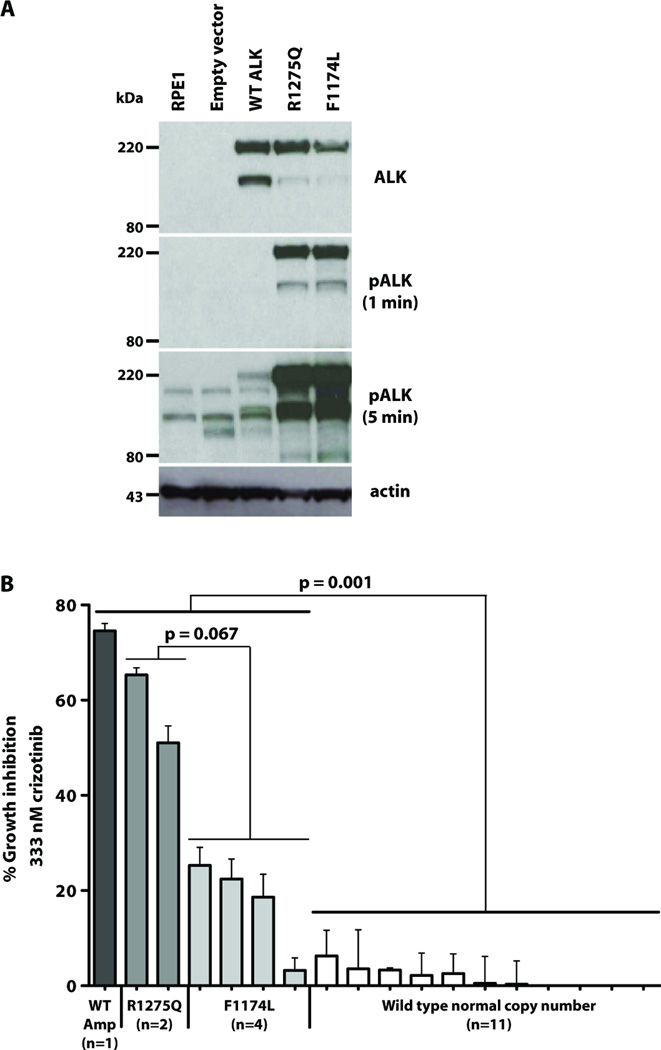
Fig. 1
Fig. 1. Constitutive activity and inhibitor sensitivity of F1174L and R1275 ALK mutants
(A) Immunoblots of total ALK and pALK in hTERT-RPE1 cells infected with retroviruses directing expression of wild-type or mutated ALK. Lower panel is actin loading control. (B) Proliferation of neuroblastoma cell lines over 72 hours of incubation with 333nM crizotinib. Growth inhibition ± S.D. is reported for at least three independent experiments. p values were calculated for marked comparisons using two-sided exact Wilcoxon-Mann-Whitney tests. Cell lines were (left to right): wild-type ALK amplified (NB1); R1275Q (NB1643, LAN5); F1174L (SH-SY5Y, KELLY, NBSD, SMS-SAN); wild-type ALK, normal copy number (NB1691, NB-EBc1, IMR5, NB16, NLF, IMR32, NBLS, SKNBE2C, NGP, SKNAS, SKNFI).
Fig. 2
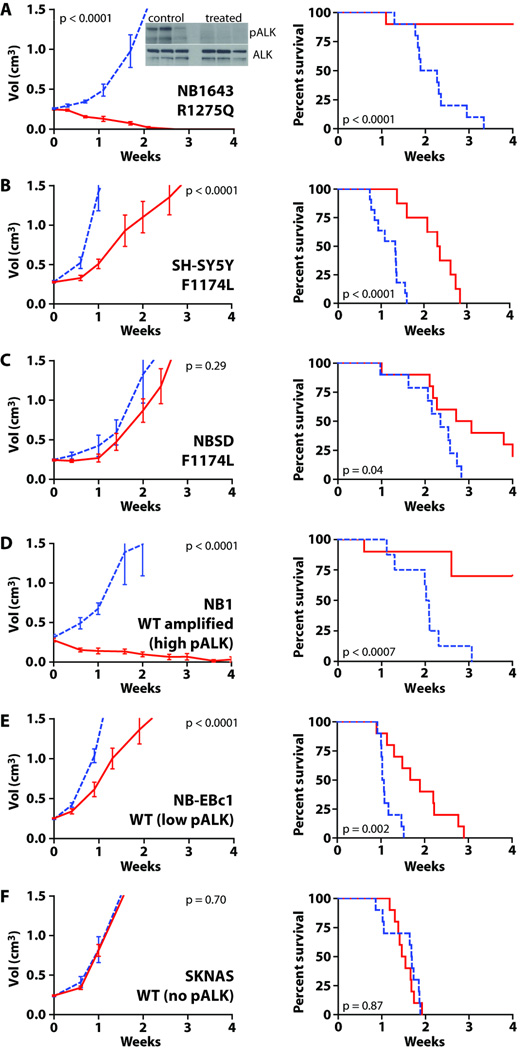
Fig. 2. Crizotinib activity in vivo for wild-type and mutated ALK
Subcutaneously implanted neuroblastoma tumors were monitored in CB17 scid mice treated with crizotinib (solid red lines), or vehicle (dashed blue lines). Tumor volume (left panels) is displayed as mean ± S.E.M. Study end points for survival analysis (right panels) were tumor volume ≥1.5cm3 or treatment-related death. (A) NB1643 (R1275Q) xenografts: inset shows immunoblot of ALK and pALK; (B) SH-SY5Y (F1174L); (C) NBSD (F1174L); (D) NB1 (wild-type amplified with strong phospho-ALK staining); (E) NB-EBc1 (wild-type, with weak phospho-ALK staining); (F) SKNAS (wild-type, undetectable pALK). Statistical treatment is described in Materials and Methods.
Fig. 3
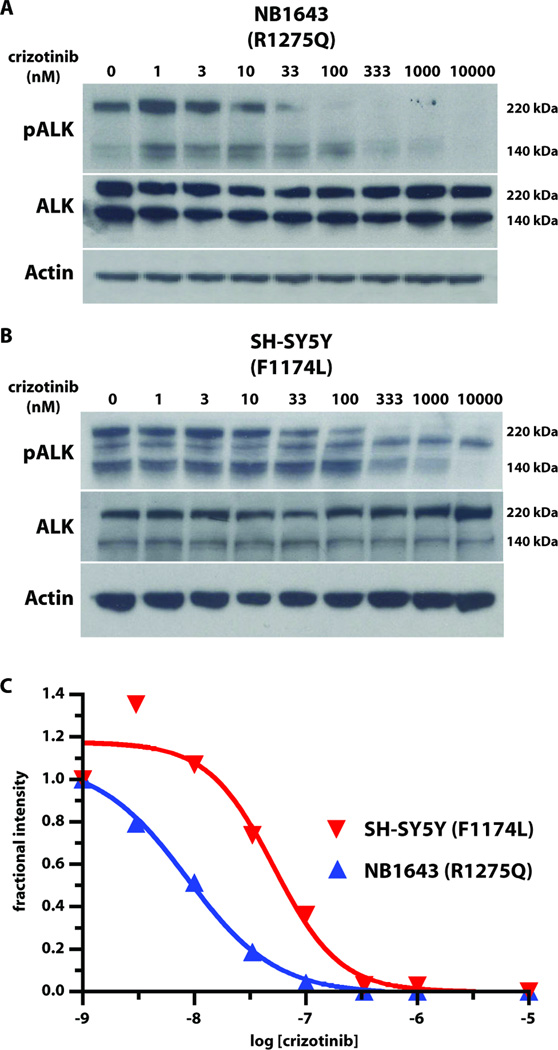
Fig. 3. Inhibition of constitutive ALK autophosphorylation by crizotinib
Representative immunoblots of ALK autophosphorylation in neuroblastoma cell-lines after treatment with different crizotinib concentrations (0 to 10µM). Whole cell lysates were immunoblotted for phospho-ALK (using pY1604 antibody), total ALK, and actin (loading control) for (A) NB1643 cells (R1275Q ALK), (B) SH-SY5Y cells (F1174L ALK). Downstream signaling molecules are analyzed in fig. S2. (C) Quantitation of phospho-ALK levels (220kDa species) as a function of crizotinib concentration.
Fig. 4
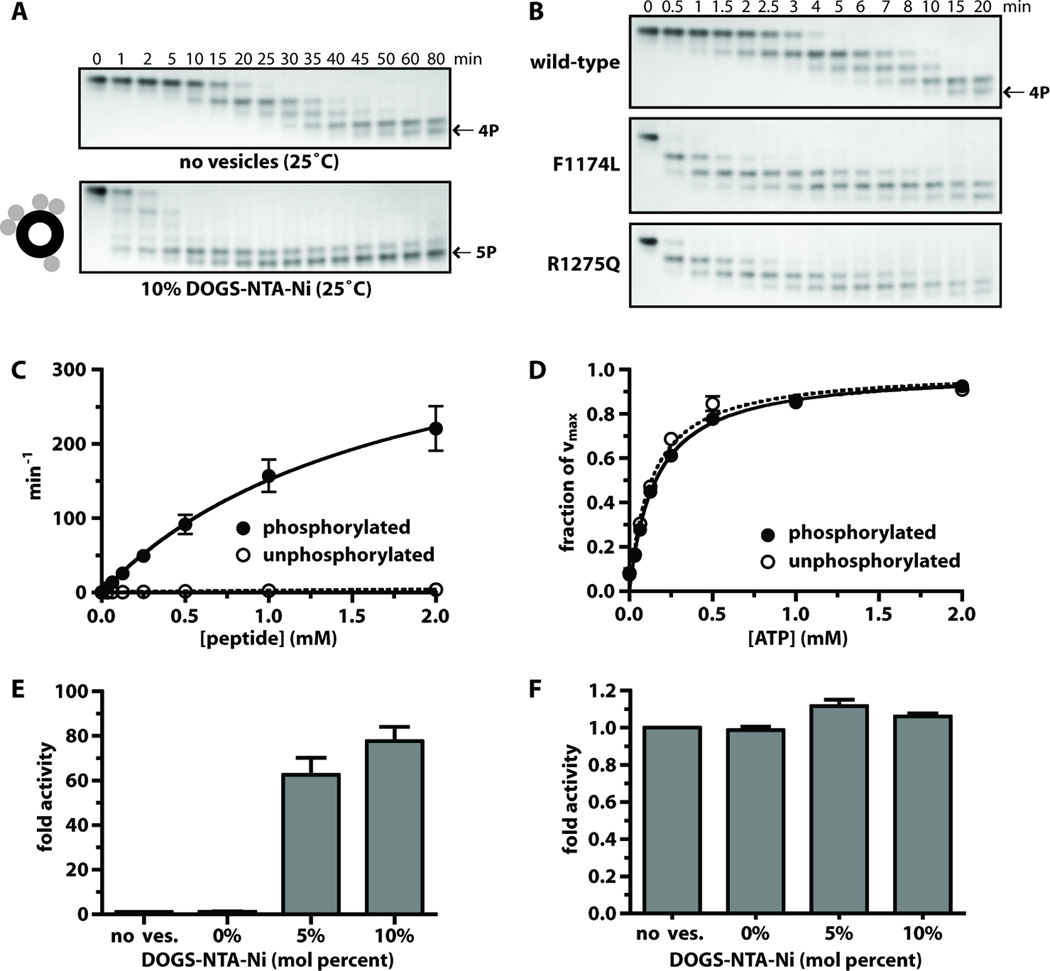
Fig. 4. Analysis of ALK-TKD activation in vitro
(A) Separation of differently autophosphorylated ALK-TKD species by native gel electrophoresis to monitor autophosphorylation at 25°C in the absence (top) and presence (bottom) of vesicles containing 10% DOGS-NTA-Ni (100µM total lipid), 10mM MgCl2, and 2mM ATP. (B) Autophosphorylation of wild-type and mutated ALK-TKD (10µM) with saturating ATP (2mM) and 10mM MgCl2 at 37°C. Results are quantitated in fig. S4. (C) Rate of 32P incorporation at 25°C into substrate peptide (see Materials and Methods) for autophosphorylated ALK-TKD (10nM) and unphosphorylated ALK-TKD (500nM) as peptide substrate concentration is increased. ATP concentration was 2mM. (D) Km, ATP determination for autophosphorylated (10nM) and unphosphorylated (500nM) ALK-TKD at fixed peptide substrate concentration (1mM). (E) Enhancement of EGFR-TKD kinase (1µM) by vesicles containing increasing mole percentages of DOGS-NTA-Ni (10µM DOGS-NTA-Ni, 100–200µM total lipid). (F) Effect on autophosphorylated ALK-TKD (1µM) activity of adding DOGS-NTA-Ni vesicles. Data are shown as means ± SEM from at least three independent experiments. All experiments except those in (B) were performed at 25°C.
Fig. 5
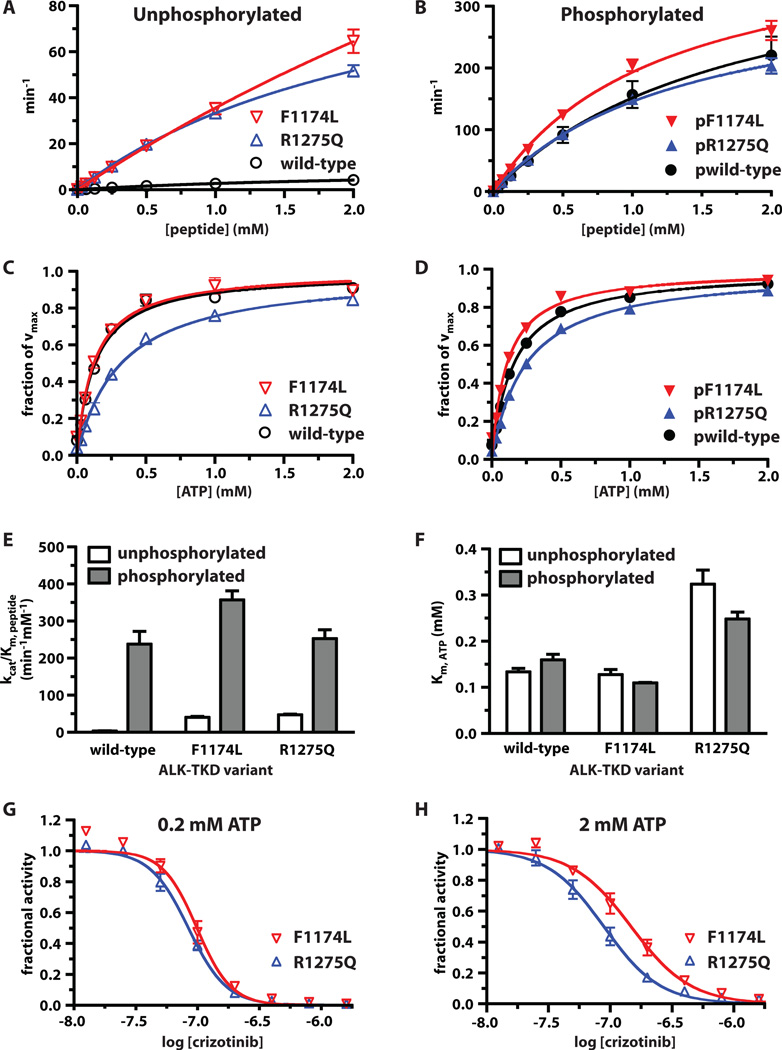
Fig. 5. Comparison of wild-type ALK-TKD with F1174L and R1275Q variants in vitro
(A,B) Rates of 32P incorporation into ‘YYY’ peptide at saturating ATP (2mM) for: (A) unphosphorylated wild-type (500nM) or mutated (50nM) ALK-TKD; and (B) phosphorylated wild-type and mutated ALK-TKD (all at 10nM). (C,D) Km, ATP determination (with YYY peptide fixed at 1mM) for: (C) unphosphorylated wild-type (500nM) or mutated (50nM) ALK-TKD; and (D) phosphorylated ALK-TKD variants (all at 10nM). (E) Comparison of catalytic efficiencies (kcat/Km, peptide) for unphosphorylated and phosphorylated ALK-TKD variants. (F) Comparison of Km, ATP values. (G,H) Inhibition of unphosphorylated F1174L and R1275Q ALK-TKD (50nM) by crizotinib in peptide phosphorylation assays ([peptide] is 0.5mM) at 0.2mM ATP (G) and 2mM ATP (H). All data are shown as means ± SEM from at least three independent experiments. Experiments were performed at 25°C.
Fig. 6
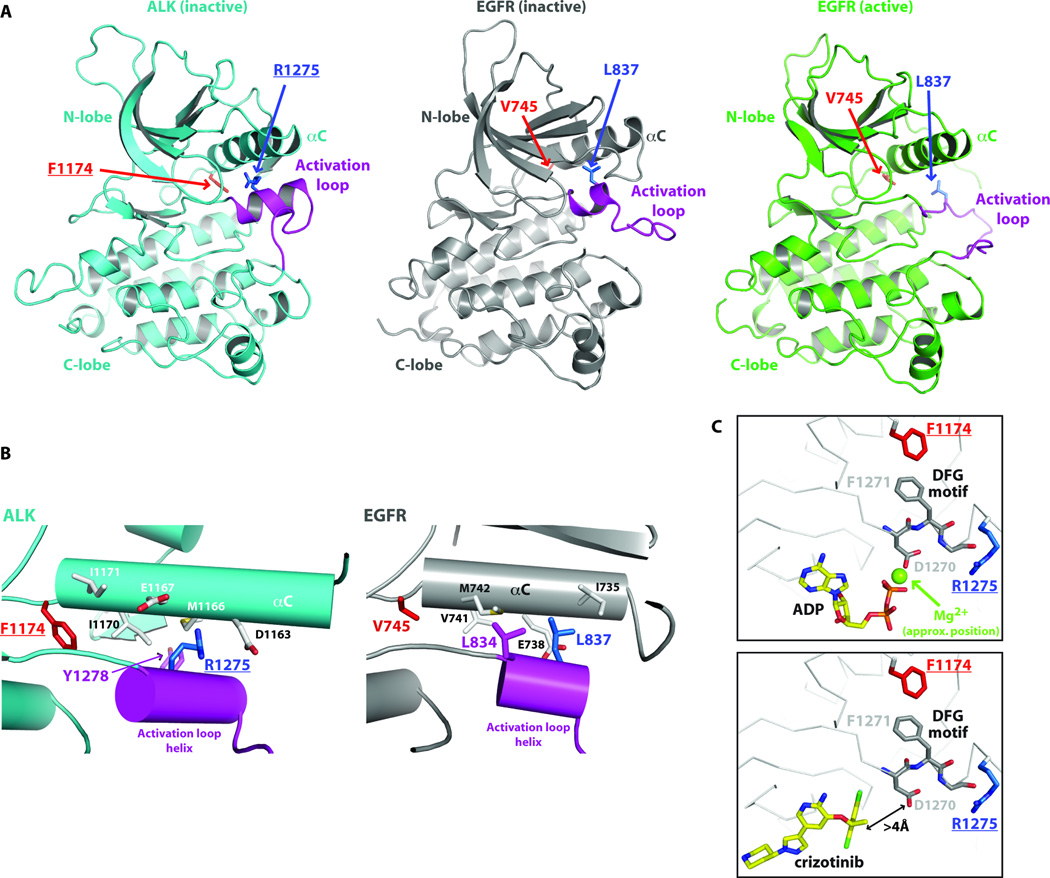
Fig. 6. Structural basis for ALK-TKD activation by F1174L and R1275Q mutations
(A) Cartoon representations of inactive ALK-TKD (26) from PDB entry 3LCS (cyan), inactive EGFR-TKD (23) from PDB entry 2GS7 (grey), and active EGFR from PDB entry 1M14 (green). The activation loop is colored magenta in each structure. Positions of F1174 (red) and R1275 (blue) are marked in ALK-TKD, as are their structural equivalents in EGFR (V745 and L837). (B) Detail of interactions between the short activation loop helix (magenta) and helix αC in inactive ALK-TKD (left) and inactive EGFR-TKD (right). (C) Close-up of relationship between F1174 side chain, the ‘DFG motif’ and ATP/drug binding site. In the upper panel, taken from PDB entry 3LCT (26), which contains bound ADP, an Mg2+ ion (not reported in this structure) was placed based on its location in the active insulin receptor TKD. Lower panel (with bound crizotinib) taken from PDB entry 2XP2.

References

    1. D'Angio GJ, Evans AE, Koop CE. Special pattern of widespread neuroblastoma with a favourable prognosis. Lancet. 1971;1:1046–1049. - PubMed
    1. Hobbie WL, Moshang T, Carlson CA, Goldmuntz E, Sacks N, Goldfarb SB, Grupp SA, Ginsberg JP. Late effects in survivors of tandem peripheral blood stem cell transplant for high-risk neuroblastoma. Pediatr. Blood Cancer. 2008;51:679–683. - PMC - PubMed
    1. Iwahara T, Fujimoto J, Wen D, Cupples R, Bucay N, Arakawa T, Mori S, Ratzkin B, Yamamoto T. Molecular characterization of ALK, a receptor tyrosine kinase expressed specifically in the nervous system. Oncogene. 1997;14:439–449. - PubMed
    1. Morris SW, Kirstein MN, Valentine MB, Dittmer KG, Shapiro DN, Saltman DL, Look AT. Fusion of a kinase gene, ALK, to a nucleolar protein gene, NPM, in non-Hodgkin's lymphoma. Science. 1994;263:1281–1284. - PubMed
    1. Soda M, Choi YL, Enomoto M, Takada S, Yamashita Y, Ishikawa S, Fujiwara S, Watanabe H, Kurashina K, Hatanaka H, Bando M, Ohno S, Ishikawa Y, Aburatani H, Niki T, Sohara Y, Sugiyama Y, Mano H. Identification of the transforming EML4-ALK fusion gene in non-small-cell lung cancer. Nature. 2007;448:561–566. - PubMed

Publication types

MeSH terms