Current requirements for polymeric biomaterials in otolaryngology
- PMID: 22073104
- PMCID: PMC3199814
- DOI: 10.3205/cto000063
Current requirements for polymeric biomaterials in otolaryngology
Abstract
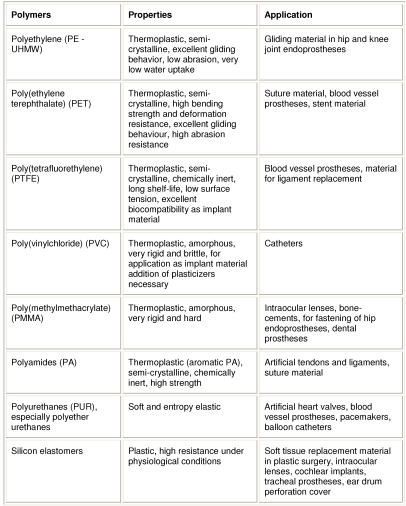
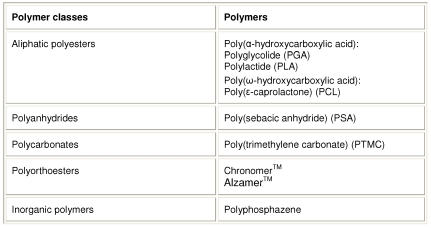
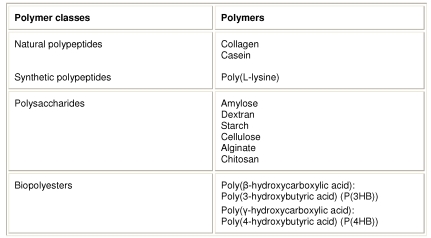
In recent years otolaryngology was strongly influenced by newly developed implants which are based on both, innovative biomaterials and novel implant technologies. Since the biomaterials are integrated into biological systems they have to fulfill all technical requirements and accommodate biological interactions. Technical functionality relating to implant specific mechanical properties, a sufficiently high stability in terms of physiological conditions, and good biocompatibility are the demands with regard to suitability of biomaterials. The goal in applying biomaterials for implants is to maintain biofunctionality over extended periods of time. These general demands to biomaterials are equally valid for use in otolaryngology. Different classes of materials can be utilized as biomaterials. Metals belong to the oldest biomaterials. In addition, alloys, ceramics, inorganic glasses and composites have been tested successfully. Furthermore, natural and synthetic polymers are widely used materials, which will be in the focus of the current article with regard to their properties and usage as cochlear implants, osteosynthesis implants, stents, and matrices for tissue engineering. Due to their application as permanent or temporary implants materials are differentiated into biostable and biodegradable polymers. The here identified general and up to date requirements for biomaterials and the illustrated applications in otolaryngology emphasize ongoing research efforts in this area and at the same time demonstrate the high significance of interdisciplinary cooperation between natural sciences, engineering, and medical sciences.
Keywords: biomaterials; implants; otolaryngology; polymers.
Figures
References
-
- Langer R. 1994 Whitaker Lecture: polymers for drug delivery and tissue engineering. Ann Biomed Eng. 1995;23(2):101–111. doi: 10.1007/BF02368317. Available from: http://dx.doi.org/10.1007/BF02368317. - DOI - PubMed
-
- Langer R. Drug delivery and targeting. Nature. 1998;392(6679 Suppl):5–10. - PubMed
-
- Langer R. Biomaterials in drug delivery and tissue engineering: one laboratory's experience. Acc Chem Res. 2000;33(2):94–101. doi: 10.1021/ar9800993. Available from: http://dx.doi.org/10.1021/ar9800993. - DOI - PubMed
-
- Oberhoff M, Kunert W, Herdeg C, Küttner A, Kranzhöfer A, Horch B, Baumbach A, Karsch KR. Inhibition of smooth muscle cell proliferation after local drug delivery of the antimitotic drug paclitaxel using a porous balloon catheter. Basic Res Cardiol. 2001;96(3):275–282. doi: 10.1007/s003950170058. Available from: http://dx.doi.org/10.1007/s003950170058. - DOI - PubMed
-
- Paulson DP, Abuzeid W, Jiang H, Oe T, O'Malley BW, Li D. A novel controlled local drug delivery system for inner ear disease. Laryngoscope. 2008;118(4):706–711. doi: 10.1097/MLG.0b013e31815f8e41. Available from: http://dx.doi.org/10.1097/MLG.0b013e31815f8e41. - DOI - PubMed
LinkOut - more resources
Full Text Sources