


Protozoan parasite Toxoplasma gondii manipulates mate choice in rats by enhancing attractiveness of males
- PMID: 22073295
- PMCID: PMC3206931
- DOI: 10.1371/journal.pone.0027229
Protozoan parasite Toxoplasma gondii manipulates mate choice in rats by enhancing attractiveness of males
Abstract
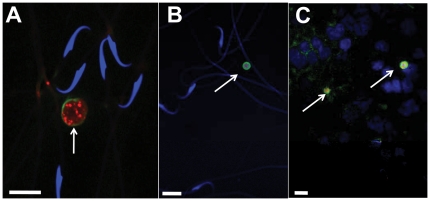
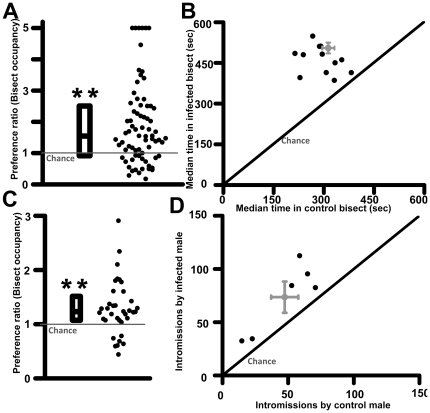
Females in various species typically avoid males infected with parasites, while parasite-free males advertise their status through conspicuous phenotypic traits. This process selects for heritable resistance and reduces direct exposure of the female to parasites. Coevolving parasites are likely to attempt to circumvent this obstacle. In this paper, we demonstrate a case of parasitic manipulation of host mate choice. We report that Toxoplasma gondii, a sexually transmitted infection of brown rats, enhances sexual attractiveness of infected males. Thus under some evolutionary niches, parasites can indeed manipulate host sexual signaling to their own advantage.
Conflict of interest statement
Figures
References
-
- Dawson RD, Bortolotti GR. Carotenoid-dependent coloration of male American kestrels predicts ability to reduce parasitic infections. Naturwissenschaften. 2006;93:597–602. - PubMed
-
- Deaton R. Effects of a parasitic nematode on male mate choice in a livebearing fish with a coercive mating system (western mosquitofish, Gambusia affinis). Behav Processes. 2009;80:1–6. - PubMed
-
- Ehman KD, Scott ME. Female mice mate preferentially with non-parasitized males. Parasitology. 2002;125:461–466. - PubMed
-
- Houde AE, Torio AJ. Effects of parasitic infection on male color pattern and female choice in guppies. Behavioral Ecology. 1992;3:346–351.
Publication types
MeSH terms
Grants and funding
LinkOut - more resources
Full Text Sources
