


The Matthew effect in environmental science publication: a bibliometric analysis of chemical substances in journal articles
- PMID: 22074398
- PMCID: PMC3229577
- DOI: 10.1186/1476-069X-10-96
The Matthew effect in environmental science publication: a bibliometric analysis of chemical substances in journal articles
Abstract
Background: While environmental research addresses scientific questions of possible societal relevance, it is unclear to what degree research focuses on environmental chemicals in need of documentation for risk assessment purposes.
Methods: In a bibliometric analysis, we used SciFinder to extract Chemical Abstract Service (CAS) numbers for chemicals addressed by publications in the 78 major environmental science journals during 2000-2009. The Web of Science was used to conduct title searches to determine long-term trends for prominent substances and substances considered in need of research attention.
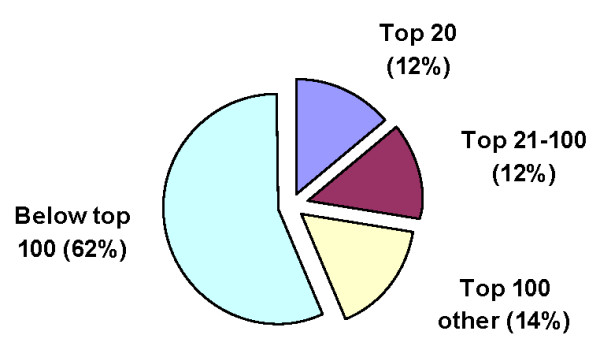
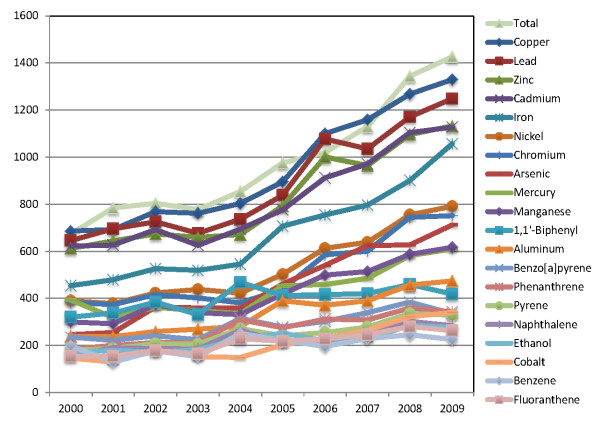
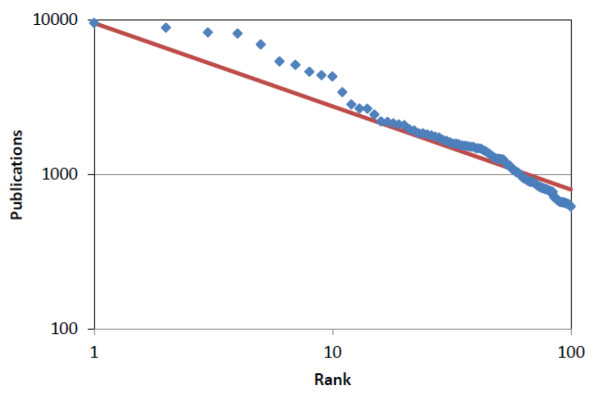
Results: The 119,636 journal articles found had 760,056 CAS number links during 2000-2009. The top-20 environmental chemicals consisted of metals, (chlorinated) biphenyls, polyaromatic hydrocarbons, benzene, and ethanol and contributed 12% toward the total number of links- Each of the top-20 substances was covered by 2,000-10,000 articles during the decade. The numbers for the 10-year period were similar to the total numbers of pre-2000 articles on the same chemicals. However, substances considered a high priority from a regulatory viewpoint, due to lack of documentation, showed very low publication rates. The persistence in the scientific literature of the top-20 chemicals was only weakly related to their publication in journals with a high impact factor, but some substances achieved high citation rates.
Conclusions: The persistence of some environmental chemicals in the scientific literature may be due to a 'Matthew' principle of maintaining prominence for the very reason of having been well researched. Such bias detracts from the societal needs for documentation on less well known environmental hazards, and it may also impact negatively on the potentials for innovation and discovery in research.
Figures
References
-
- National Research Council (NRC) Toxicity Testing: Strategies to Determine Needs and Priorities. 1984. - PubMed
-
- Environmental Defense Fund (EDF) Toxic Ignorance: The Continuing Absence of Basic Health Testing for Top-Selling Chemicals in the United States. Washington, DC; 1997.
-
- Environmental Protection Agency (EPA) Chemical Hazard Data Availability Study. What do we really know about the safety of high production volume chemicals? EPA's 1998 baseline of hazard information that is readily available to the public. 1998.
MeSH terms
Substances
LinkOut - more resources
Full Text Sources
