


Increased expression of zinc finger protein 267 in non-alcoholic fatty liver disease
- PMID: 22076166
- PMCID: PMC3209606
Increased expression of zinc finger protein 267 in non-alcoholic fatty liver disease
Abstract
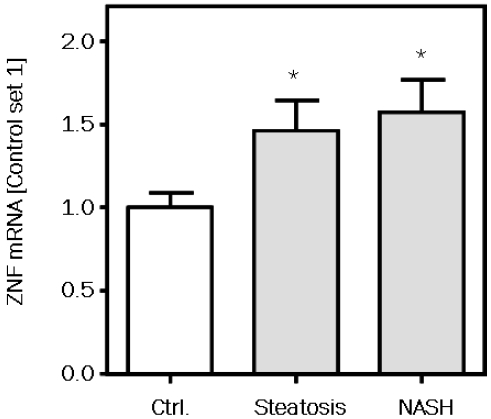
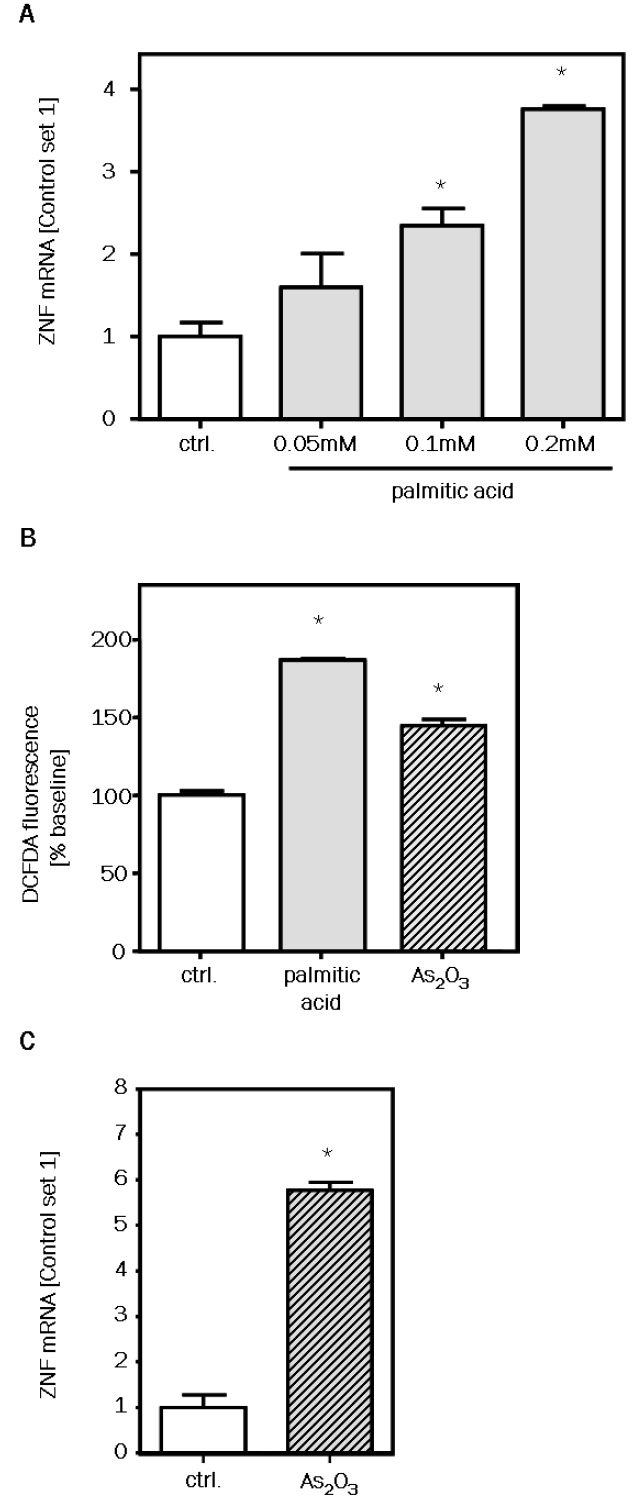
Hepatocellular lipid accumulation is a hallmark of non-alcoholicfatty liver disease (NAFLD), which encompasses a spectrum ranging from simple steatosis to non-alcoholic steatohepatitis (NASH) and ultimately cirrhosis. Zinc finger protein 267 (ZNF267) belongs to the family of Kruppel-like transcription factors, which regulate diverse biological processes that include development, proliferation, and differentiation. We have previously demonstrated that ZNF267 expression is up-regulated in liver cirrhosis and is further increased in hepatocellular carcinoma (HCC). Here, we analyzed the expression of ZNF267 in tissue specimens of NAFLD patients and found a significant up-regulation compared to normal liver tissue. Noteworthy, ZNF267 mRNA was already significantly increased in steatotic liver tissue without inflammation. In line with this, incubation of primary human hepatocytes with palmitic acid induced a dose-dependent lipid accumulation and corresponding dose-dependent ZNF267 induction in vitro. Furthermore, hepatocellular lipid accumulation induced formation of reactive oxygen species (ROS), and also chemically induced ROS formation increased ZNF267 mRNA expression. In summary with previous findings, which revealed ZNF267 as pro-fibrogenic and pro-cancerogenic factor in chronic liver disease, the present study further suggests ZNF267 as promising therapeutic target particularly for NAFLD patients. In addition, it further indicates that hepatic steatosis per se has pathophysiological relevance and should not be considered as benign.
Keywords: Kruppel-like factor; Non-alcoholic fatty liver disease; ZNF267.
Figures
References
-
- Li JC, Yang XR, Sun HX, Xu Y, Zhou J, Qiu SJ, Ke AW, Cui YH, Wang ZJ, Wang WM, Liu KD, Fan J. Up-regulation of Kruppel-like factor 8 promotes tumor invasion and indicates poor prognosis for hepatocellular carcinoma. Gas-troenterology. 2010;139:2146–2157. - PubMed
Publication types
MeSH terms
Substances
Grants and funding
LinkOut - more resources
Full Text Sources
Other Literature Sources
Medical
Molecular Biology Databases