


Methods to limit attrition in longitudinal comparative effectiveness trials: lessons from the Lithium Treatment - Moderate dose Use Study (LiTMUS) for bipolar disorder
- PMID: 22076437
- PMCID: PMC3700408
- DOI: 10.1177/1740774511427324
Methods to limit attrition in longitudinal comparative effectiveness trials: lessons from the Lithium Treatment - Moderate dose Use Study (LiTMUS) for bipolar disorder
Abstract
Background: High attrition rates, which occur frequently in longitudinal clinical trials of interventions for bipolar disorder, limit the interpretation of results.
Purpose: The aim of this article is to present design approaches that limited attrition in the Lithium Treatment - Moderate dose Use Study (LiTMUS) for bipolar disorder.
Methods: LiTMUS was a 6-month randomized, longitudinal multisite comparative effectiveness trial that enrolled bipolar participants who were at least mildly ill. Participants were randomized to either low to moderate doses of lithium or no lithium; other treatments needed for mood stabilization were administered in a guideline-informed, empirically supported, and personalized fashion to participants in both treatment arms.
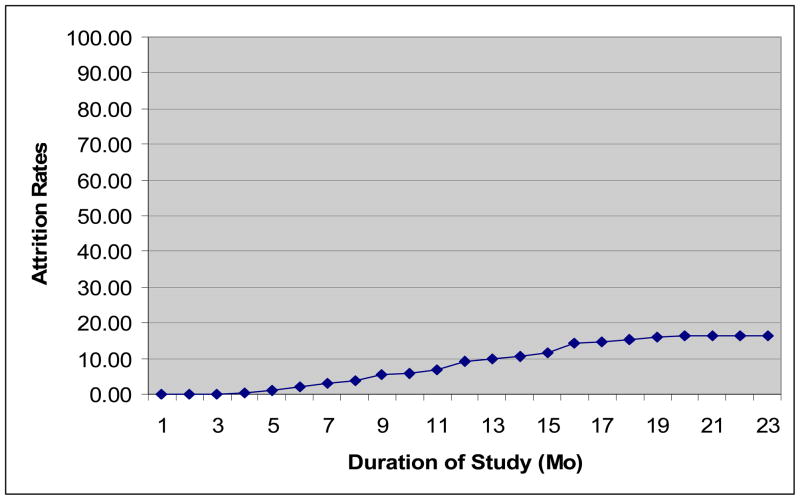
Results: Components of the study design that may have contributed to low attrition (16%) among 283 participants randomized included the use of (1) an intent-to-treat design, (2) a randomized adjunctive single-blind design, (3) participant reimbursement, (4) assessment of intent to attend the next study visit (included a discussion of attendance obstacles when intention was low), (5) quality care with limited participant burden, and (6) target windows for study visits.
Limitations: The relationships between attrition and effectiveness and tolerability of treatment have not been analyzed yet.
Conclusions: These components of the LiTMUS design may have limited attrition and may inform the design of future randomized comparative effectiveness trials among similar patients and those from other difficult-to-follow populations.
Trial registration: ClinicalTrials.gov NCT00667745.
Figures
References
-
- Thase ME. How should efficacy be evaluated in randomized clinical trials of treatments for depression? J Clin Psychiatry. 1999;60(Suppl 4):23–31. - PubMed
-
- Leon AC, Mallinckrodt CH, Chuang-Stein C, Archibald DG, Archer GE, Chartier K. Attrition in randomized controlled clinical trials: Methodological issues in psychopharmacology. Biol Psychiatry. 2006;59:1001–5. - PubMed
-
- Smith LA, Cornelius V, Warnock A, Tacchi MJ, Taylor D. Pharmacological interventions for acute bipolar mania: A systematic review of randomized placebo-controlled trials. Bipolar Disord. 2007;9:551–60. - PubMed
-
- Maarbjerg K, Aagaard J, Vestergaard P. Adherence to Lithium Prophylaxis: I. Clinical Predictors and Patient’s Reasons for Nonadherence. Pharmacopsychiatry. 1988;21:121–5. - PubMed
