


Epigenetics in breast cancer: what's new?
- PMID: 22078060
- PMCID: PMC3326545
- DOI: 10.1186/bcr2925
Epigenetics in breast cancer: what's new?
Abstract
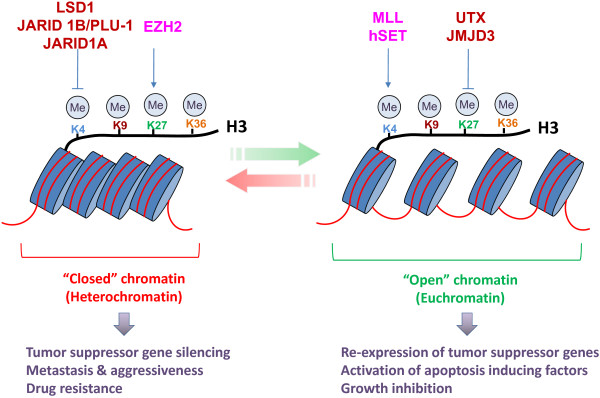
Epigenetic changes are critical for development and progression of cancers, including breast cancer. Significant progress has been made in the basic understanding of how various epigenetic changes such as DNA methylation, histone modification, miRNA expression, and higher order chromatin structure affect gene expression. The present review will focus on methylation and demethylation of histones. While the acetylation of histones has been at the forefront of well-characterized post-translational modifications of histones, including the development of inhibitors targeting de-acetylating enzymes, the past few years have witnessed a dramatic increase in knowledge regarding the role of histone methylation/demethylation. This is an exciting and rapidly evolving area of research, with much promise for potential clinical intervention in several cancers including breast cancer. We also summarize efforts to identity DNA methylation signatures that could be prognostic and/or predictive markers in breast cancer, focusing on recent studies using genome-wide approaches. Finally, we briefly review the efforts made by both the National Institutes of Health Epigenome Project and The Cancer Genome Atlas, especially highlighting the study of breast cancer epigenetics, exciting technological advances, potential roadblocks, and future directions.
Figures

Comment in
-
Targeting LSD2 in breast cancer.Aging (Albany NY). 2018 Jan 20;10(1):11-12. doi: 10.18632/aging.101371. Aging (Albany NY). 2018. PMID: 29356682 Free PMC article. No abstract available.
References
Publication types
MeSH terms
Substances
LinkOut - more resources
Full Text Sources
Medical
Miscellaneous
