


Preschoolers' psychosocial problems: in the eyes of the beholder? Adding teacher characteristics as determinants of discrepant parent-teacher reports
- PMID: 22080387
- PMCID: PMC3332350
- DOI: 10.1007/s10578-011-0271-0
Preschoolers' psychosocial problems: in the eyes of the beholder? Adding teacher characteristics as determinants of discrepant parent-teacher reports
Abstract
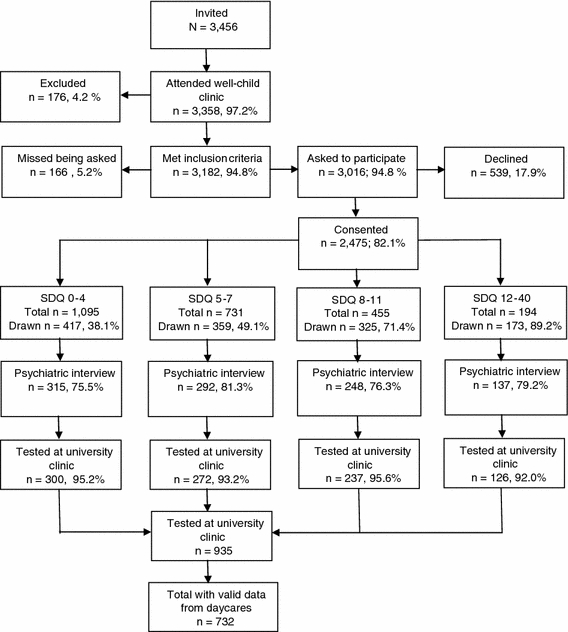
In this study, we explored informant characteristics as determinants of parent-teacher disagreement on preschoolers' psychosocial problems. Teacher characteristics were included in the analyses, in addition to child and parent factors. Psychosocial problems of 732 4-year olds from a Norwegian community sample were assessed by parents and teachers (CBCL-TRF). Furthermore, teachers reported on their education, experience and relationship to the child. Parental stress and psychopathology were also measured. Teachers rated children considerably lower than their parents did, especially on internalizing problems. When teachers rated more child problems, this was strongly associated with conflict in the teacher-child relationship, which predicted disagreement more than other factors. The highest agreement was on boys' externalizing problems. Girls' behavior was rated much lower by teachers than boys' behavior compared to parents' ratings. Possible teacher perception biases are discussed, such as teacher-child conflict, non-identification of internalizing problems, and same-gender child preference.
References
-
- De Los Reyes A, Goodman KL, Kliewer W, Reid-Quiñones K. Whose depression relates to discrepancies? Testing relations between informant characteristics and informant discrepancies from both informants’ perspectives. Psychol Assess. 2008;20:139–149. doi: 10.1037/1040-3590.20.2.139. - DOI - PMC - PubMed
