


The potential for poly (ADP-ribose) polymerase inhibitors in cancer therapy
- PMID: 22084640
- PMCID: PMC3210467
- DOI: 10.1177/1758834011417039
The potential for poly (ADP-ribose) polymerase inhibitors in cancer therapy
Abstract
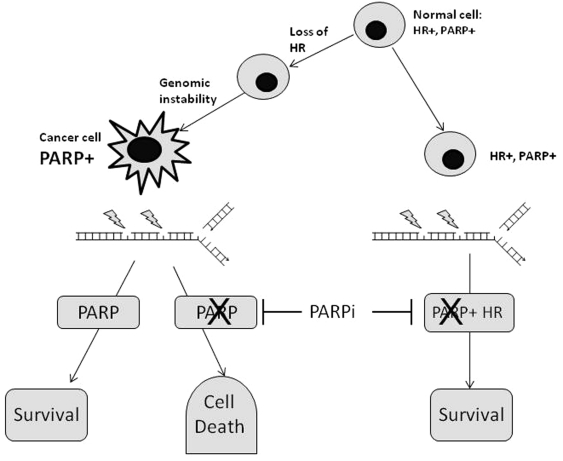
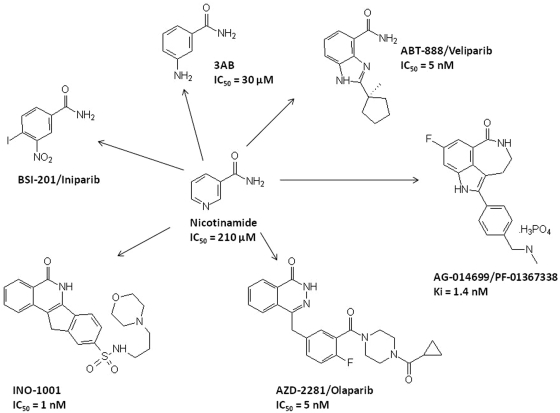
The modulation of DNA repair pathways for therapeutic benefit in cancer has now become a reality with the development of poly (ADP-ribose) polymerase inhibitors (PARPi). PARP is involved in single-strand DNA breaks, which in the presence of defective homologous recombination repair lead to double-strand DNA breaks, the most lethal form of DNA damage. These agents therefore may be the drugs of choice for BRCA mutant breast and ovarian cancers. PARPi result in synergistic antitumor effects when combined with cisplatin, temozolomide, topoisomerase inhibitors and ionizing radiation. The indications for PARPi lie beyond BRCA mutations and may include genomic and functional defects in DNA repair and damage response pathways. Several PARPi are in the clinical development phase at this time and, given the recent failure of a phase III clinical trial of iniparib in triple-negative breast cancer, the identification of structural and functional differences between these inhibitors becomes critical. Acquired resistance to PARPi is being noted and represents an important limitation in this field. A concise review of the literature in this field is presented.
Keywords: BRCA2 gene; DNA repair-deficiency disorders; poly (ADP-ribose) polymerases.
Figures
References
-
- Ashworth A. (2008) A synthetic lethal therapeutic approach: poly(ADP) ribose polymerase inhibitors for the treatment of cancers deficient in DNA double-strand break repair. J Clin Oncol 26: 3785–3790 - PubMed
LinkOut - more resources
Full Text Sources
Other Literature Sources
Miscellaneous
