. 2011;6(11):e27160.
doi: 10.1371/journal.pone.0027160. Epub 2011 Nov 8.

Time-resolved transcriptomics and bioinformatic analyses reveal intrinsic stress responses during batch culture of Bacillus subtilis

Affiliations

Time-resolved transcriptomics and bioinformatic analyses reveal intrinsic stress responses during batch culture of Bacillus subtilis

Evert-Jan Blom et al. PLoS One. 2011.

Abstract

We have determined the time-resolved transcriptome of the model gram-positive organism B. subtilis during growth in a batch fermentor on rich medium. DNA microarrays were used to monitor gene transcription using 10-minute intervals at 40 consecutive time points. From the growth curve and analysis of all gene expression levels, we identified 4 distinct growth phases and one clear transition point: a lag phase, an exponential growth phase, the transition point and the very clearly separated early and late stationary growth phases. The gene expression profiles suggest the occurrence of stress responses at specific times although no external stresses were applied. The first one is a small induction of the SigB regulon that occurs at the transition point. Remarkably, a very strong response is observed for the SigW regulon, which is highly upregulated at the onset of the late stationary phase. Bioinformatic analyses that were performed on our data set suggest several novel putative motifs for regulator binding. In addition, the expression profiles of several genes appeared to correlate with the oxygen concentration. This data set of the expression profiles of all B. subtilis genes during the entire growth curve on rich medium constitutes a rich repository that can be further mined by the scientific community.


Conflict of interest statement

Competing Interests: The authors have declared that no competing interests exist.

Figures

Figure 1
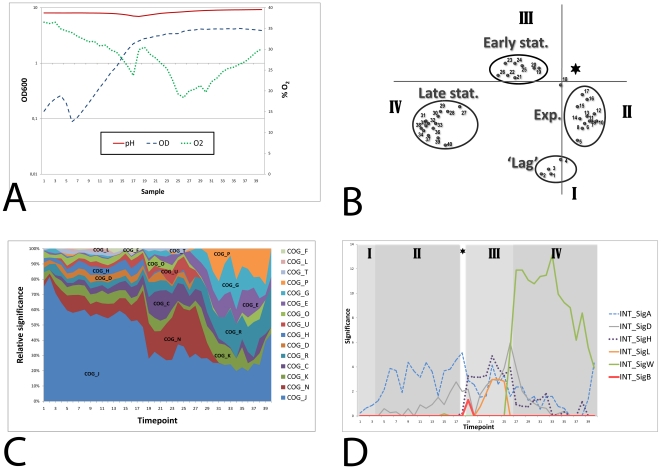
Figure 1. Growth curve and general characterization of the time-series experiment.
A) Optical density (OD600), pH and oxygen levels (% O2) of the culture were monitored. B) Visualization of the first two components from the PCA analysis. I: lag phase, II: exponential growth phase, III: early stationary phase, IV: late stationary phase. The asterisk represents the transition point. C) Significantly overrepresented COG classes (log transformed p-values (á = 0.05 and Bonferroni corrected)) scaled per time point. COG_J: Translation, ribosomal structure and biogenesis, COG_K: Transcription, COG_L: DNA replication, recombination and repair, COG_D: Cell division and chromosome partitioning, COG_O: Posttranslational modification, protein turnover, chaperones, COG_N: Cell motility and secretion, COG_P: Inorganic ion transport and metabolism, COG_T: Signal transduction mechanisms, COG_C: Energy production and conversion, COG_G: Carbohydrate transport and metabolism, COG_E: Amino acid transport and metabolism, COG_F: Nucleotide transport and metabolism, COG_H: Coenzyme metabolism, COG_U: Intracellular trafficking and secretion, COG_R: General function prediction only. D) Significantly overrepresented sigma factor regulons (log transformed p-values (á = 0.05 and Bonferroni corrected)). The different growth-phases that were identified by the PCA analysis are visualized in the expression graph. I: lag phase, II: exponential growth phase, III: early stationary growth phase. IV: late stationary growth phase. The asterisk represents the transition point.
Figure 2
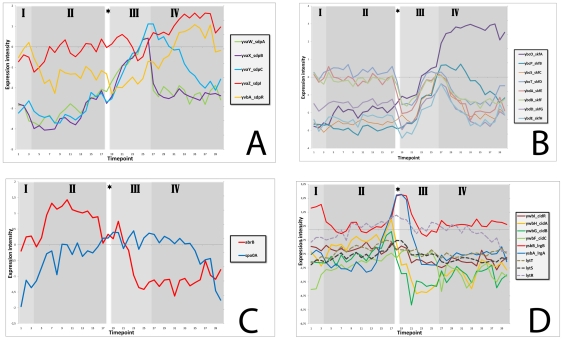
Figure 2. Expression profiles of genes involved in the production of toxic proteins.
A) The sdp operon. B) The skf operon. C) The regulators AbrB and Spo0A. D) Antiholin lrgAB, holin cidA, remaining members of operon ywbGF, putative regulator ywbI, and the lytST two-component regulatory system.
Figure 3
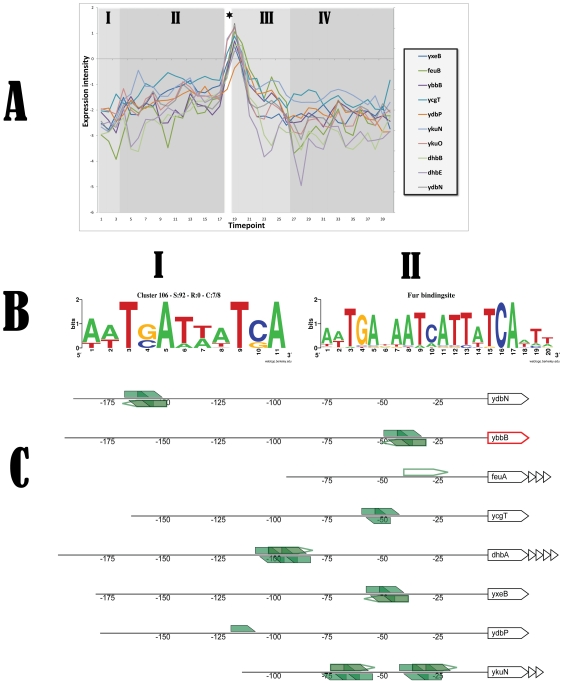
Figure 3. Information for cluster 106 obtained by a K-means clustering analysis using 189 clusters.
The most overrepresented DNA binding site was identified in the upstream regions of the operon members of this cluster. A) Expression graph of the members of cluster 106. B.I) Most overrepresented motif that was identified in 7 out of 8 operons of the cluster. B.II) The most overrepresented motif from B.I shows high similarity with the known DNA binding site of Fur. C) Visualization of the genomic context of putative and known motifs in the upstream sequences of the operons. Open polygons represent known binding sites derived from literature sources. Filled polygons depict putative motifs, numbers represent the upstream region. The first gene of the operon is displayed; remaining members of this operon are visualized as triangles. Genes coding for a putative regulator are colored red.

References

    1. Barbe V, Cruveiller S, Kunst F, Lenoble P, Meurice G, et al. From a consortium sequence to a unified sequence: the Bacillus subtilis 168 reference genome a decade later. Microbiology. 2009;155:1758–1775. - PMC - PubMed
    1. Kobayashi K, Ehrlich SD, Albertini A, Amati G, Andersen KK, et al. Essential Bacillus subtilis genes. Proc Natl Acad Sci U S A. 2003;100:4678–4683. - PMC - PubMed
    1. Rasmussen S, Nielsen HB, Jarmer H. The transcriptionally active regions in the genome of Bacillus subtilis. Mol Microbiol. 2009;73:1043–1057. - PMC - PubMed
    1. Wolff S, Antelmann H, Albrecht D, Becher D, Bernhardt J, et al. Towards the entire proteome of the model bacterium Bacillus subtilis by gel-based and gel-free approaches. J Chromatogr B Analyt Technol Biomed Life Sci. 2007;849:129–140. - PubMed
    1. Becher D, Büttner K, Moche M, Hessling B, Hecker M. From the genome sequence to the protein inventory of Bacillus subtilis. Proteomics. 2011;11:2971–2980. - PubMed

Publication types

Associated data