Prophylactic and therapeutic vaccination using dendritic cells primed with peptide 10 derived from the 43-kilodalton glycoprotein of Paracoccidioides brasiliensis
- PMID: 22089247
- PMCID: PMC3255948
- DOI: 10.1128/CVI.05414-11
Prophylactic and therapeutic vaccination using dendritic cells primed with peptide 10 derived from the 43-kilodalton glycoprotein of Paracoccidioides brasiliensis
Abstract
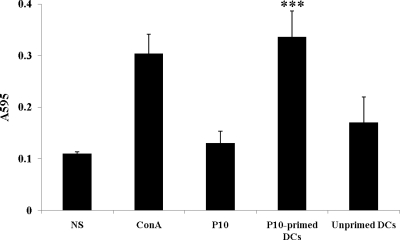
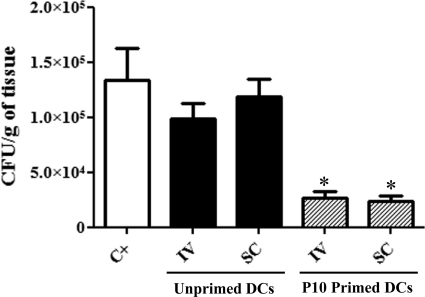
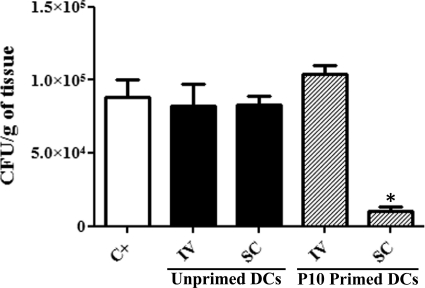
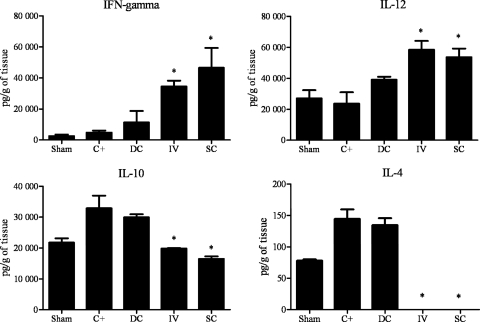
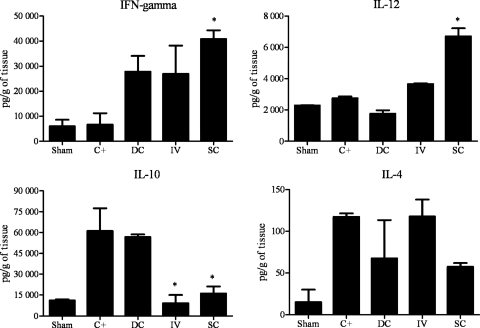
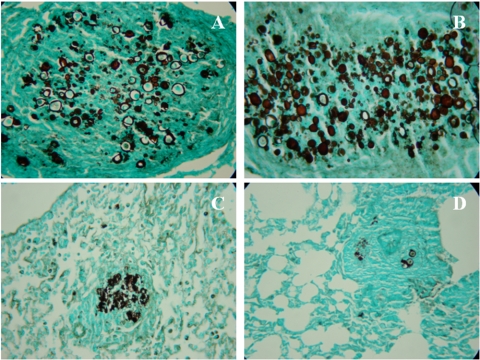
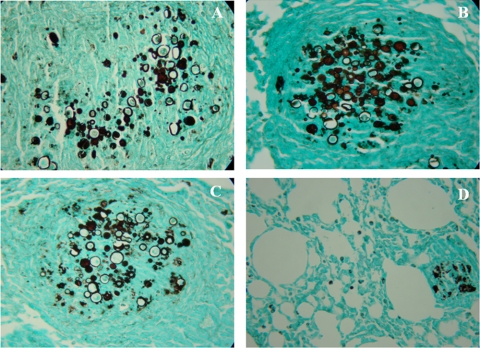
Vaccination with peptide 10 (P10), derived from the Paracoccidioides brasiliensis glycoprotein 43 (gp43), induces a Th1 response that protects mice in an intratracheal P. brasiliensis infection model. Combining P10 with complete Freund's adjuvant (CFA) or other adjuvants further increases the peptide's antifungal effect. Since dendritic cells (DCs) are up to 1,000-fold more efficient at activating T cells than CFA, we examined the impact of P10-primed bone-marrow-derived DC vaccination in mice. Splenocytes from mice immunized with P10 were stimulated in vitro with P10 or P10-primed DCs. T cell proliferation was significantly increased in the presence of P10-primed DCs compared to the peptide. The protective efficacy of P10-primed DCs was studied in an intratracheal P. brasiliensis model in BALB/c mice. Administration of P10-primed DCs prior to (via subcutaneous vaccination) or weeks after (via either subcutaneous or intravenous injection) P. brasiliensis infection decreased pulmonary damage and significantly reduced fungal burdens. The protective response mediated by the injection of primed DCs was characterized mainly by an increased production of gamma interferon (IFN-γ) and interleukin 12 (IL-12) and a reduction in IL-10 and IL-4 compared to those of infected mice that received saline or unprimed DCs. Hence, our data demonstrate the potential of P10-primed DCs as a vaccine capable of both the rapid protection against the development of serious paracoccidioidomycosis or the treatment of established P. brasiliensis disease.
Figures
References
-
- Almeida SR, Lopes JD. 2001. The low efficiency of dendritic cells and macrophages from mice susceptible to Paracoccidioides brasiliensis in inducing a Th1 response. Braz. J. Med. Biol. Res. 34: 529–537 - PubMed
-
- Austyn JM. 2000. Antigen-presenting cells. Experimental and clinical studies of dendritic cells. Am. J. Respir. Crit. Care Med. 162 (Part 2): S146–S150 - PubMed
-
- Banchereau J, et al. 2000. Immunobiology of dendritic cells. Annu. Rev. Immunol. 18: 767–811 - PubMed
-
- Banchereau J, Steinman RM. 1998. Dendritic cells and the control of immunity. Nature 392: 245–252 - PubMed
Publication types
MeSH terms
Substances
LinkOut - more resources
Full Text Sources
Medical