


Mathematical model identifies blood biomarker-based early cancer detection strategies and limitations
- PMID: 22089452
- PMCID: PMC3423335
- DOI: 10.1126/scitranslmed.3003110
Mathematical model identifies blood biomarker-based early cancer detection strategies and limitations
Abstract
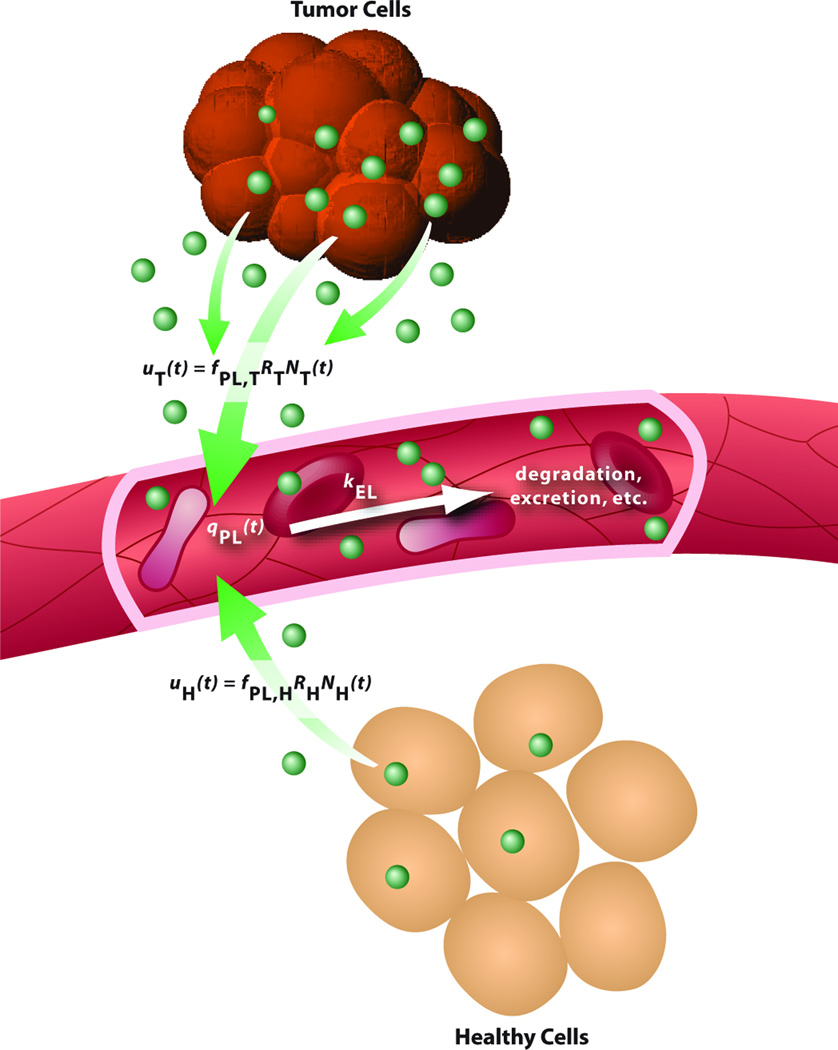
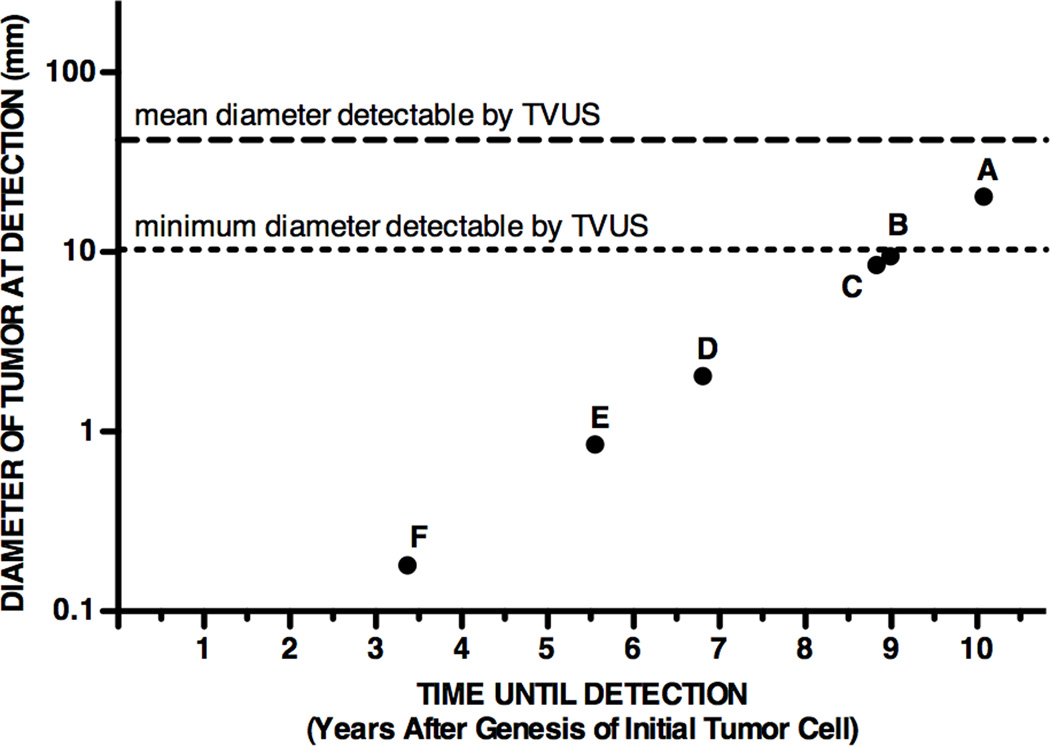
Most clinical blood biomarkers lack the necessary sensitivity and specificity to reliably detect cancer at an early stage, when it is best treatable. It is not yet clear how early a clinical blood assay can be used to detect cancer or how biomarker-based strategies can be improved to enable earlier detection of smaller tumors. To address these issues, we developed a mathematical model describing dynamic plasma biomarker kinetics in relation to the growth of a tumor, beginning with a single cancer cell. To exemplify a realistic scenario in which biomarker is shed by both cancerous and noncancerous cells, we primed the model on ovarian tumor growth and CA125 shedding data, for which tumor growth parameters and shedding rates are readily available in published literature. We found that a tumor could grow unnoticed for more than 10.1 years and reach a volume of about π/6(25.36 mm)(3), corresponding to a spherical diameter of about 25.36 mm, before becoming detectable by current clinical blood assays. Model parameters were perturbed over log orders of magnitude to quantify ideal shedding rates and identify other blood-based strategies required for early submillimeter tumor detectability. The detection times we estimated are consistent with recently published tumor progression time lines based on clinical genomic sequencing data for several cancers. Here, we rigorously showed that shedding rates of current clinical blood biomarkers are likely 10(4)-fold too low to enable detection of a developing tumor within the first decade of tumor growth. The model presented here can be extended to virtually any solid cancer and associated biomarkers.
Figures
Comment in
-
Biomarkers: Major mathematical hurdles for biomarker-based screening.Nat Rev Cancer. 2011 Dec 8;12(1):3. doi: 10.1038/nrc3191. Nat Rev Cancer. 2011. PMID: 22158023 No abstract available.
References
-
- Etzioni R, Urban N, Ramsey S, McIntosh M, Schwartz S, Reid B, Radich J, Anderson G, Hartwell L. The case for early detection. Nat Rev Cancer. 2003;3:243–252. - PubMed
-
- Gambhir SS. Novel Strategies and Challenges for Early Relevant Cancer Detection. Science. 2011 In Press.
-
- Dutta S, Wang FQ, Fishman DA. The dire need to develop a clinically validated screening method for the detection of early-stage ovarian cancer. Biomark Med. 2010;4:437–439. - PubMed
Publication types
MeSH terms
Substances
Grants and funding
LinkOut - more resources
Full Text Sources
Other Literature Sources
Research Materials
Miscellaneous
