


Successful prevention of tunneled, central catheter infection by antibiotic lock therapy using cefotaxime
- PMID: 22091249
- PMCID: PMC3214338
Successful prevention of tunneled, central catheter infection by antibiotic lock therapy using cefotaxime
Abstract
Background: Chronic hemodialysis patients frequently require vascular access through central venous catheters (CVCs). The most significant complication of these catheters is infection. This risk can be lowered by the use of an antibiotic-Heparin lock. This study focuses on hemodialysis patients using Tunneled-cuffed catheters (TCC), to assess the rate of catheter-related infections (CRI) in catheter-restricted filling with Cefotaxime and Heparin in end stage renal disease patients.
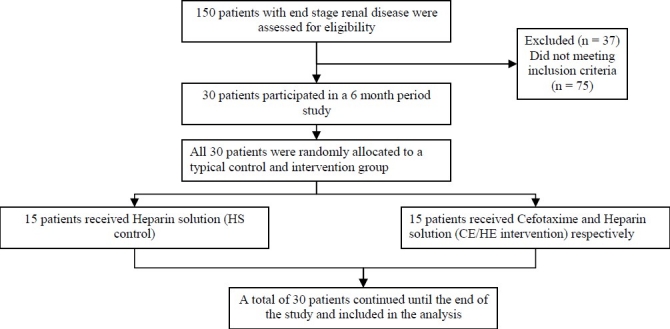
Methods: A double-blind randomized study was conducted to compare 5000 U/ml Heparin plus10 mg/ml cefotaxime (CE/HS) as catheter-lock solutions, with Heparin (5000 U/ml) alone. A total of 30 patients with end-stage renal disease and different etiologies, were enrolled for chronic hemodialysis with permanent catheters from December 2009 to March 2010. These patients were randomly assigned to two groups of 15 members. Blood samples were collected for culture, sensitivity, and colony count, from the catheter lumen and the peripheral vein. CRI was considered as the end point.
Results: The rate of CRI was significantly lower in the cefotaxime group versus control group (p < 0.001). No exit site infection was occurred in both groups. Infection-free survival rates at 180 days were 100% for the CE/HS group, and 56% for the HS group.
Conclusions: Antibiotic lock therapy using cefotaxime reduces the risk of CRI in hemodialysis patients.
Keywords: Catheter; Cefotaxime; Hemodialysis; Heparin; Lock Solution Infection.
Conflict of interest statement
References
-
- Bristol: UK Renal Registry; 2005. UK Renal Registry. New Adult Patients Starting Renal Replacement Therapy in the UK in 2004; pp. 12–26.
-
- Allon M, Radeva M, Bailey J, Beddhu S, Butterly D, Coyne DW, et al. The spectrum of infection-related morbid-ity in hospitalized haemodialysis patients. Nephrol Dial Transplant. 2005;20(6):1180–6. - PubMed
-
- Bethesda, MD: National Institutes of Health, National Institute of Diabetes and Digestive and Kidney Diseases; 2004. U.S. Renal Data System, USRDS 2004 Annual Data Report: Atlas of End-Stage Renal Disease in the United States.
-
- Saxena AK, Panhotra BR. The impact of catheter-restricted filling with cefotaxime and heparin on the lifespan of temporary hemodialysis catheters: a case controlled study. J Nephrol. 2005;18(6):755–63. - PubMed
-
- Pastan S, Soucie JM, McClellan WM. Vascular access and increased risk of death among hemodialysis patients. Kidney Int. 2002;62(2):620–6. - PubMed
LinkOut - more resources
Full Text Sources