Review
. 2012 May;36(3):717-33.
doi: 10.1111/j.1574-6976.2011.00305.x. Epub 2011 Oct 4.

Mechanisms of Toxoplasma gondii persistence and latency

Affiliations
Review

Mechanisms of Toxoplasma gondii persistence and latency

William J Sullivan Jr et al. FEMS Microbiol Rev. 2012 May.

Abstract

Toxoplasma gondii is an obligate intracellular protozoan parasite that causes opportunistic disease, particularly in immunocompromised individuals. Central to its transmission and pathogenesis is the ability of the proliferative stage (tachyzoite) to convert into latent tissue cysts (bradyzoites). Encystment allows Toxoplasma to persist in the host and affords the parasite a unique opportunity to spread to new hosts without proceeding through its sexual stage, which is restricted to felids. Bradyzoite tissue cysts can cause reactivated toxoplasmosis if host immunity becomes impaired. A greater understanding of the molecular mechanisms orchestrating bradyzoite development is needed to better manage the disease. Here, we will review key studies that have contributed to our knowledge about this persistent form of the parasite and how to study it, with a focus on how cellular stress can signal for the reprogramming of gene expression needed during bradyzoite development.


Figures

Figure 1
Figure 1. Life cycle of Toxoplasma gondii
The definitive host of Toxoplasma is the cat (members of the Felidae family), the only organisms capable of supporting the sexual stage of the parasite. Infected cats excrete stable, infectious oocysts into the environment that transmit the parasite to other warm blooded animals, which serve as intermediate hosts. Within intermediate hosts, Toxoplasma persists as infectious bradyzoites within tissue cysts, providing another route of transmission via carnivorism. Infection of humans may occur via two routes: direct exposure to oocysts in the environment or from contaminated food or water, and ingestion of bradyzoite tissue cysts in undercooked meat. Primary infection of the fetus can occur during pregnancy if tachyzoites cross the placental barrier, leading to congenital birth defects or spontaneous abortion.
Figure 2
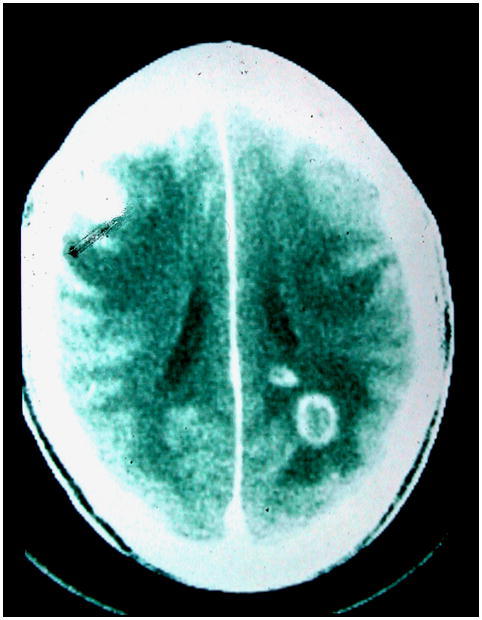
Figure 2. Reactivated Toxoplasma infection
Brain CT scan with contrast shows reactivation of disease in an HIV positive patient (male Hispanic age 28 with CD4 count of 48). The ring enhancing lesion has surrounding edema. Image courtesy of Dr. LM Weiss Albert Einstein College of Medicine.
Figure 3
Figure 3. Bradyzoite cyst and morphology
A. Phase image of a brain cyst harboring hundreds of bradyzoites isolated from a chronically infected mouse. Image courtesy of Dr. LM Weiss, Albert Einstein College of Medicine. B. Electron micrograph shows detail of bradyzoites within an intracellular tissue cyst. Note the posterior location of the parasite nucleus, abundance of amylopectin granules (white) and micronemes (black). Image courtesy of Dr. David Ferguson, University of Oxford.
Figure 4
Figure 4. Dolichos lectin stains bradyzoite cyst wall
Type II strain ME49 tachyzoites were grown in human foreskin fibroblasts and induced to form bradyzoite tissue cysts by alkaline stress (pH 8.2) for 7 days. Following methanol fixation, tissue cysts were detected using FITC-conjugated Dolichos biflorus lectin. 4′,6-diamidino-2-phenylindole (DAPI) was used as a co-stain of DNA. Image courtesy of Dr. Christian Konrad (Sullivan laboratory).
Figure 5
Figure 5. Stage differentiation of Toxoplasma
Replicating tachyzoites convert to latent bradyzoites in response to a wide variety of stresses (see text and Box 1), and bradyzoites can reconvert into proliferating tachyzoites if stress is removed or immunity is impaired. The transition from tachyzoite to bradyzoite is associated with morphological changes that include narrowing of the parasite body, movement of the nucleus towards the parasite posterior, an increase in the number of micronemes (blue) and amylopectin granules (white), and more electron dense rhoptries (maroon). One stress response pathway linked to stage conversion involves the phosphorylation of the alpha subunit of eukaryotic initiation factor-2 (TgIF2α), which is mediated by stress-activated TgIF2α kinases (TgIF2Ks). Phosphorylated TgIF2α represses global translation, allowing preferential translation of a subset of mRNAs that encode stress responsive factors. Bradyzoites maintain high levels of phosphorylated TgIF2α relative to proliferating tachyzoites. In addition to translational control, transcription and epigenetic factors have also been implicated in stage conversion. Histone acetylation in particular has been correlated with stage-specific gene expression: in tachyzoites, promoters of tachyzoite-specific (TZ) genes contain acetylated nucleosomes while promoters of bradyzoite-specific genes (BZ) do not (active genes are denoted in green, repressed genes in red). Histone acetylation contributes to the restructuring of chromatin to create a local environment more conducive to gene expression.

References

    1. Al-Anouti F, Tomavo S, Parmley S, Ananvoranich S. The expression of lactate dehydrogenase is important for the cell cycle of Toxoplasma gondii. J Biol Chem. 2004;279:52300–52311. - PubMed
    1. Anderson MZ, Brewer J, Singh U, Boothroyd JC. A pseudouridine synthase homologue is critical to cellular differentiation in Toxoplasma gondii. Eukaryot Cell. 2009;8:398–409. - PMC - PubMed
    1. Barragan A, Sibley LD. Transepithelial migration of Toxoplasma gondii is linked to parasite motility and virulence. J Exp Med. 2002;195:1625–1633. - PMC - PubMed
    1. Behnke MS, Radke JB, Smith AT, Sullivan WJ, Jr, White MW. The transcription of bradyzoite genes in Toxoplasma gondii is controlled by autonomous promoter elements. Mol Microbiol. 2008;68:1502–1518. - PMC - PubMed
    1. Behnke MS, Wootton JC, Lehmann MM, et al. Coordinated progression through two subtranscriptomes underlies the tachyzoite cycle of Toxoplasma gondii. PLoS One. 2010;5:e12354. - PMC - PubMed

Publication types

MeSH terms