


Sphagnum mosses harbour highly specific bacterial diversity during their whole lifecycle
- PMID: 22094342
- PMCID: PMC3309359
- DOI: 10.1038/ismej.2011.151
Sphagnum mosses harbour highly specific bacterial diversity during their whole lifecycle
Abstract
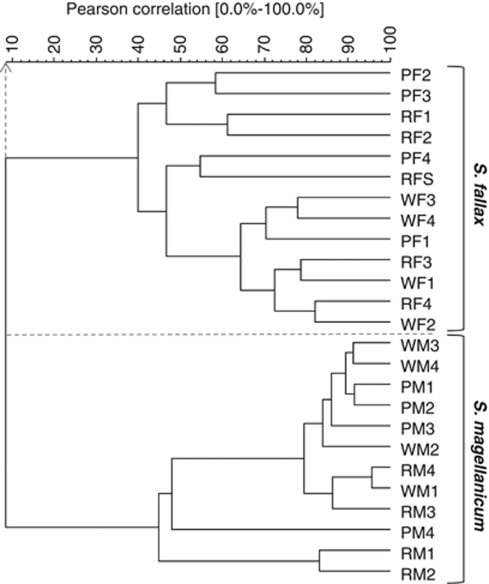
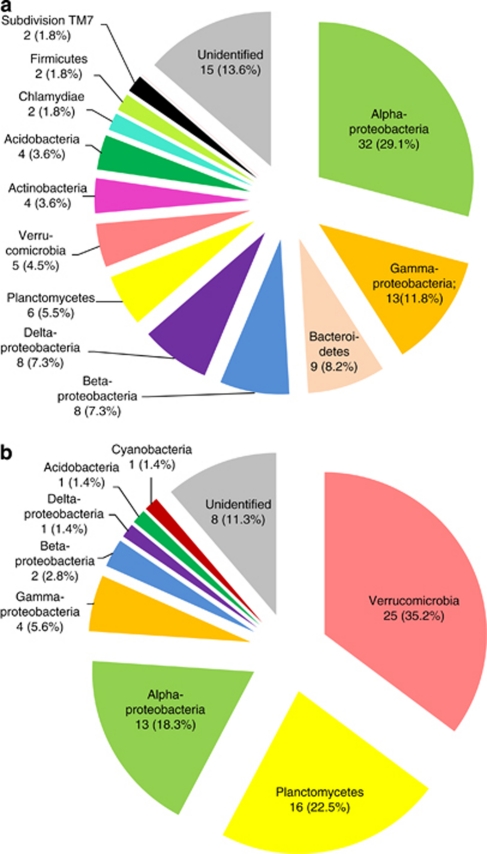
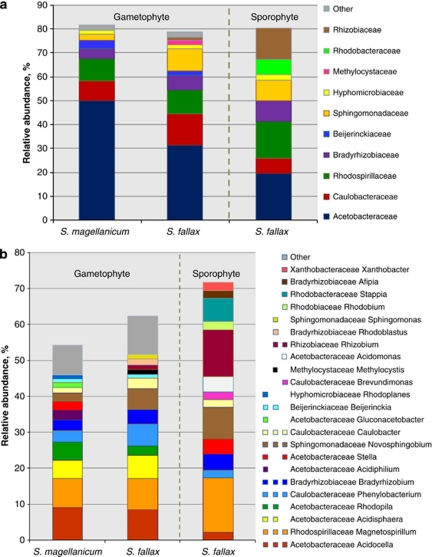
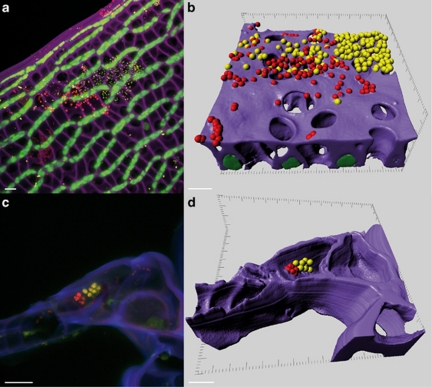
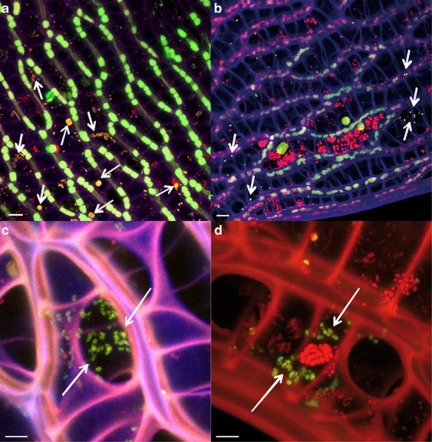
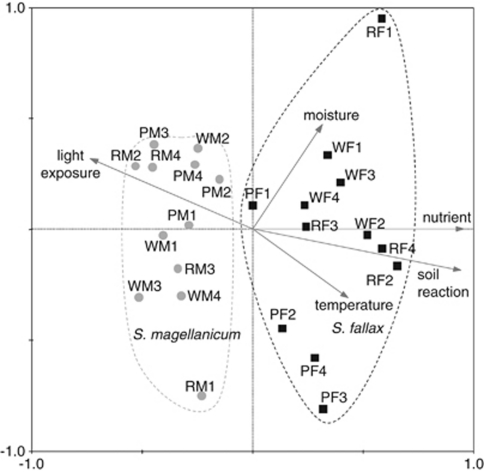
Knowledge about Sphagnum-associated microbial communities, their structure and their origin is important to understand and maintain climate-relevant Sphagnum-dominated bog ecosystems. We studied bacterial communities of two cosmopolitan Sphagnum species, which are well adapted to different abiotic parameters (Sphagnum magellanicum, which are strongly acidic and ombrotrophic, and Sphagnum fallax, which are weakly acidic and mesotrophic), in three Alpine bogs in Austria by a multifaceted approach. Great differences between bacterial fingerprints of both Sphagna were found independently from the site. This remarkable specificity was confirmed by a cloning and a deep sequencing approach. Besides the common Alphaproteobacteria, we found a discriminative spectrum of bacteria; although Gammaproteobacteria dominated S. magellanicum, S. fallax was mainly colonised by Verrucomicrobia and Planctomycetes. Using this information for fluorescent in situ hybridisation analyses, corresponding colonisation patterns for Alphaproteobacteria and Planctomycetes were detected. Bacterial colonies were found in high abundances inside the dead big hyalocytes, but they were always connected with the living chlorocytes. Using multivariate statistical analysis, the abiotic factors nutrient richness and pH were identified to modulate the composition of Sphagnum-specific bacterial communities. Interestingly, we found that the immense bacterial diversity was transferred via the sporophyte to the gametophyte, which can explain the high specificity of Sphagnum-associated bacteria over long distances. In contrast to higher plants, which acquire their bacteria mainly from the environment, mosses as the phylogenetically oldest land plants maintain their bacterial diversity within the whole lifecycle.
Figures
References
-
- Belyea LR, Malmer N. Carbon sequestration in peatland: patterns and mechanisms of response to climate change. Glob Change Biol. 2004;10:1043–1052.
-
- Berg G, Krechel A, Ditz M, Sikora RA, Ulrich A, Hallman J. Endophytic and ectophytic potato-associated bacterial communities differ in structure and antagonistic function against plant pathogenic fungi. FEMS Microbiol Ecol. 2005;51:215–229. - PubMed
-
- Berg G, Smalla K. Plant species and soil type cooperatively shape the structure and function of microbial communities in the rhizosphere. FEMS Microbiol Ecol. 2009;68:1–13. - PubMed
