


Multidimensional predictors of fatigue among octogenarians and centenarians
- PMID: 22094445
- PMCID: PMC3362238
- DOI: 10.1159/000332214
Multidimensional predictors of fatigue among octogenarians and centenarians
Abstract
Background: Fatigue is a common and frequently observed complaint among older adults. However, knowledge about the nature and correlates of fatigue in old age is very limited.
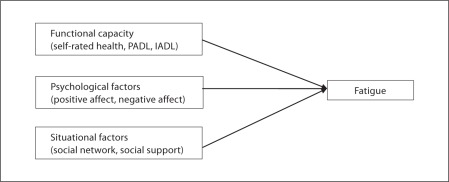
Objective: This study examined the relationship of functional indicators, psychological and situational factors and fatigue for 210 octogenarians and centenarians from the Georgia Centenarian Study.
Methods: Three indicators of functional capacity (self-rated health, instrumental activities of daily living, physical activities of daily living), two indicators of psychological well-being (positive and negative affect), two indicators of situational factors (social network and social support), and a multidimensional fatigue scale were used. Blocked multiple regression analyses were computed to examine significant factors related to fatigue. In addition, multi-group analysis in structural equation modeling was used to investigate residential differences (i.e., long-term care facilities vs. private homes) in the relationship between significant factors and fatigue.
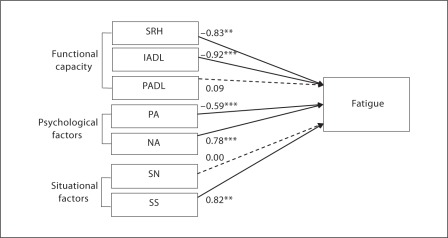
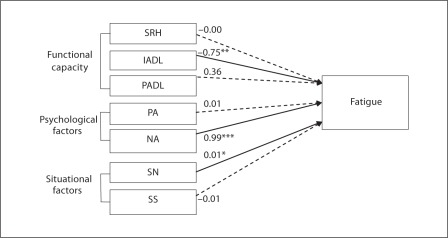
Results: Blocked multiple regression analyses indicated that two indicators of functional capacity, self-rated health and instrumental activities of daily living, both positive and negative affect, and social support were significant predictors of fatigue among oldest-old adults. The multiple group analysis in structural equation modeling revealed a significant difference among oldest-old adults based on residential status.
Conclusion: The results suggest that we should not consider fatigue as merely an unpleasant physical symptom, but rather adopt a perspective that different factors such as psychosocial aspects can influence fatigue in advanced later life.
Copyright © 2011 S. Karger AG, Basel.
Figures
References
-
- Poluri A, Mores J, Cook DB, Findley TW, Cristian A. Fatigue in the elderly population. Phys Med Rehabil Clin N Am. 2005;16:91–108. - PubMed
-
- Gialamas A, Beilby JJ, Pratt NL, Henning R, Marley JE, Roddick JF. Investigating tiredness in Australian general practice. Do pathology tests help in diagnosis? Aust Fam Physician. 2003;32:663–666. - PubMed
-
- Murtagh J. Fatigue – a general diagnostic approach. Aust Fam Physician. 2003;32:873–876. - PubMed
-
- Ferrell BR, Grand M, Funk B, Ly J. ‘Bone tired’: the experience of fatigue and its impact on quality of life. Oncol Nurs Forum. 1996;23:1539–1547.
-
- Blesch KS, Paice JA, Wichkham R, Harte N, Schnoor DK, Purl S, Rehwalt M, Kopp PL, Mason S, Coveny SB, McHale M, Cahill M. Correlates of fatigue in people with breast or lung cancer. Oncol Nurs Forum. 1991;18:81–87. - PubMed
Publication types
MeSH terms
Grants and funding
LinkOut - more resources
Full Text Sources
Medical
