Hemodynamic stress response during laparoscopic cholecystectomy: Effect of two different doses of intravenous clonidine premedication
- PMID: 22096279
- PMCID: PMC3214551
- DOI: 10.4103/0970-9185.86586
Hemodynamic stress response during laparoscopic cholecystectomy: Effect of two different doses of intravenous clonidine premedication
Abstract
Background: Clonidine has emerged as an attractive premedication desirable in laparoscopic surgery wherein significant hemodynamic stress response is seen. The minimum safe and effective dose of intravenous clonidine to attenuate the hemodynamic stress response during laparoscopic surgery has however not yet been determined.
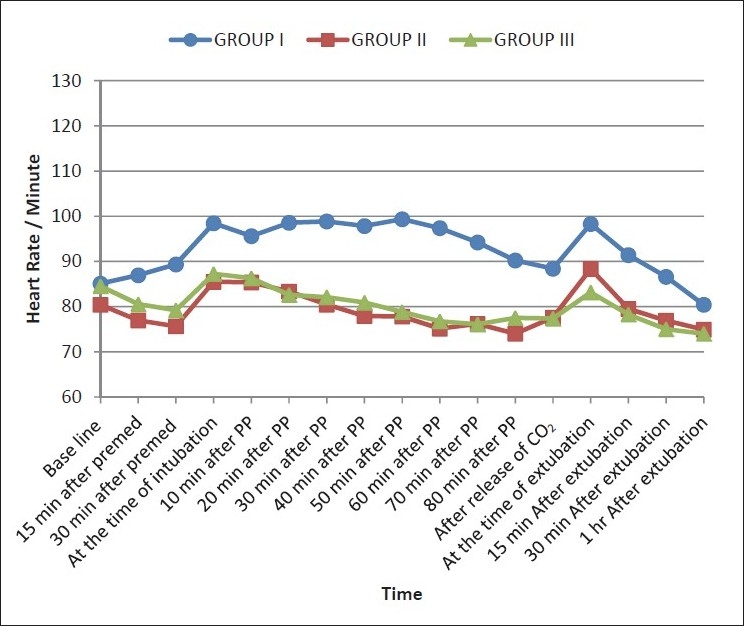
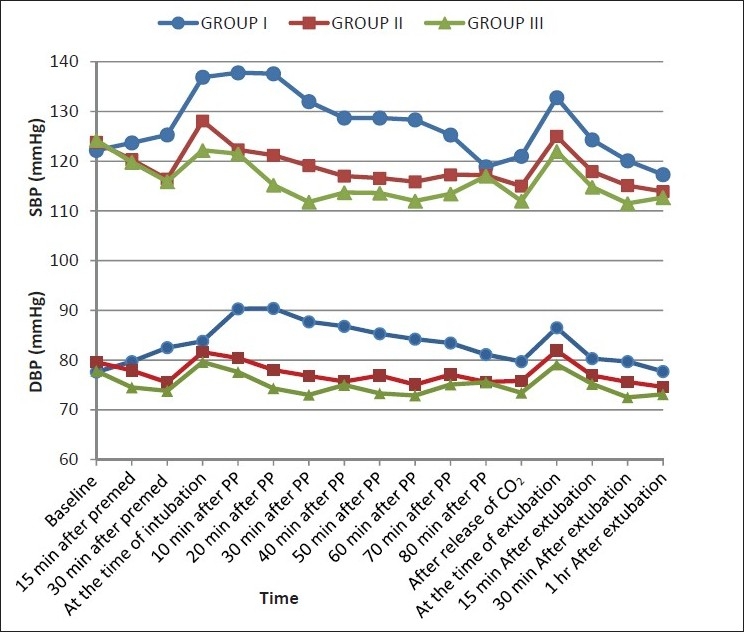
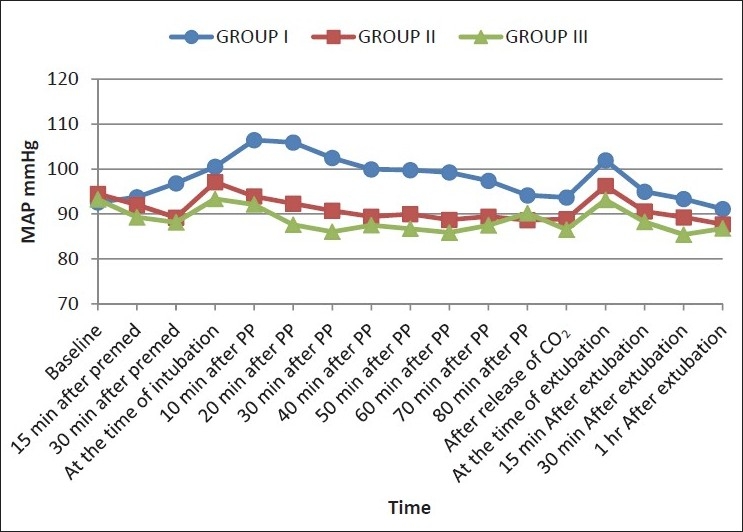
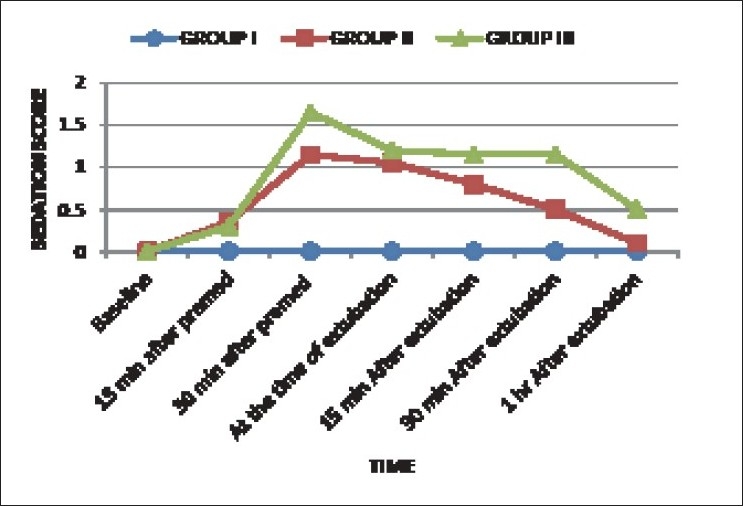
Materials and methods: This prospective, randomized, double-blind controlled study was conducted on 90 adults of ASA physical status I and II, scheduled for laparoscopic cholecystectomy under general anesthesia. Patients were randomized to one of the three groups (n= 30). Group I received 100 ml of normal saline, while groups II and III received 1 μg/ kg and 2 μg/ kg of clonidine respectively, intravenous, in 100 ml of normal saline along. All patients received glycopyrrolate 0.004 mg/kg and tramadol 1.5 mg/kg intravenously, 30 min before induction. Hemodynamic variables (heart rate, systolic, diastolic, mean arterial pressure), SpO2, and sedation score were recorded at specific timings. MAP above 20% from baseline was considered significant and treated with nitroglycerine.
Results: In group I, there was a significant increase in hemodynamic variables during intubation pneumoperitoneum and extubation (P<0.001). Clonidine given 1 μg/kg intravenous attenuated hemodynamic stress response to pneumoperitoneum (P<0.05), but not that associated with intubation and extubation. Clonidine 2 μg/kg intravenous prevented hemodynamic stress response to pneumoperitoneum and that associated with intubation and extubation (P<0.05). As against 14 and 2 patients in groups I and II respectively, no patient required nitroglycerine infusion in group III.
Conclusions: Clonidine, 2 μg/ kg intravenously, 30 min before induction is safe and effective in preventing the hemodynamic stress response during laparoscopic cholecystectomy.
Keywords: Clonidine; laparoscopic cholecystectomy; pneumoperitoneum; stress response.
Conflict of interest statement
Figures
References
-
- Cunningham AJ, Brull SJ. Laparoscopic Cholecystectomy: Anesthetic implications. Anaesth Analg. 1993;76:1120–33. - PubMed
-
- Jean LJ. Anaesthesia for Laparoscopic surgery. In: Miller RD, editor. Anesthesia. 7th ed. New York: Churchill Livingstone; 2010. pp. 2185–202.
-
- Thune A, Appalgren L, Haglind E. Prevention of post operative nausea and vomiting after laparoscopic cholecystectomy. Eur J Surg. 1995;161:265–8. - PubMed
-
- Feig BW, Berger DH, Doughtery TB, Dupuis JF, His B, Hickey RC, et al. Pharmacologic intervention can reestablish baseline hemodynamic parameters during laparoscopy. Surgery. 1994;116:733–9. - PubMed
-
- Malek J, Knor J, Kurzova A, Lopourova M. Adverse hemodynamic changes during laparoscopic cholecystectomy and their possible suppression with clonidine premedication: Comparison with intravenous and intramuscular premedication. RozhlChir. 1999;78:286–91. - PubMed
LinkOut - more resources
Full Text Sources
Medical
Research Materials