The analgesic efficacy of peritubal infiltration of 0.25% bupivacaine in percutaneous nephrolithotomy - A prospective randomized study
- PMID: 22096280
- PMCID: PMC3214552
- DOI: 10.4103/0970-9185.86591
The analgesic efficacy of peritubal infiltration of 0.25% bupivacaine in percutaneous nephrolithotomy - A prospective randomized study
Abstract
Background: Percutaneous nephrolithotomy is a routine endourologic procedure in patients with renal stones. Although it is less painful than open surgery, good postoperative analgesia is required to alleviate pain around nephrostomy tube.
Materials and methods: Sixty ASA grade I patients, 18 to 60 years of age, of either sex were randomized to receive 20 ml of 0.25% bupivacaine (group S) or 20 ml of normal saline (group C) through 23-gauge spinal needle along the nephrostomy tube under fluroscopic guidance at the end of the surgery. Postoperative pain score was assessed by visual and dynamic visual analog scores. When the scores were ≥4, rescue analgesia was given in the form of tramadol 1 mg/kg i.v. upto maximum 400 mg in 24 hours. Time to first demand analgesia and total dose of tramadol in first 24 hours was noted.
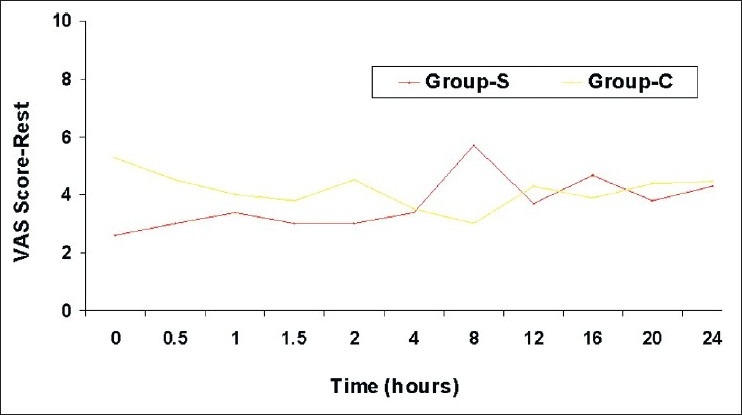
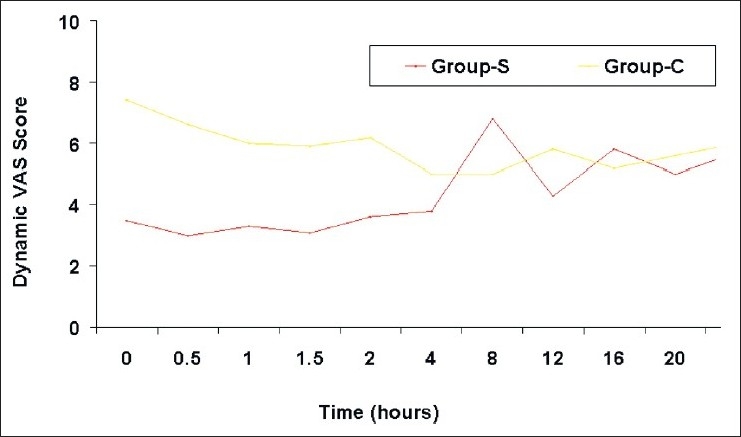
Results: Pain scores at rest and during coughing as well as rescue analgesic requirements for first 24 hours were significantly less in the bupivacaine group than those of the control group (P < 0.05). The first request for demand analgesia was around 9 hours in group S, while in group C it was around 2.6 hours (P < 0.05). Total requirement of tramadol in group S was 119.3 mg and in C group it was 276.8 mg (P < 0.05).
Conclusion: Peritubal infiltration of 0.25% bupivacaine is efficient in alleviating postoperative pain after PCNL.
Keywords: Percutaneous nephrolithotomy; peritubal block; postoperative analgesia.
Conflict of interest statement
Figures
References
-
- Dalela D, Goel A, Singh P, Shankhwar S. Renal capsular block: A novel method performing PCNL under local Anaesthesia. J Endourol. 2004;18:544–6. - PubMed
-
- Aravantinos E, Karatzas A, Gravas S, Tzortzis V, Melekos M. Feasibility of PCNL under assisted local Anaesthesia. Eur Urol. 2007;51:224–8. - PubMed
-
- Bellman G, Davidoff R, Candella J, Gerspach J, Kurtz S. Tubeless percutaneous renal surgery. J Urol. 1997;157:1578–82. - PubMed
-
- Karami H, Gholamrezaie H. Totally tubeless percutaneous Nephrolithotomy in selected patients. J Endourol. 2004;18:475–6. - PubMed
-
- Lojanapiwat B, Soonthornphan S, Wudhikarn S. Tubeless Percutaneous Nephrolithotomy in Selected Patients. J Endourol. 2001;15:711–3. - PubMed
LinkOut - more resources
Full Text Sources
Medical