


Flexor pollicis longus tendon rupture after volar plating of a distal radius fracture: pronator quadratus plate coverage may not adequately protect tendons
- PMID: 22096615
- PMCID: PMC3216646
Flexor pollicis longus tendon rupture after volar plating of a distal radius fracture: pronator quadratus plate coverage may not adequately protect tendons
Abstract
Objective: The senior author previously reported a case of rupture of the flexor policis longus tendon after volar plating of a distal radius fracture. We hypothesized that restoration of the pronator quadratus to its native position after plating might prevent this problem.
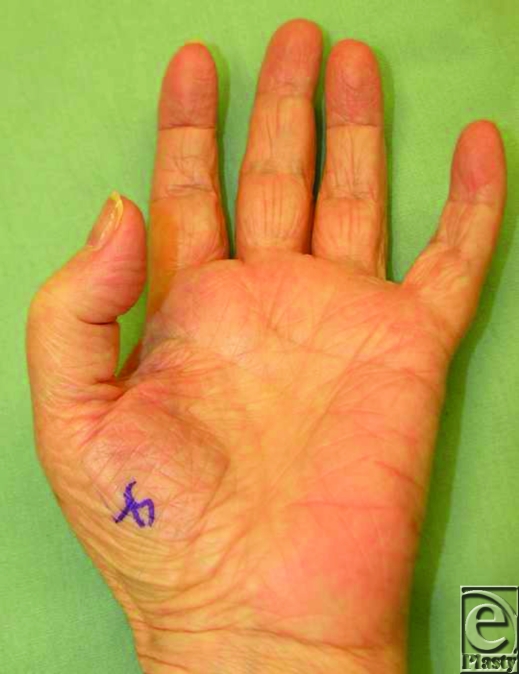
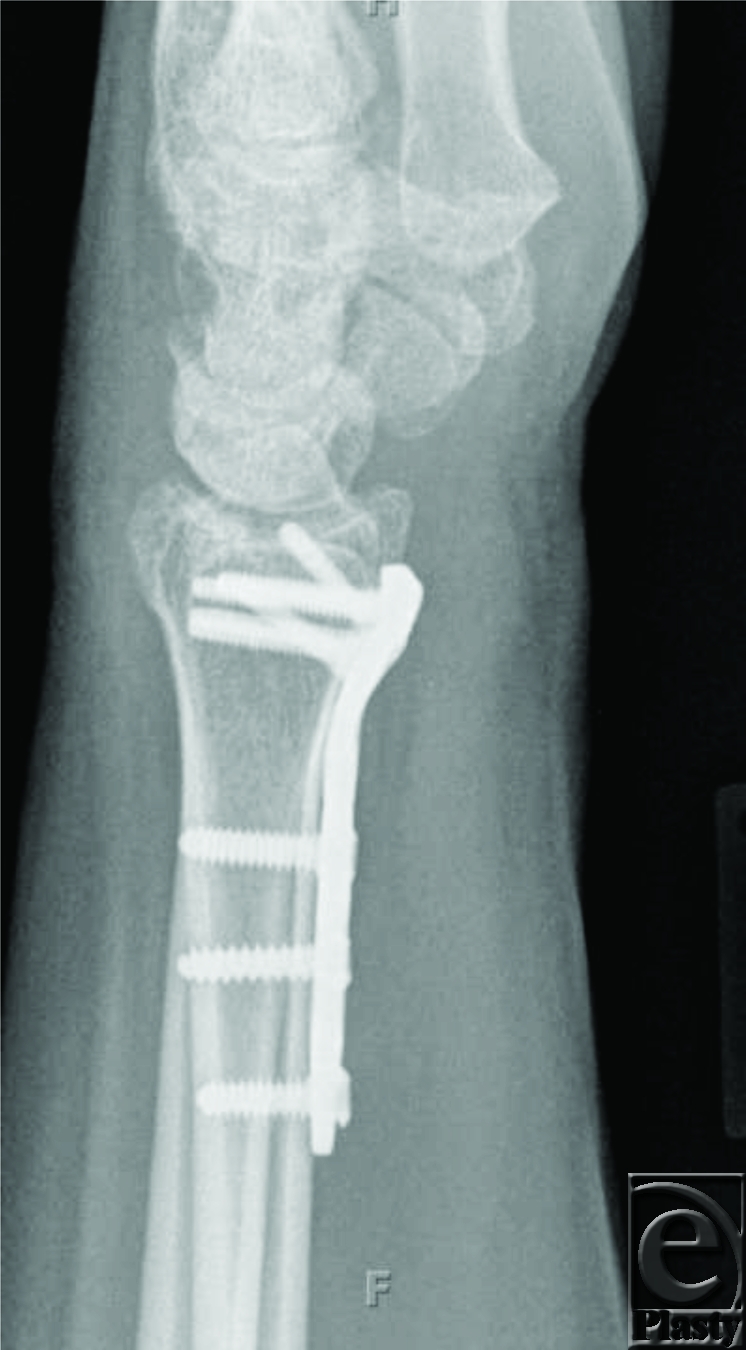
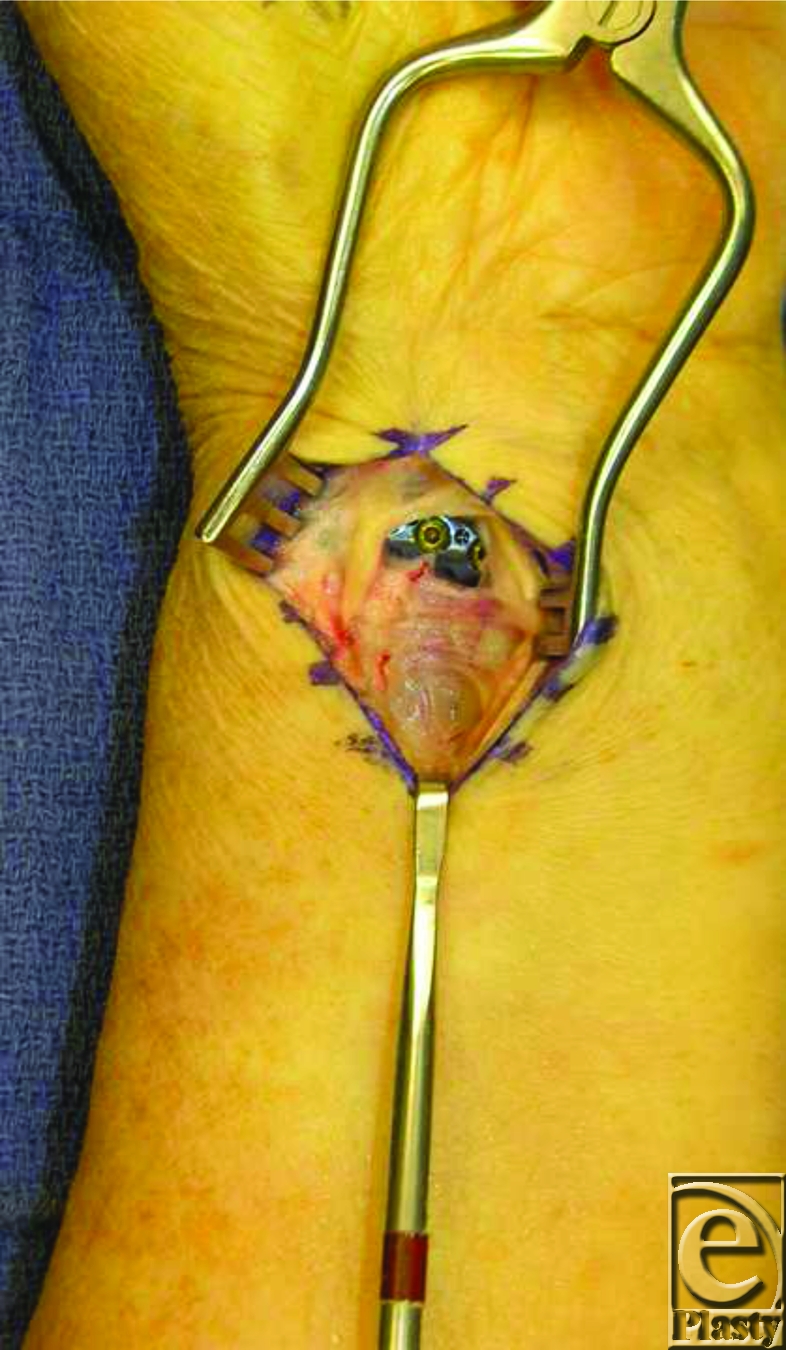
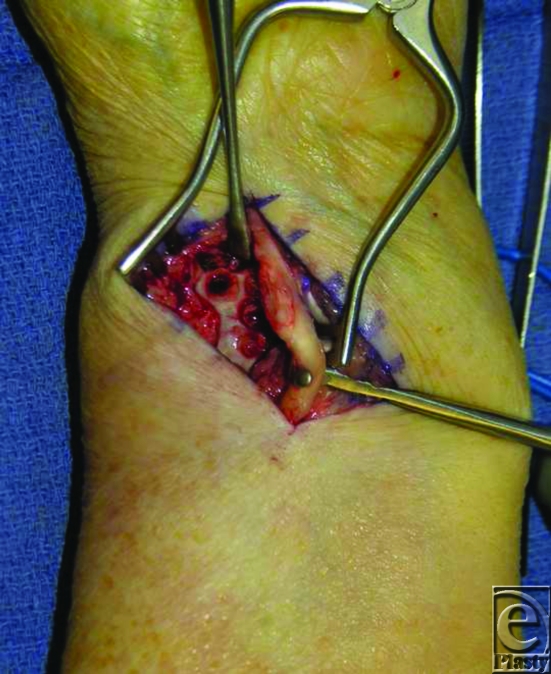
Methods: The authors report a new case of irritation of the flexor policis longus 2.5 years after volar plating of a distal radius fracture. The plate was in good contact with the bone, and the pronator quadratus had been restored to its native position. Despite this, there was a partial-thickness laceration of the tendon over the plate and a defect in the pronator quadratus muscle which had been between the plate and the tendon.
Results: The patient was treated with removal of the plate and repair of the tendon. She never lost function of the flexor policis longus tendon and has full function of her hand.
Conclusions: The authors believe that restoration of the pronator quadratus to its native position after volar plating of a distal radius fracture does protect the overlying flexor tendons. Even with this step, tendon irritation can still occur. The authors advise their patients at the time of discharge from initial treatment of their distal radius fracture to be vigilant for any evidence of flexor tendon irritation and to return for evaluation if they have any suspicion of this.
Figures
References
-
- Orbay L. The treatment of unstable distal radius fractures with volar fixation. Hand Surg. 2000;5:103–12. - PubMed
-
- Berglund LM. Complications of volar plate fixation for managing distal radius fractures. J Am Acad Orthop Surg. 2009;17:369–77. - PubMed
-
- Lifchez SL. Flexor pollicis longus tendon rupture after volar plating of a distal radius fracture. Plast Reconstr Surg. 2010;125:21e–23e. - PubMed
-
- Rozental TD, Blazar PE. Functional outcome and complications after volar plating for dorsally displaced, unstable fractures of the distal radius. J Hand Surg. 2006;31A:359–65. - PubMed
-
- Arora R, Lutz M, Hennerbichler A, Krappinger D, Espen D, Gabl M. Complications following internal fixation of unstable distal radius fracture with a palmar locking-plate. J Orthop Trauma. 2007;21:316–22. - PubMed
LinkOut - more resources
Full Text Sources
Medical