


Keeping chromatin quiet: how nucleosome remodeling restores heterochromatin after replication
- PMID: 22101266
- PMCID: PMC3272284
- DOI: 10.4161/cc.10.23.18558
Keeping chromatin quiet: how nucleosome remodeling restores heterochromatin after replication
Abstract
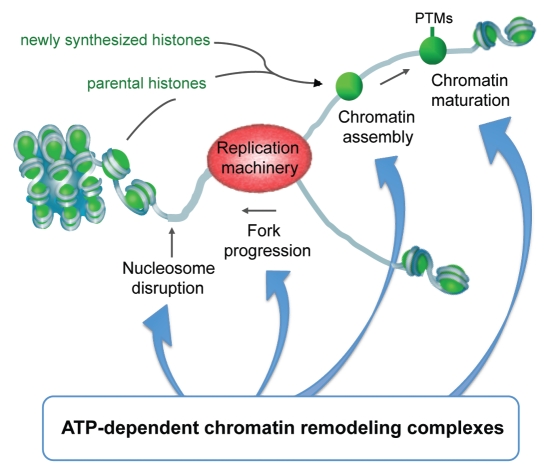
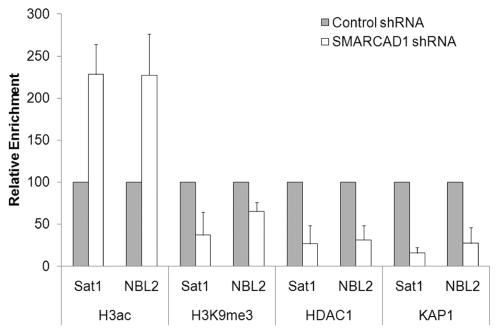
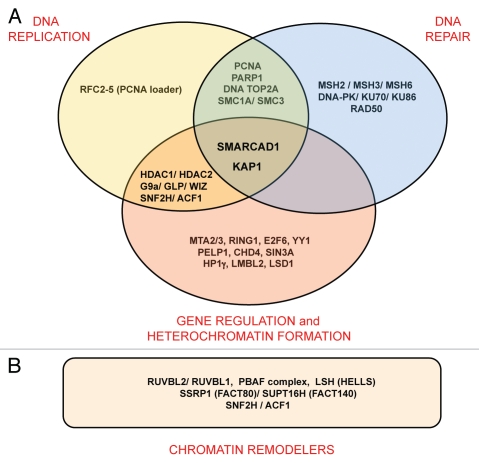
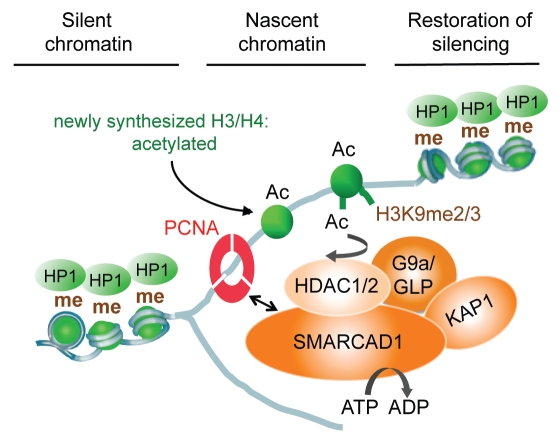
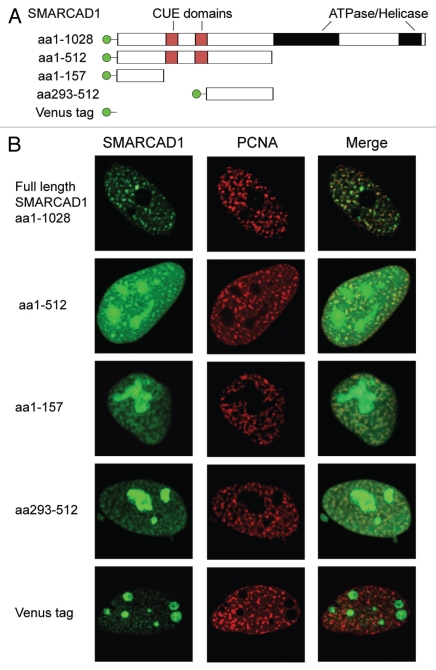
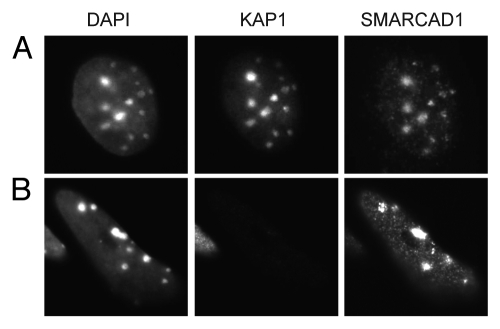
Disruption of chromatin organization during replication poses a major challenge to the maintenance and integrity of genome organization. It creates the need to accurately reconstruct the chromatin landscape following DNA duplication but there is little mechanistic understanding of how chromatin based modifications are restored on newly synthesized DNA. ATP-dependent chromatin remodeling activities serve multiple roles during replication and recent work underscores their requirement in the maintenance of proper chromatin organization. A new component of chromatin replication, the SWI/SNF-like chromatin remodeler SMARCAD1, acts at replication sites to facilitate deacetylation of newly assembled histones. Deacetylation is a pre-requisite for the restoration of epigenetic signatures in heterochromatin regions following replication. In this way, SMARCAD1, in concert with histone modifying activities and transcriptional repressors, reinforces epigenetic instructions to ensure that silenced loci are correctly perpetuated in each replication cycle. The emerging concept is that remodeling of nucleosomes is an early event imperative to promote the re-establishment of histone modifications following DNA replication.
Figures
References
Publication types
MeSH terms
Substances
Grants and funding
LinkOut - more resources
Full Text Sources
